Patty Chang
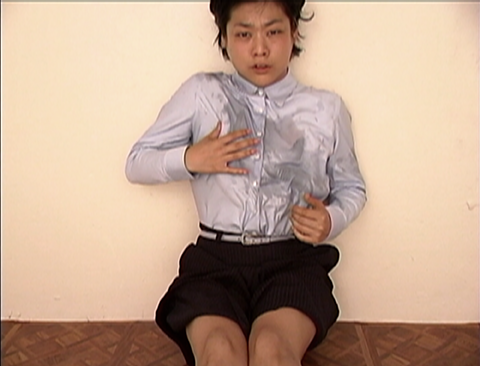
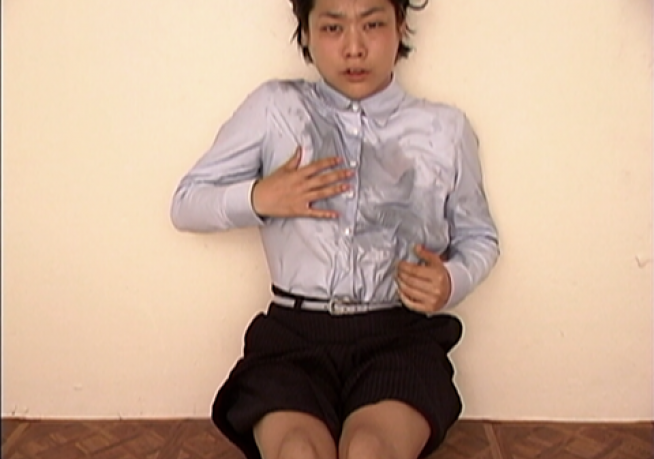
Patty Chang is an American artist that is very well known for her performance art. Performance art is a type of artwork made through the actions and movements of the artist or other participants. They can be recorded or they can also happen in a live setting. The video Untitled, (eels) on display in MY BODY, MY RULES is an example of this kind of recorded performance art.
Patty Chang is a Los Angeles based performance artist and film director. Performance art is a type of artwork made through the actions and movements of the artist or other participants. They can be recorded or they can also happen in a live setting. The video Untitled, (eels) on display in MY BODY, MY RULES is an example of this kind of recorded performance art. In Untitled (eels), Chang uses her body in a way that would make most people uncomfortable as a provocation to critique societal norms around how women are supposed to act, what they’re supposed to wear, and other feminist concerns. Chang’s work bravely ignores whatever societal rules exist and places herself in a variety of uncomfortable situations. Chang channels the history of feminist performance art and uses her own body as a site of resistance and endurance in both her performances and films.
Naomi Fisher
Naomi Fisher is a native-born Miami artist. Working across many different materials and media for the past two decades, she still calls Miami home.
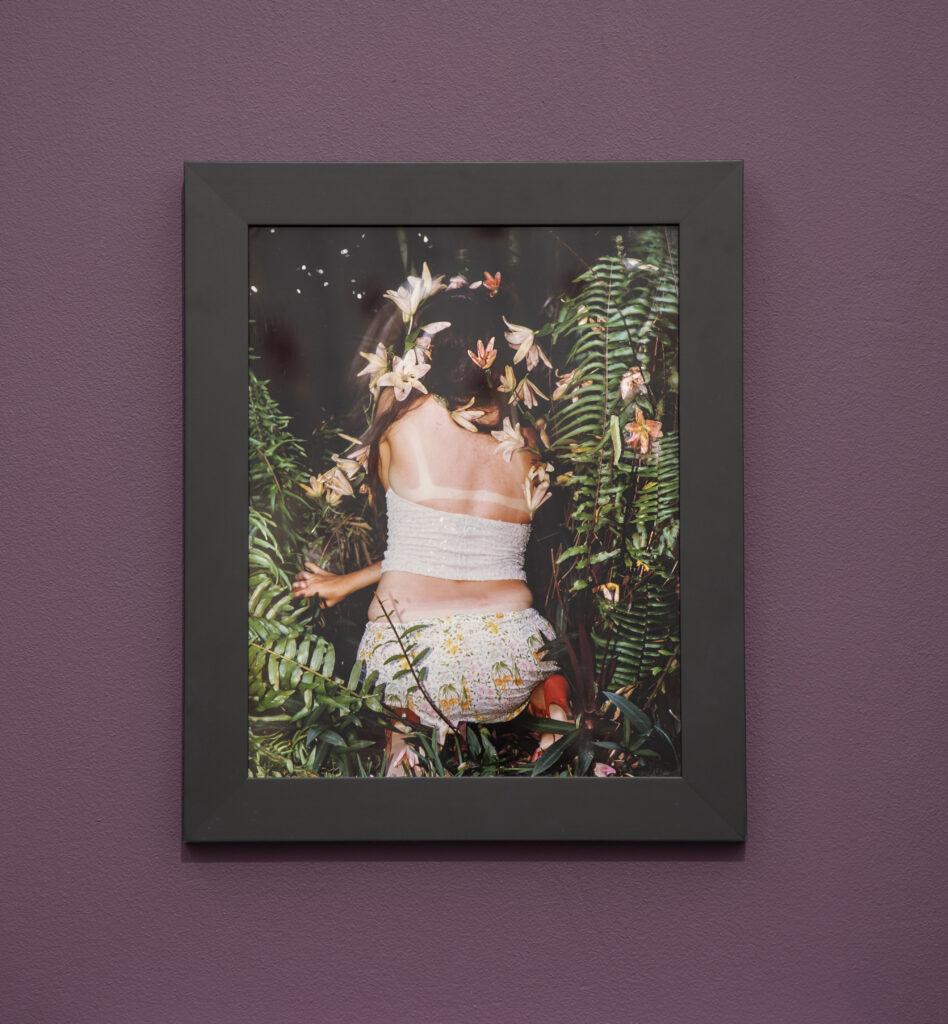
Fisher’s Untitled (Pink Lilies, Ferns) is photograph on display in MY BODY, MY RULES, shown alongside many other women artists in what is called a “gallery” arrangement. This is when several artworks are clustered closer together than normally in a museum.
This picture shows many objects and experiences we could associate with Miami. The green ferns and pink lilies mentioned in the title are examples of Miami’s abundant tropical plant life.
The person in the photograph has their back turned facing us. We see tan-lines stretching across her back, perhaps reminding us of Miami’s famously sunny weather.
Images of women enjoying Miami’s lush environment have been used by the tourism industry for nearly a century. Fisher’s photograph, while making reference to her home, does so in a way that is different for several reasons. It was not made by a man, as most advertising campaigns were and still are, and also does not assume the viewer is male.
Miami is the largest city in the United States founded by a woman, Julia Tuttle. Naomi Fisher in a way is recreating a vision of Miami, from a woman’s perspective, just like her historical predecessor.
Frances Goodman
Frances Goodman lives and works in Johannesburg, South Africa. She is a mixed media artist; her works are made up of many different materials. She is most famous for her use of acrylic nails and other materials rarely used in art making.
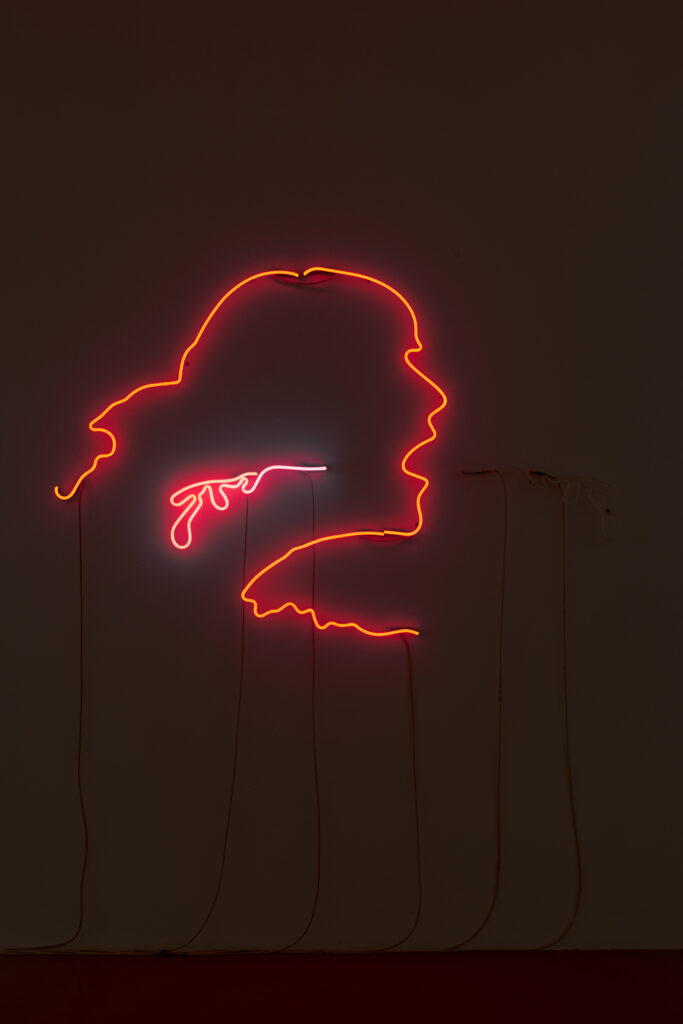
Spit/Swallow is made out of neon tubes, showing the profile of a woman in pink and the saliva in blue. Goodman asks us to think about the many times some women may feel like they have to hold back, or swallow, their thoughts or opinions. This could be due to many reasons, like the expectations some cultures or ethnicities place on women’s behavior. Another might be the threat of violence some women may face in certain interactions if they voiced their true thoughts. The “spit” in this artwork can be seen as all the women that bravely spoke out, sometimes at great personal risk.
There are countless examples of women who continue to speak out about their rights and control over their bodies around the world. 2020 is the 100th year anniversary of women’s suffrage, or voting rights, in the United States. The 19th amendment, ratified in 1920, was the result of decades of women organizing, marching, and protesting, even if it meant getting arrested.
The Women’s March, held in January of 2017, is another more recent example of women not holding back.
Lee Matarazzi
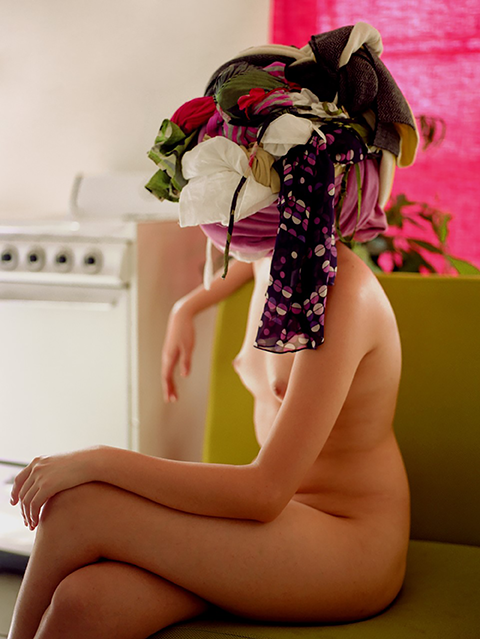
Lee Matarazzi’s artworks on display in MY BODY, MY RULES. are part of a larger series of photographs. In this series, we see portraits of models, sometimes including the artist herself, posed in the nude. The models have their faces covered by a jumble of clothing, like jumbles of laundry wrapping their heads.
Clothing in this artwork could mean many different things. Maybe Matarazzi wants us to think about how women in many homes are expected to do laundry, and other types of unpaid labor. Maybe the artist wants us to think about how many laws and societal rules continue to decide for women how they get to dress their own bodies.
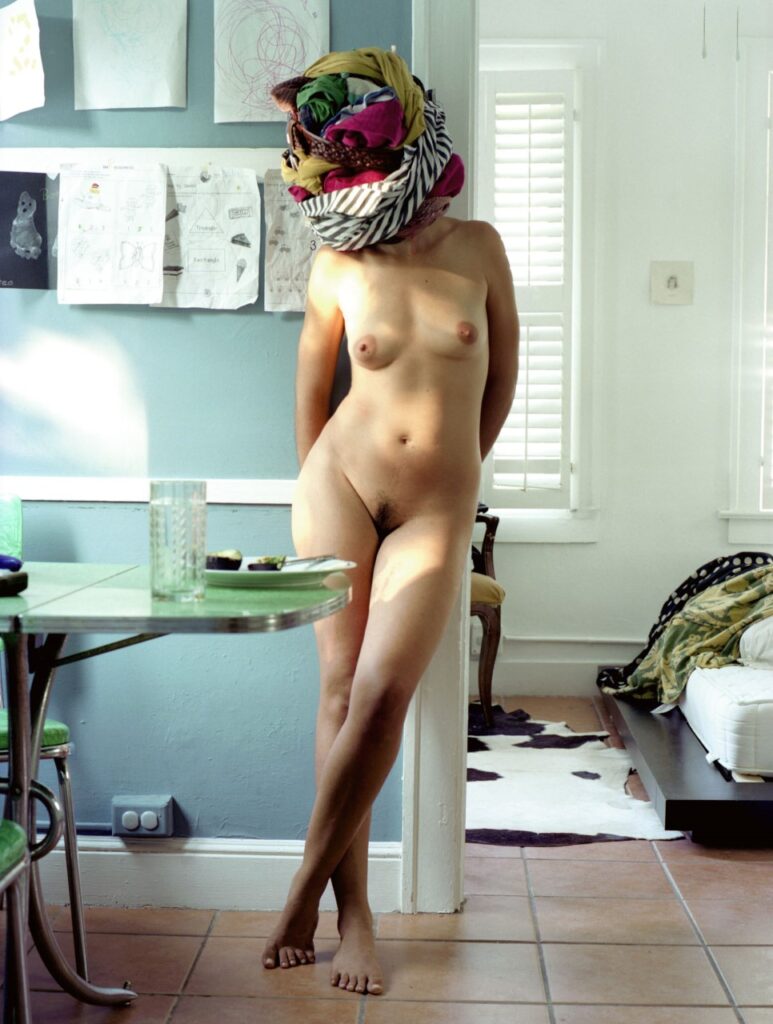
The poses in these photographs may seem familiar, as these are poses seen throughout Art History. Many male artists in the past would have nude women model for them and depict them in similar styles. Maybe Matarazzi is taking control of this form of photography, by being both the artist and model.
Ana Mendieta
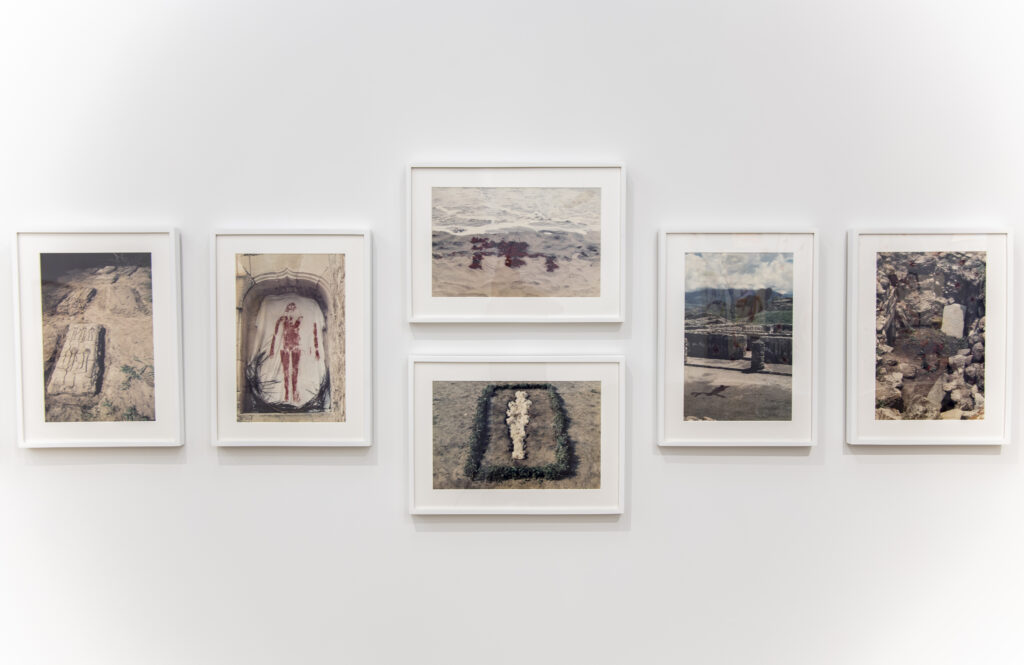
Silueta Works in Mexico, by Ana Mendieta is part of a larger series of photographs in which the artist used not only her body, but also outlines of her body, as well as casts and other arrangements, always in the same pose.
Mendieta’s large body of work throughout the late 1970s and 1980s opened doors for women artists of color and immigrant backgrounds in the United States. Her influence and legacy are far reaching, as her artworks, photographs, and films continue to be exhibited around the world.
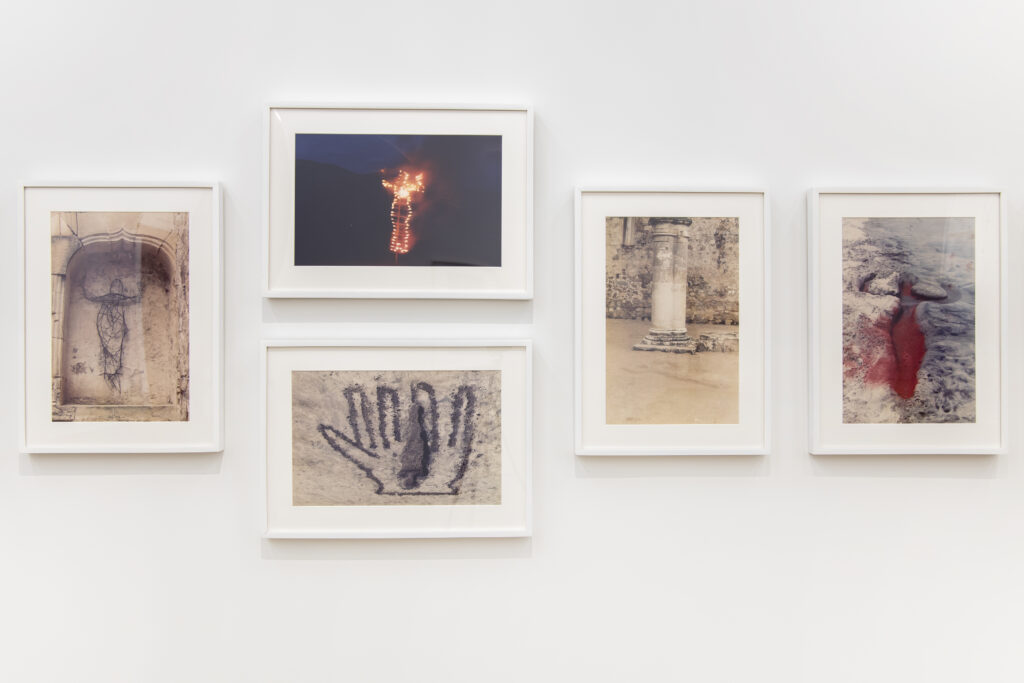
On November 18th, 2020, a day before the opening of MY BODY, MY RULES, Ana Mendieta should have had celebrated her seventy-second birthday. Her sudden and untimely death in 1985 remains controversial and disputed to many who are influenced by her work to this day. Carl Andre, Mendieta’s husband at the time, is thought by some to have had a very deliberate hand in her death. He was eventually found not guilty of murder charges.
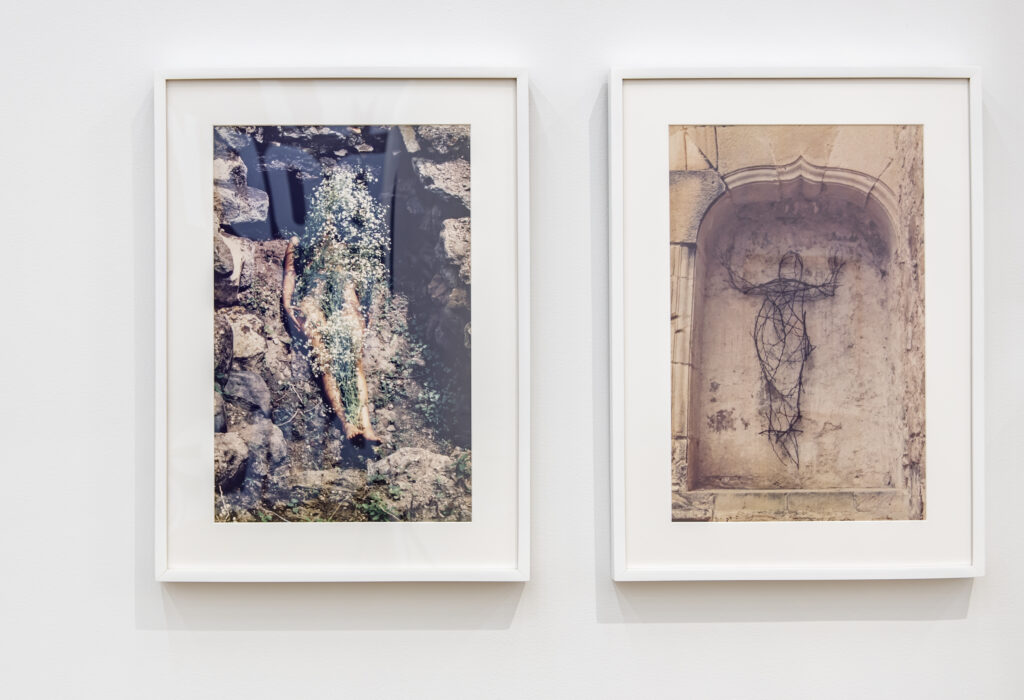
A group of feminist activists protested an opening of Carl Andre’s works in New York as recently as 2014. One of their protest signs read “We wish Ana Mendieta was still alive.”
Wangechi Mutu
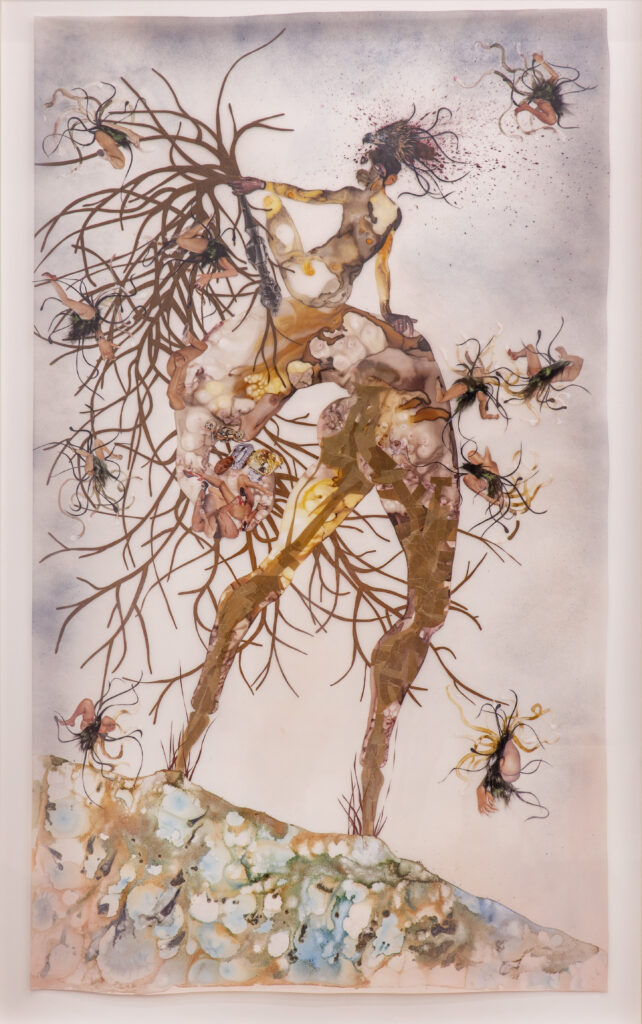
You tried so hard to make us away, 2005 by Kenyan-American artist Wangechi Mutu, is a mixed media collage made up of ink, acrylic paint, glitter, fur, and contact paper on mylar.
Like the many different materials Mutu uses in this work, this collage touches multiple themes as they relate to women, their bodies, and society’s many written and unwritten rules.
The figure that dominates this collage is facing away from us, giving us her backside. As she bends over backwards, her torso unravels itself into an array of limbs that look like the roots of a plant or tree. Coming out of the bent form, there is a smaller figure, with an arm stretched in front of her and one behind. She may be holding on to the larger figure or splitting it apart.
The root-like shapes in this artwork are meant to look like mangroves. These trees are found along many tropical shorelines, in places like Florida and the Caribbean and Africa. In this collage, Mutu is referencing the place of Black women, not only in the history of Black people in the Americas, but also their erasure.
Black women are present in every major feminist movement in the United States. However, white-led feminist movements over time have been slow to acknowledge the intersecting and overlapping identities of Black women and other women of color.
Maria Nepomuceno
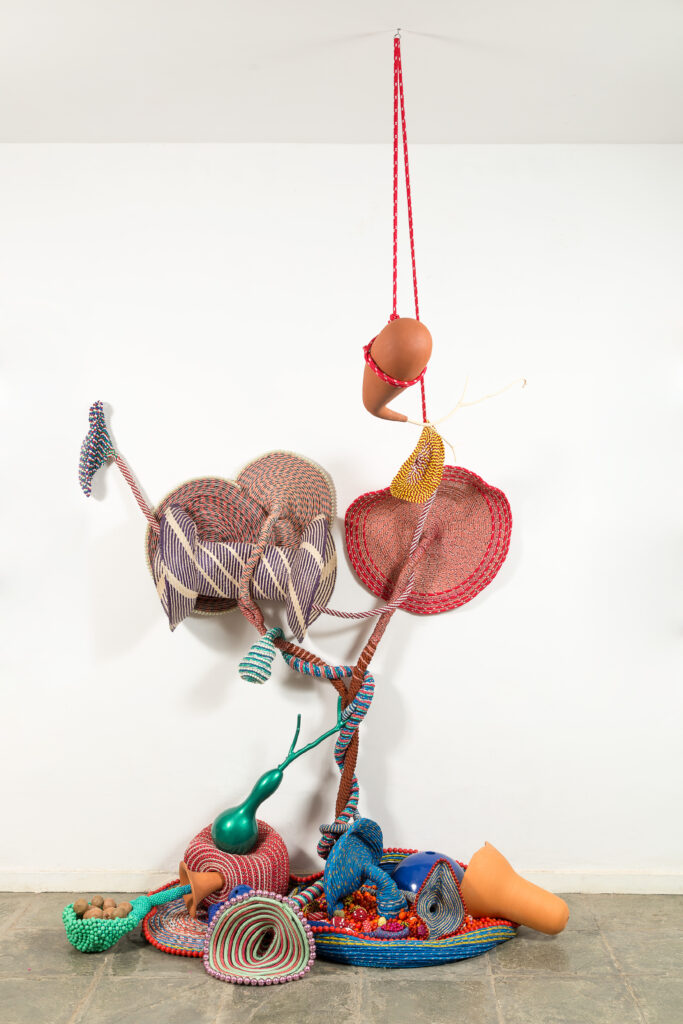
3 Mulheres (Three women) by Maria Nepomuceno is a mixed media sculpture. Made up of beads, rope, clay, pieces of ceramic, and Neopomuceno’s well-known braid technique, this diversity of materials is in many ways similar to the diversity of women seen in her country of origin, Brazil.
Brazil is the largest country in South America with a large and racially diverse population. Recently, women’s rights groups in Brazil began advocating for expanding rights and access to economic resources. It is one thing to have equal rights, however, like in the United States, race, class, gender, and other identity markers stand as barriers to equity and equality.
Politician Marielle Franco is an example of a woman living through Brazil’s racial and economic divisions. In 2016, she ran and was elected to the Rio city council as an advocate for poor and working-class Black mothers. She made it a point to highlight the difficulty of everyday life in the favelas, or shantytowns in and around Rio de Janeiro.
The above image shows Franco speaking to her fellow citizens about confronting race and gender discrimination. Franco is an example of Black Latin American woman that used protest, advocacy, and her own voice to attempt to bring change to these injustices. For daring to speak out, Franco was assassinated in 2017. The charges against her murderers are still ongoing.
Christina Quarles
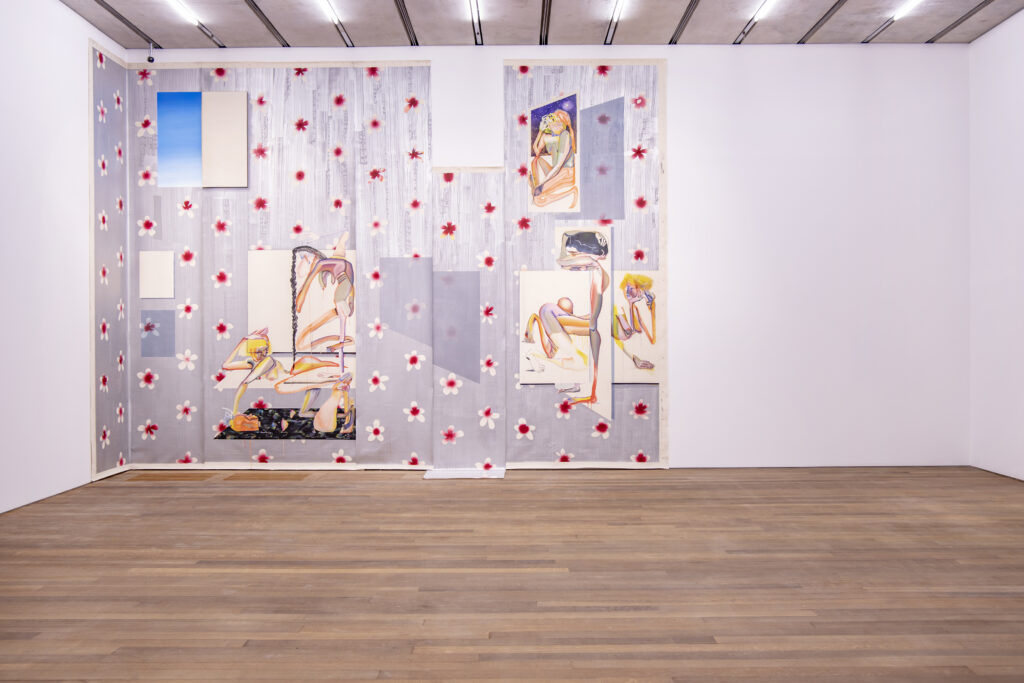
Forced Perspective (And I Kno It’s Rigged, But It’s tha Only Game in Town), by artist Christina Quarles is an acrylic painting on large sections of canvas. This artwork is around 16 feet tall and 21 feet across, and fully takes up the entire height of the gallery wall. It is often displayed with some of the canvas laying on the museum floor. Please watch your step.
Quarles is an artist that uses different techniques to explore layered identities. The painting is meant to look like a flat surface, either a textured wall or some sort of wallpaper, with several openings or windows. Inside these cut out squares, are nude figures, painted with stretched limbs and in a series of exaggerated poses. This process of “tricking the eye” into thinking a flat surface has depth is called trompe l’oeil. There are also other techniques, like linear perspective, where Quarles builds a third dimension into this painting. This can be seen clearly in the black square in the lower left. The lines that frame the outline of this square are painted in different angles, leading the mind to an imaginary vanishing point somewhere deeper in the painting.
Quarles identifies as a Queer, cis-gendered woman. She is also keenly aware of how her light skin obscures the fact that she has a black father. The layered and overlapping markers of her identity is an example of intersectionality, a term coined by American lawyer and scholar Kimberlé Crenshaw. Instead of identity being composed of partial or fractional components, they are layered upon each other. This concept has been embraced by many feminists since 2000, as feminism grew to encompass the rights of trans individuals, as well as sought to include more non-white voices.
Zilia Sanchez
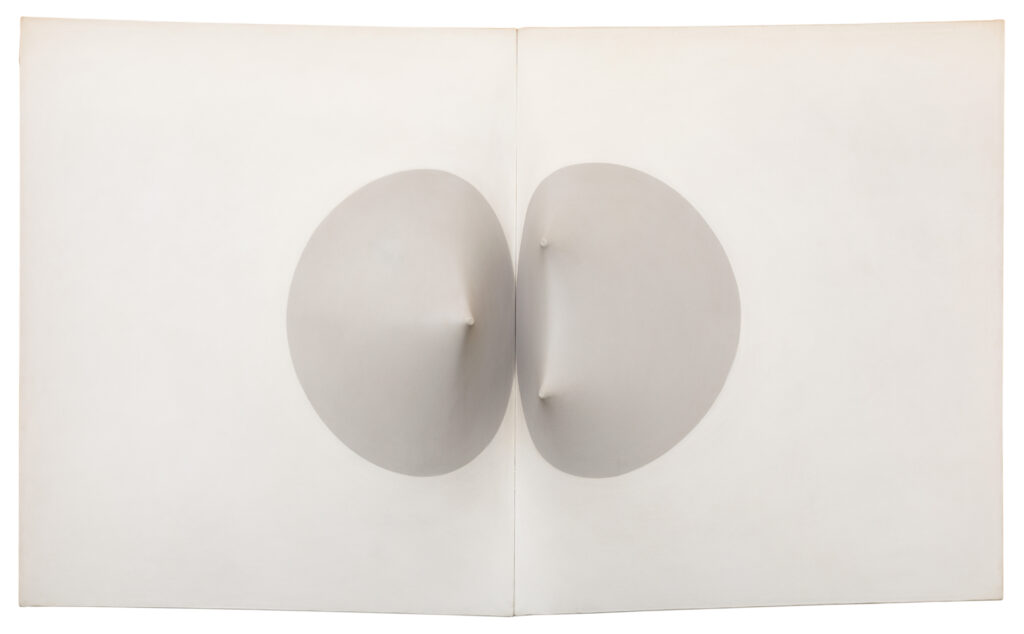
Zilia Sanchez’s Sin Titulo (Untitled) is an example of her most well-known artworks. Many of her other artworks have similar approaches, combining elements of sculpture and painting.
In Sin Titulo (Untitled), two grey circles in the center of a white canvas project or protrude outward. Made of painted canvas stretched across a wooden frame, the height and width of this artwork references painting. However, because this artwork pops out of its frame, it also has depth. This work of art could also be considered a relief sculpture. This is a special type of three-dimensional artwork where forms are attached to a flat surface.
Sanchez’ work is known for having “erotic undertones.” This means that some of the shapes and forms in this artwork can be interpreted as looking like parts of the body associated with sex. For most of human history, and throughout the study of art history, while both men and women created and critiqued art, men usually found fame and authority. While we may see a woman’s breasts in this artwork, who gets to define them as “erotic?” Perhaps Sanchez’s forms are meant to celebrate women’s bodies in a non-sexual way.
Feedback
We hope you enjoyed this Digital Exhibition Guide!
We appreciate you taking the time to submit feedback to us as we strive to make PAMM as engaging as possible. You may submit your feedback anonymously through this form or by emailing us directly at AppFeedback@pamm.org