


As part of Pérez Art Museum Miami’s (PAMM) Caribbean Cultural Institute programming, join us for a special film screening and conversation on the 235th anniversary of the Bois Caïman ceremony with filmmaker Dudley Alexis in conversation with artist Edouard Duval-Carrie and FIU Professor Chantalle F. Verna featuring the documentary film The Creole Pig: Haiti’s Great Loss.
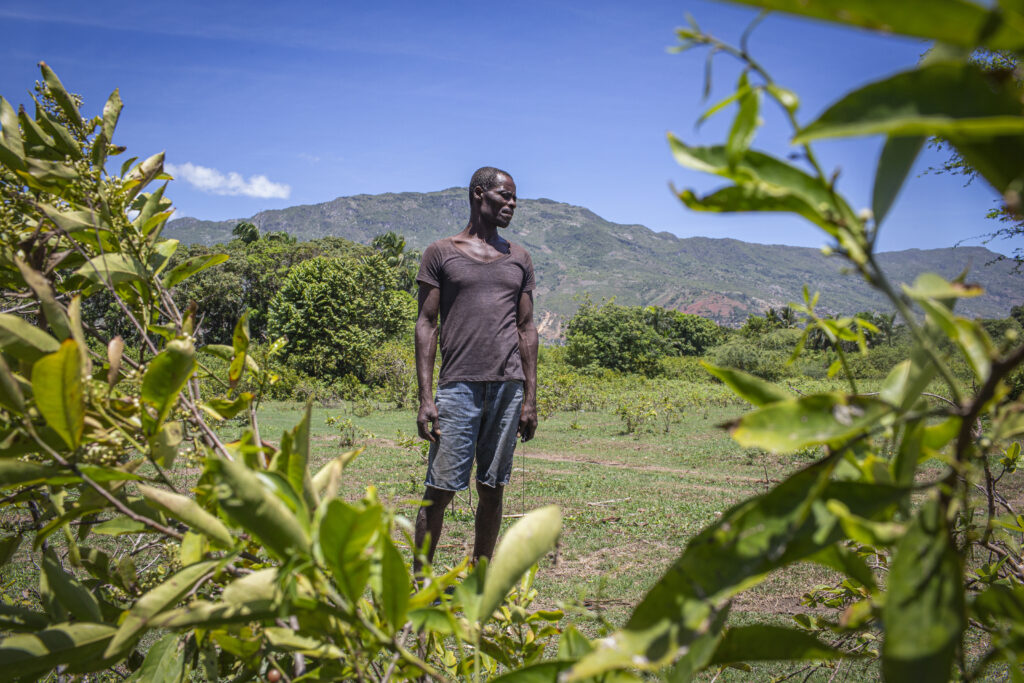
This film recounts the story of a vital, resilient animal central to Haitian life for generations. Indigenous to Haiti, the Creole pig was a critical resource for peasant farmers. However, in the 1980s, an outbreak of swine flu, prompted USDA and the Haitian government to exterminate the entire population of Creole pigs. This drastic measure delivered a devastating economic blow to an already struggling nation. The documentary explores how this mass culling accelerated Haiti’s economic decline while examining the political and social fallout. Featuring interviews with farmers, economists, educators, and political analysts, the film delves into Haiti’s history and politics to unpack the profound and ongoing impact to the lives and culture of the Haitian people.
After the program, enjoy post-film discussion and libations in Little Haiti. Stop at Lakou for drinks and bites for purchase, visit the gallery at IPC ArtSpace, and don’t miss the studio of Edouard Duval-Carrié.
Schedule
7:30–8pm Welcome and seating
8–9pm Film screening
9–9:30pm Panel conversation
10pm Post-film discussion and libations in Little Haiti (207 NE 59th Street and 225 NE 59th Street, Miami, FL 33137)

About Dudley Alexis
Dudley Alexis’ mission is deeply rooted in uncovering hidden details that give meaning to the lives of those often overlooked. Through his lens, he captures the stories of individuals, revealing tales of tragedy and triumph, all while emphasizing their drive for dignity and equality in a world that frequently marginalizes them.
His artistic journey began in Miami, where he studied multimedia art in high school and college. Early in his career, he worked for Miccosukee Magazine, creating short documentaries that shed light on the First Nation Miccosukee Tribe of Florida and their intersection with the everyday lives of Miami residents. This experience laid the foundation for his subsequent work, including his first full-length documentary, “Liberty in a Soup” (2016), exploring Soup Joumou and commemorating Haiti as the first independent Black Republic. In 2021, “Liberty in a Soup” earned recognition from Haiti’s UNESCO delegation which designated Soup Joumou as an intangible cultural heritage.
Alexis’ next documentary, “When Liberty Burns,” is an in-depth analysis of the 40th anniversary of the life and untimely death of Arthur McDuffie at the hands of Miami Dade police officers. This work earned Alexis nominations at the Suncoast Regional Emmy Awards and the Knight Made in Miami Film Award.
About Edouard Duval-Carrié
Edouard Duval-Carrié is a contemporary artist and curator based in Miami, Florida. Born and raised in Haiti, Duval-Carrié fled the regime of “Papa Doc” Duvalier as a teenager and subsequently resided in locales as diverse as Puerto Rico, New York, Montreal, Paris and Miami. Parallels thus emerge between the artist’s cosmopolitan lifestyle and his artistic sensitivity toward the multifaceted identities that form his native Haiti. At heart, Duval-Carrié is an educator—he challenges the viewer to make meaning of dense iconography derived from Caribbean history, politics, and religion. His mixed media works and installations present migrations and transformations, often human and spiritual.
Recently, the conceptual layering of Duval-Carrié’s works has been further emphasized in his materials and through consistent attention to translucent and reflective mediums, such as glitter, glass, and resin. The introspective effects of these mediums transform his works into spatial interventions that implicate the viewer in their historicity. At their most fundamental, Duval-Carrié’s works ask the viewer to complicate the Western Canon, to consider how Africa has shaped the Americas, and how the Caribbean has shaped the modern world. His works have been exhibited in major museums, art institutions and galleries in Africa, Europe and the Americas. Duval-Carrié creates works that speak to the complexities of the Caribbean and its diaspora.
About Chantalle F. Verna
Professor Chantalle F. Verna focuses on the culture of foreign relations, specifically concerning Haiti and the United States during the mid-20th century. Her first book, titled “Haiti and the Uses of America: Post-U.S. Occupation Promises, 1934-54,” is a study that emphasizes the importance of examining the post-occupation period—the decades following the U.S. military occupation of Haiti (1915–34) and considering how Haiti’s public officials and privileged citizens rationalized nurturing ties with the United States when the two nations began negotiating the reinstatement of Haitian sovereignty in 1930.
The book is based on public and private records that Professor Verna collected in Haiti and the United States, including the papers of Haitian presidents, ministers, and Americans working on development missions in Haiti; the writings of Haitian intellectuals; and interviews with elders from the study period. Professor Verna’s findings reveal that during the mid-20th century, the ideas and actions of Haitians and Americans were heavily informed by internationalist ideals that stressed the shared history and interwoven future of all independent nations, particularly those in the Americas. Her book demonstrates why Haitians had an affinity for Haiti-U.S. cooperation as a nation-building strategy and how that strategy facilitated the rise of international aid as a central component of U.S. foreign relations.

