Introduction
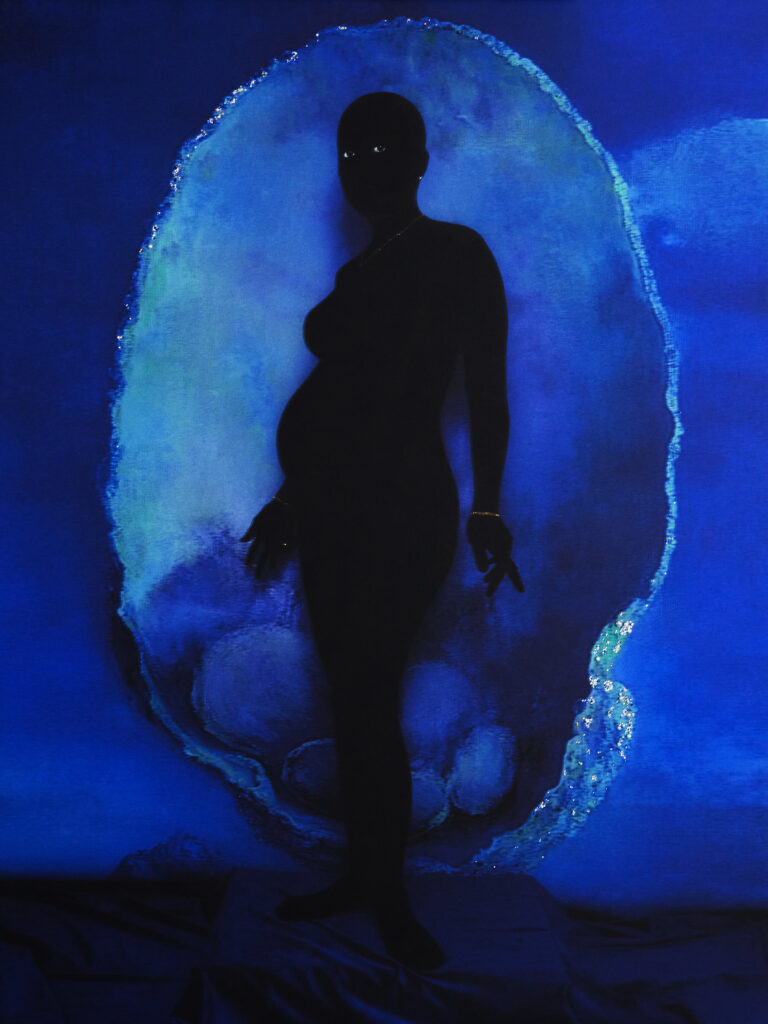
El Monte presents the collaborative work of twin brothers Elliot & Erick Jiménez, whose photography weaves together the spiritual practices inherited from their grandmother with contemporary art. This exhibition takes its name from Lydia Cabrera’s seminal 1954 work “El Monte,” a foundational text that preserved Afro-Cuban religious knowledge and practices that colonialism sought to erase.
Through their lens, the twins create an intricate visual language that bridges multiple worlds: the sacred and the secular, the private rituals practiced in Miami homes and the broader Cuban diaspora experience, art historical references and personal family memory. Their photographs serve as both documentation and transformation, capturing how syncretic spiritual practices continue to evolve within everyday life.

What is Syncretism?
Syncretism is the blending of different religious and cultural traditions to create new forms of belief and practice. This mixing often occurs when communities are displaced or when different cultures come into contact through migration, colonization, or trade.
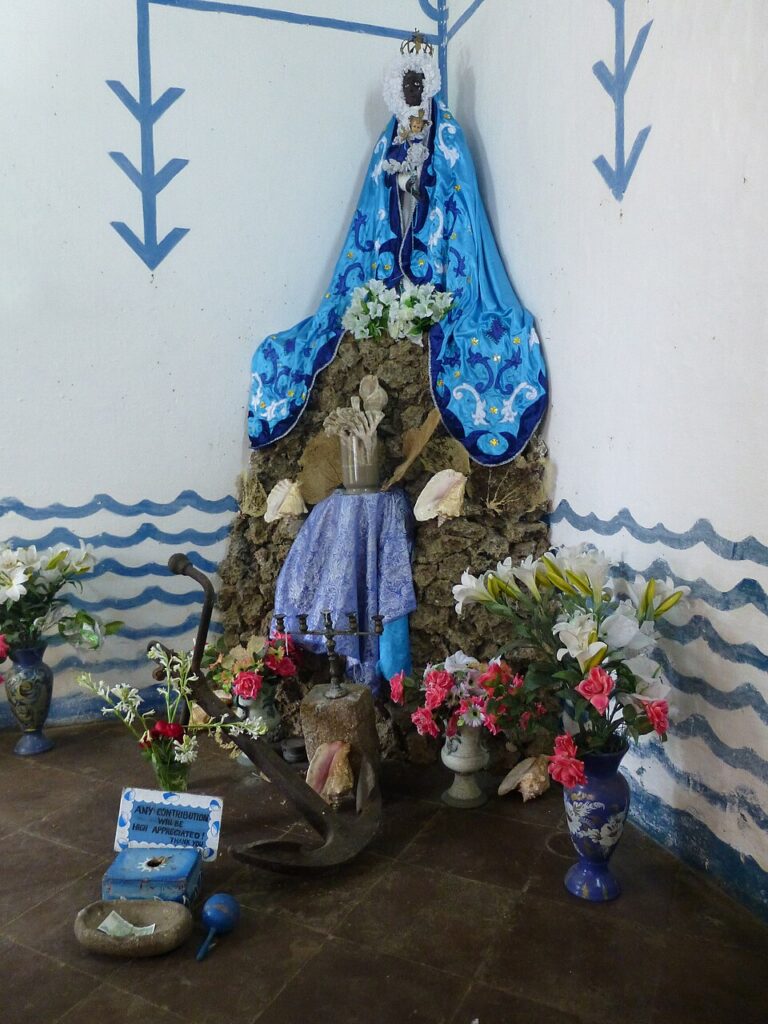
In the context of Afro-Cuban religions, such as Lucumí or Santería, syncretism emerged as enslaved Africans were forced to practice their spiritual traditions in secret under colonial rule. They adapted by associating their orishas (or deities) with Catholic saints, allowing them to maintain their beliefs while appearing to conform to imposed religious practices. Over time, these blended traditions developed into rich spiritual systems that combined Yoruba, Catholic, and Indigenous elements.
Syncretism represents both survival strategy and creative adaptation—a way for communities to preserve their cultural identity while navigating new and often oppressive circumstances.
El pequeño gigante (The Little Giant)
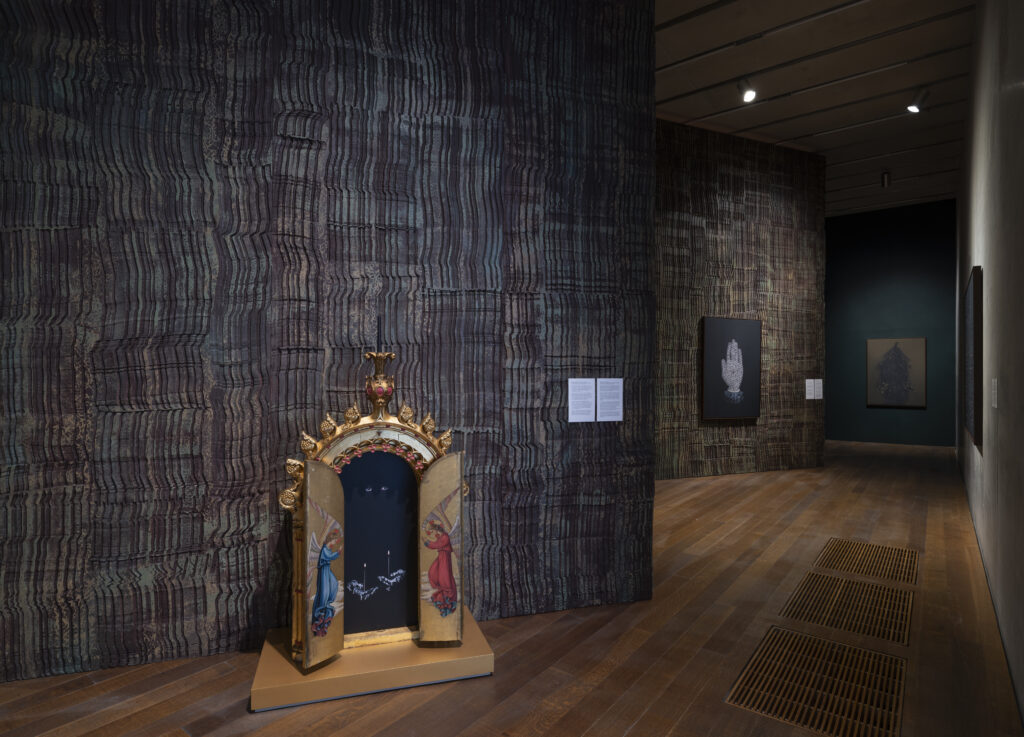
This piece welcomes and guards at the entrance of El Monte, as Elegguá does in Lucumí tradition. Elegguá is the orisha of crossroads, of all beginnings and ends. As Cabrera describes in El Monte, he is both small and powerful—a “little giant” positioned at thresholds of homes, roads, or forests, the first to be addressed and the opener of all paths.
The artists have transformed a 19th-century French tabernacle—originally meant to house the divine—into a portal that references the syncretic layers within Afro-Cuban spirituality. The tabernacle features angels painted in red and blue robes, the colors associated with the Ibejí, while twin cherub angels appear on each side when the doors are closed. This expansion into sculptural elements represents the transculturation the artists explore—finding objects that hold meaning within Lucumí even when originally created for other purposes.
Visual Description
El pequeño gigante is a mixed-media sculpture made in 2025 featuring a 19th-century French tabernacle with ornate golden decorative elements. The tabernacle has an elaborate baroque design with carved flourishes, and a crown-like structure at the top with red circular decorative elements. A decorative band with clusters of pink circles adorns the interior arch of the opening.
The tabernacle sits on a golden platform against a textured dark wall with vertical striations. Its doors remain open, creating an arched opening that reveals a dark interior where a pair of piercing white eyes are visible. Below the eyes, a pair of ghostly hands appear to be holding melting candles, with white wax dripping downward in the dark space.
On the interior of the open doors, two angels are painted in flowing robes in a medieval style—characterized by stylized, flat forms and symbolic rather than naturalistic representation—one in blue robes on the left door, one in red robes on the right door. Both angels are positioned with hands in prayer or reverence. The golden tabernacle creates both an ornate frame and a portal, transforming this religious object into a threshold between worlds.
El Monte (Ibejí)
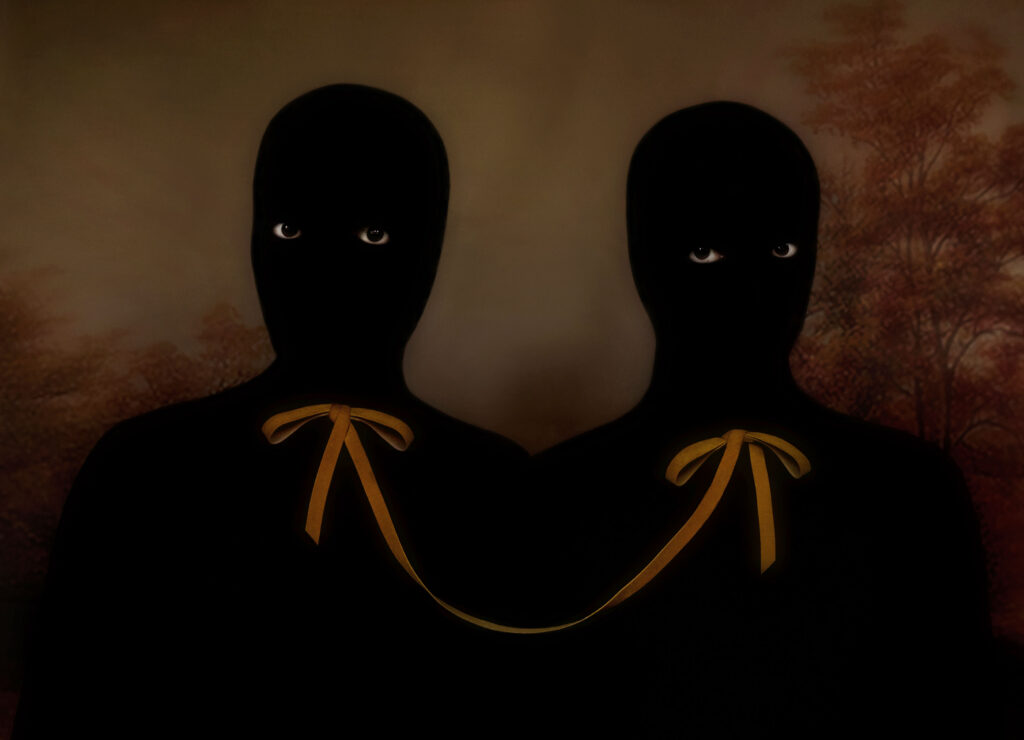
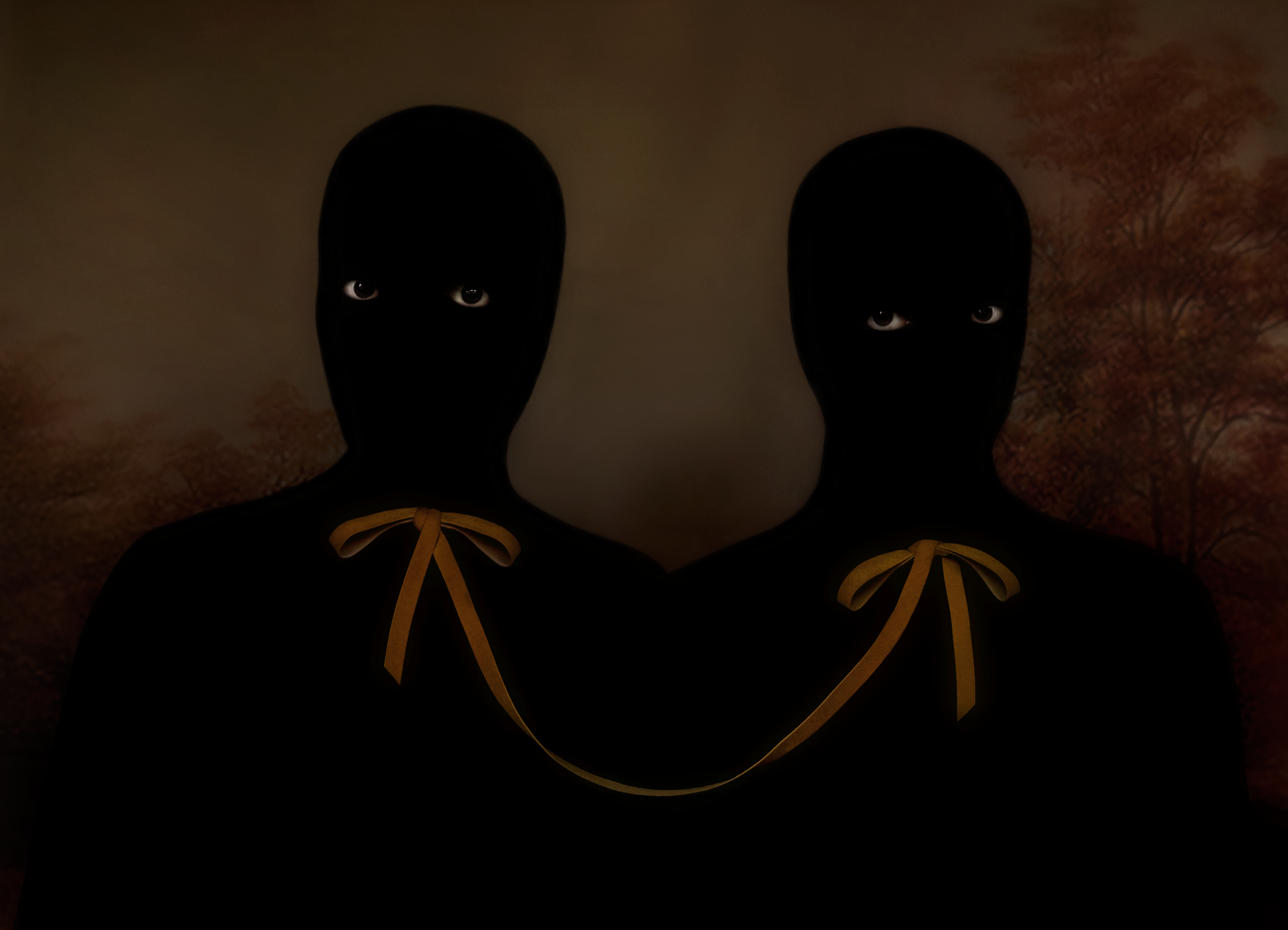
El Monte (Ibejí) represents the Afro-Cuban twin orisha—a single spirit split in two. The yellow cord connecting the figures references Oshún, the orisha who serves as the Ibejí’s mother, while also suggesting the umbilical bond between twins.
Visual description
This image presents two silhouetted busts—or head-and-shoulder portraits—against a soft sepia-toned background, mimicking the earth tones found in traditional paintings. The figures are rendered in deep black, with only their eyes visible as piercing white points that create direct contact with the viewer
A golden cord forms a gentle arc between the two figures, tied in decorative bows at each chest. The background behind them depicts a forest landscape with soft, somewhat blurry atmospheric perspective and delicate tree forms that evoke Renaissance painting techniques. The overall image is symmetrical, with the two figures connected by the curved yellow ribbon.
Ibejí Altar
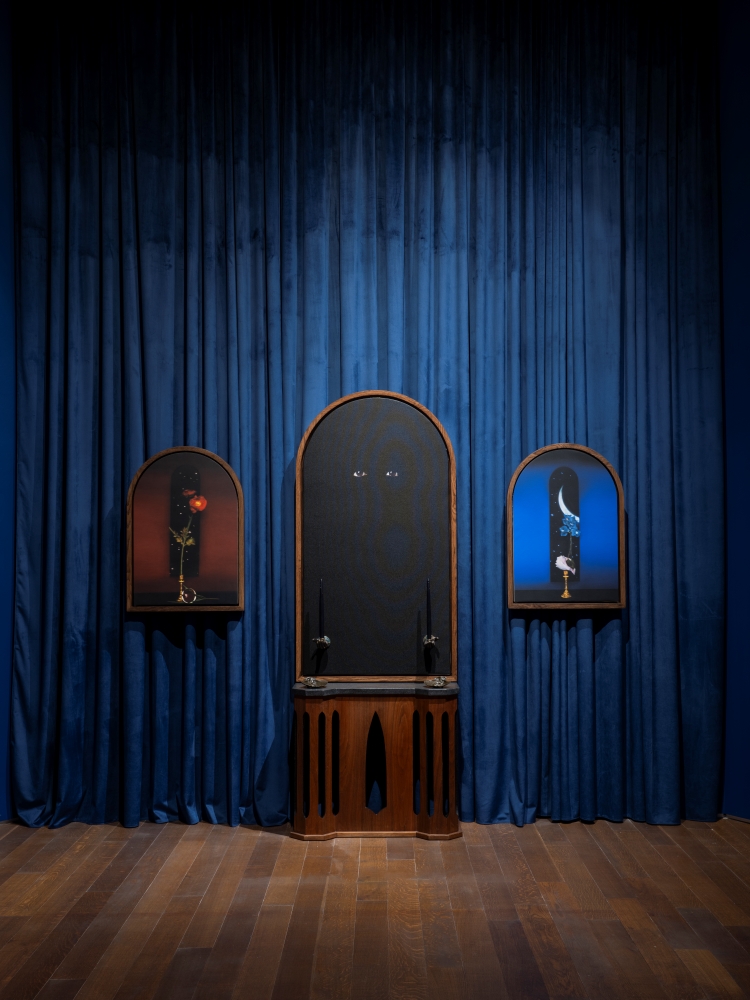
Ibejí Altar functions as the conceptual and emotional anchor of the exhibition. The assemblage references the foundational story of the Ibejí being abandoned by their mother Oshún and cared for by Yemayá, orisha of the sea and motherhood. The red and blue palette reflects colors traditionally associated with the Ibejí in Lucumí tradition, while the work offers a meditation on care, grief, and sacred connection.
Visual Description
This mixed-media assemblage is composed of archival pigment prints on canvas, crystals, Harvey Probber walnut console with custom granite top, Noel Rabior nineteenth-century bronze ashtrays, antique brass hand knobs, and brass candle holders with candles.
The work is installed against a backdrop of flowing blue curtains that create a theatrical, sanctuary-like environment. The installation consists of three arched panels. The central panel is significantly larger than the two flanking panels and rests atop the substantial walnut console with its dark granite surface, which anchors the entire composition.
The left panel features a red background with a red flower on a green stem positioned in a golden candleholder, with a small object or mirror to the right of its base.
The central panel displays a dark background with only a pair of piercing eyes visible, creating an intense focal point that draws viewers into direct contact with the work. Below, antique brass hands extend with open palms holding long black candles. Resting beneath the hands are the Ibejí, shown sleeping atop shells that reference Yemayá, suggesting they are both offerings and recipients within this altar-like structure.
The right panel shows a deep blue background with eyes visible in the dark upper section. In the background, there is a white crescent moon shape with blue flowers, positioned above a golden candleholder. The overall installation creates a powerful sense of sacred space, with the dramatic scale and careful lighting emphasizing its function as both artwork and spiritual contemplation.
Who is the Ram and Who is the Knife?
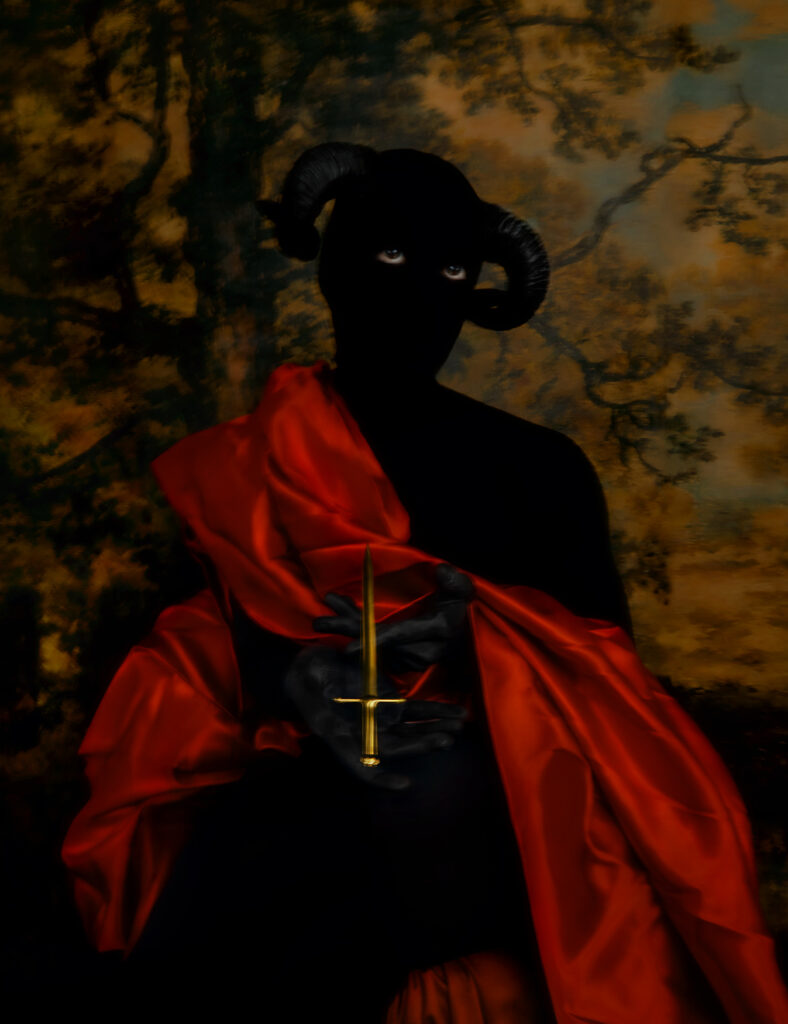
Who is the Ram and Who is the Knife? explores sacrifice as both spiritual act and historical consequence. In Lucumí tradition, the ram becomes sanctified through ritual, carrying prayers and transformations to the orishas, especially Changó. Here, traditional roles are inverted—the ram holds the knife, shifting questions of power and agency.
The cross-shaped blade references both ritual tools and colonial oppression. For Yoruba people, survival demanded sacrifice of language, names, and visible traditions, creating Lucumí as an act of resistance through adaptation. The ram’s shadow evokes Changó, orisha of fire, thunder, and justice, transforming sacrifice into sovereignty.
Visual Description
At the center of this image is a silhouetted figure against a sepia forest background with branching trees. The figure appears ram-like with curved horns on its head, rendered in deep black with only the eyes visible as bright white points looking upward. The figure is draped in flowing red fabric that creates dramatic folds and shadows across the torso.
The ram-like figure appears to balance a golden cross-shaped knife at chest level, carefully holding the end of the blade in one hand while the fingertips of the other hand delicately graze the blade’s surface—in a posture that almost seems to suggest surrender. The red drapery contrasts sharply with the dark silhouette and warm brown background. The overall composition follows the same sepia-toned, forest setting as other works in the series, with the addition of sparkling elements that catch light throughout the image.
Glossary of Terminology
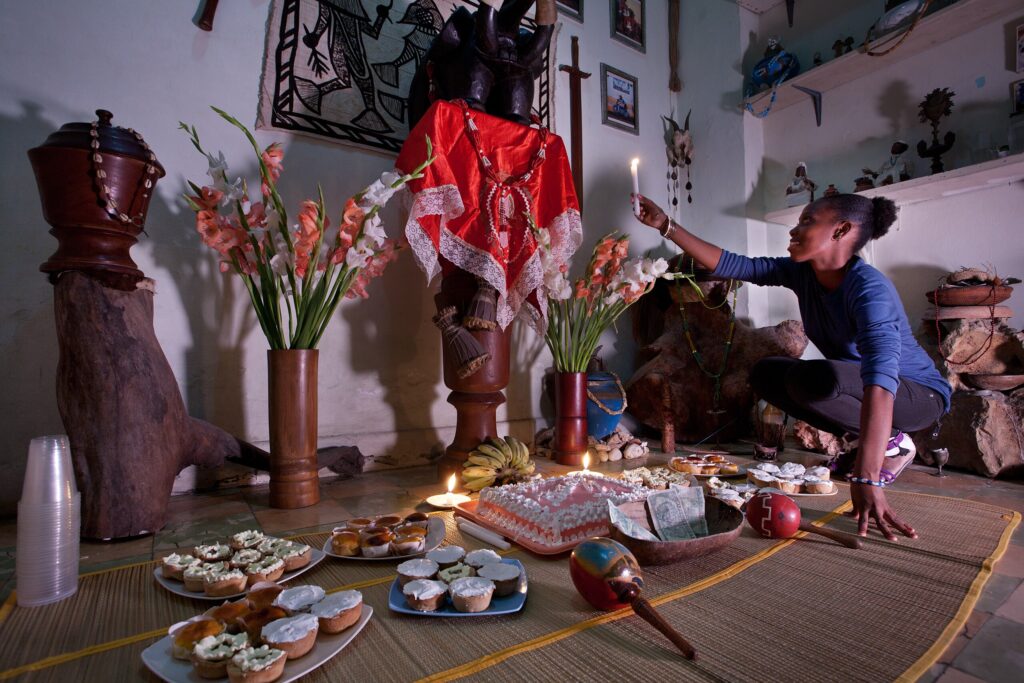
Here are some useful terms that will help you understand the spiritual concepts and practices referenced throughout the exhibition.
Orisha – Divine spirits that govern different parts of life and nature. In Lucumí, each orisha was matched with a Catholic saint so practitioners could worship safely under colonial rule—hence why the faith is also known as Santería. Each has specific colors, foods, and rituals.
Some of the Orishas referenced in Elliot and Erick Jiménez’s work are:
- Ibejí – The twin orisha representing a single divine spirit manifested in two bodies. Sacred protectors of children and symbols of divine duality, the Ibejí embody complementary halves of one cosmic force.
- Elegguá – The orisha who opens and closes paths, guardian of crossroads and doorways. Often the first orisha to be honored in ceremonies.
- Yemayá – Mother of all orishas and goddess of the ocean. She represents motherhood, fertility, and the life-giving power of water. Her colors are blue and white.
- Changó – Orisha of thunder, lightning, fire, and drums. A powerful warrior known for his passion and strength, associated with the colors red and white.
- Oshún – Goddess of rivers, love, fertility, and gold. Known for her beauty and sensuality, she governs matters of the heart and is associated with yellow and gold.
- Obatalá – The father figure among orishas, creator of human bodies and ruler of the mind and thoughts. He represents wisdom, purity, and peace, associated with white.
- Oyá – Orisha of winds, storms, and the marketplace. She guards the gates of the cemetery and is known as a fierce warrior who accompanies the dead to the afterlife.
More terms to know:
Ceiba – The sacred kapok tree considered the most powerful in Afro-Cuban traditions. Known as the “mother of all trees,” the ceiba connects the earthly and spiritual worlds. Its massive trunk and towering canopy make it a natural cathedral where important ceremonies take place.
Ashé – The spiritual energy that flows through everything. It can be built up, shared, and passed on through proper ritual and behavior.
Feedback
We hope you enjoyed this Digital Exhibition Guide!
We appreciate you taking the time to submit feedback to us as we strive to make PAMM as engaging as possible. You may submit your feedback anonymously through this form.