guide

On View

Zoë Buckman: Show Me Your Bruises, Then

Introduction

Show Me Your Bruises, Then is the first museum solo exhibition by Zoë Buckman, a British Jewish multidisciplinary artist. At its center is a three-channel video installation in which Buckman, alongside actors Cush Jumbo and Sienna Miller, recites a poem about bruising, power, and sexual assault in intimate relationships. The poem also addresses the shame and stigma that often keep women silent. The work looks at how intimate partner violence can affect families across generations, and at the power of sharing one’s voice and story.

The two works in this exhibition, Show Me Your Bruises, Then and Can I Have a Minute to Pee, Please, draw on Zoë Buckman’s personal experience and address domestic violence. Some visitors may find this subject close to their own lives. If you or someone you know is experiencing abuse, help is available in Miami-Dade, Broward, Palm Beach, and Monroe counties. The following resources are free and confidential. You can return to the exhibition guide at any time.

Organization and Support

Zoë Buckman: Show You Me Your Bruises, Then is organized by Maritza M. Lacayo, Associate Curator. The exhibition is presented with supporting sponsorship from the Wildflower Foundation. Ongoing support for PAMM’s project galleries from Knight Foundation and additional support from Nichole and Pavel L’vov and John P. Meyer and Andrea Salazar is gratefully acknowledged.

guide

On View

Zoë Buckman: Show Me Your Bruises, Then

Domestic Violence Resources 

If you or someone you know is in immediate danger, call 911.

The Education Department at Pérez Art Museum Miami compiled this guide of 24/7 hotlines, emergency shelters, free legal help, counseling, and community organizations, along with national and statewide hotlines. Each listing is labeled by who operates it (an independent nonprofit, a government agency, or a state-managed, nonprofit-run service), so you can choose the kind of help you feel most comfortable contacting. Resources for LGBTQ+ survivors, sexual assault support, and shelters that accept pets are also included.

National and statewide 
ResourceContact Info
National Domestic Violence Hotline 

Independent 
1-800-799-7233; text START to 88788; chat at thehotline.org Confidential support, safety planning, and referrals. Available to survivors of all genders and identities. 
Florida Domestic Violence Hotline 

Government-managed / nonprofit-operated: DCF / Women In Distress 
1-800-500-1119 Statewide hotline connecting survivors to domestic violence services and shelter options throughout Florida. Listed by Miami-Dade County 
RAINN National Sexual Assault Hotline 

Independent 
800-656-4673 Confidential sexual assault support and referrals. A useful alternative for survivors who are uncomfortable contacting a government-operated service. 
The Trevor Project 

Independent 
866-488-7386; text START to 678678Crisis support for LGBTQ+ young people. Not a dedicated domestic violence service. 

Miami-Dade County 
ResourceContact Info
Advocates for Victims (Safespace) 

Government-operated 
Hotline 305-679-0303, call or text, 24/7 Emergency shelters: Central 305-693-0232, North 305-758-2546, South 305-245-5011  
Lotus House Women’s Shelter 

Independent 
305-438-0556; 217 NW 15th Street, Miami Shelter for women, youth and children experiencing homelessness; not a dedicated domestic violence program, so ask whether it fits. See lotushouse.org 
Domestic Violence Outreach Units (in courthouses) 

Government-operated 
Hialeah 305-520-4031; Downtown Miami 305-349-5813; North Dade 305-354-8728; South Dade 305-252-5807 Help with injunctions for protection; see the county page for addresses  
Inn Transition (South) 

Government-operated 
786-293-3394 Transitional housing 

Broward County 
ResourcesContactInfo
Women In Distress of Broward County 

Independent 
24-hour hotline 954-761-1133; TTY 711 136-bed shelter, counseling, injunction help, pet shelter; free; English, Spanish, Creole and Portuguese 

https://widbroward.org/   
Legal Aid Service of Broward County 

Independent 
954-765-8950 Free civil legal help; confirmed active 
Broward County Clerk of Courts – Domestic Violence Division 

Government-operated 
954-831-5570 Assistance with filing injunctions for protection against domestic violence, dating violence, stalking, and other qualifying violence. No filing fee. Main courthouse: 201 SE 6th Street, Fort Lauderdale. Broward County Clerk of Courts 
Broward Sheriff’s Office – Victim Services Unit 

Government-operated 
954-321-4200 Victim assistance, information about legal options, and connections to support services following domestic violence or other crimes. Sheriff’s Office 

Palm Beach County  
ResourceContactInfo
Aid to Victims of Domestic Abuse (AVDA) 

Independent 
24-hour hotline 1-800-355-8547; office 561-265-3797 64-bed shelter that accepts pets, transitional housing, economic empowerment program 
YWCA Harmony House Hotline 561-640-9844; office 561-640-0050 Emergency shelter and injunction help; confirmed active 
Legal Aid Society of Palm Beach County 

Independent 
561-655-8944 Free civil legal help; confirmed active 

Monroe County (Florida Keys) 
ResourceContactInfo
Domestic Abuse Shelter 

Independent 
24-hour hotline 305-743-4440; text 305-240-0105; TDD 305-296-6245 

Mailing address: P.O. Box 522696, Marathon Shores, FL 33052. Shelter locations are confidential. 
Independent nonprofit. Free emergency shelter, counseling, safety planning, and advocacy. Serves survivors throughout Monroe County. Police involvement is not required to contact an advocate. 

Free, confidential emergency shelter, safety planning, counseling and courthouse accompaniment; outreach in three Keys locations; confirmed active 


https://domesticabuseshelter.com 
Samuel’s House 

Independent 
305-296-0240; 1614 Truesdell Ct, Key West Independent nonprofit. Emergency and transitional housing, primarily Shelter and housing for women, mothers with children and families in crisis; not a dedicated domestic violence program, so ask whether it fits. See samuelshouse.org 
Queer Keys Community Center 305-735-4106 

1100 Truman Avenue, Key West, FL 33040 
Independent nonprofit. LGBTQ+ affirming support, wellness services, mental health resources, and community programming. Not a dedicated DV shelter. 

Not required for general community services 

info@queerkeys.org 

https://www.queerkeys.org 
Florida Keys Outreach Coalition 305-293-4370 

William M. Neece Center:  

2221 Patterson Avenue, Key West, FL 33040. 

Upper Keys outreach:  

90001 Overseas Highway, Tavernier, FL 33070. 
Community nonprofit. Housing assistance, homelessness prevention, shelter programs, and supportive services. Not a specialized DV agency. 

Housing instability and homelessness prevention Not generally required for initial inquiries 

https://fkoc.org/ 

For more detail on each organization, including notes on services and eligibility, see the full resource document here:

guide

On View

Zoë Buckman: Show Me Your Bruises, Then

More about Show Me Your Bruises, Then
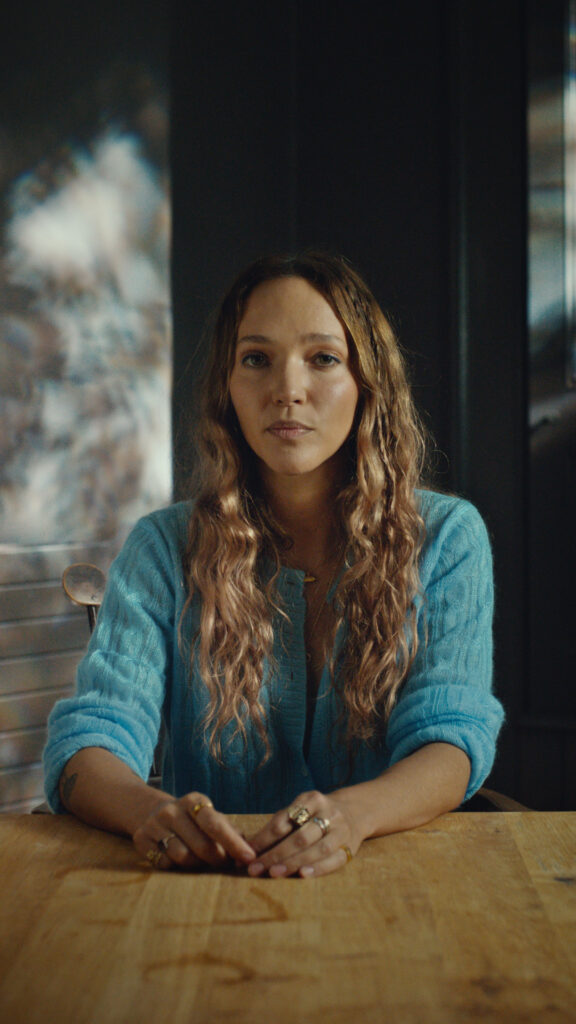
Zoë Buckman. Show Me Your Bruises, Then, 2021–22. Three-channel color video installation, with sound, 17 min. Courtesy the artist

Zoë Buckman is a multidisciplinary artist whose work combines film, poetry, textiles, sculpture, and installation. Her practice often explores themes of domestic violence, trauma, motherhood, feminism, and community. Drawing from personal experience, Buckman creates artworks that examine how individual stories connect to larger social systems. Two such works are on view here are the three-channel video installation Show Me Your Bruises, Then and the embroidered textile Can I Have a Minute to Pee, Please. 

Both artworks are part of a larger body of work centered on an ongoing writing practice that Buckman began in 2018. Together, these works explore how memory, domestic space, and everyday objects can carry personal and collective histories while creating space for conversations about survival, resilience, and care. 

The video installation is Buckman’s first major film work. Filmed around the kitchen table of Buckman’s late mother, the installation features Buckman herself alongside actors Cush Jumbo and Sienna Miller. Each woman sits separately at the end of a table, taking turns reciting a poetic text as their voices move between one another across the three screens. Rather than telling one continuous story, the poem shifts between memories, observations, and conversations, allowing individual experiences to become part of a broader reflection on survival, vulnerability, and healing. 

Domestic objects and traditional textile techniques play an important role throughout Buckman’s practice. She frequently works with vintage household linens, tablecloths, lace, and embroidered fabrics that carry histories of domestic labor and family life. In Can I Have a Minute to Pee, Please, digital embroidery is stitched onto an aged vintage textile, bringing contemporary language into conversation with a material historically associated with care, domesticity, and “women’s work.” It belongs to Buckman’s NOMI series, created during a period of personal reflection and the global lockdowns of 2020. The contrast between the precise embroidered lettering and the worn fabric reflects Buckman’s interest in the tension between systems of control and the lived realities of everyday experience. Rather than restoring these textiles, Buckman transforms them into spaces where personal histories and difficult conversations become visible. 

guide

On View

Zoë Buckman: Show Me Your Bruises, Then

Visual description of Show Me Your Bruises, Then
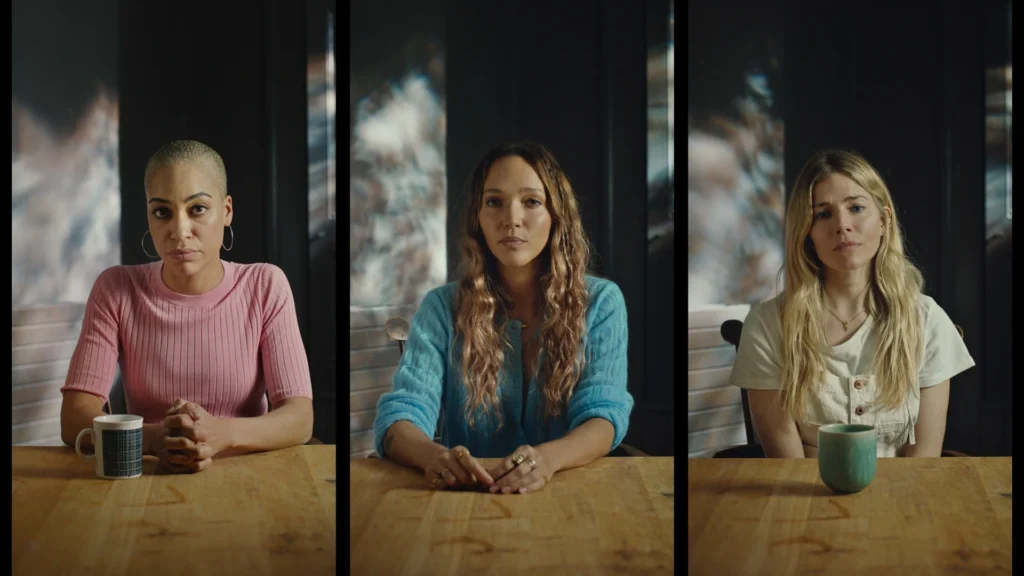
Zoë Buckman. Show Me Your Bruises, Then, 2021–22. Three-channel color video installation, with sound, 17 min. Courtesy the artist

Show Me Your Bruises, Then is a three-channel color video installation with sound created between 2021 and 2022. Written, directed, and performed by artist Zoë Buckman, the work also features actors Cush Jumbo and Sienna Miller. Running approximately 17 minutes, the installation presents three moving images projected side by side. Throughout the work, the three women sit individually at the ends of separate tables while reciting Buckman’s free-flowing poem, Show Me Your Bruises, Then. As the poem unfolds, the installation combines portraiture, close-up details, and everyday objects into a sequence of quiet, carefully paced scenes. 

The video opens with three nearly identical views of a small white ceramic cup resting on a light-colored tabletop. The cup has an irregular, sculpted form with soft folds pressed into its sides. Portions of the vessel are intentionally missing, creating openings within its walls. From above, a brown liquid falls in slow drops toward the opening of the cup. As the liquid collects inside, it flows back-out through the gaps in the ceramic form, streaming down the sides and onto the white tablecloth below. Against a dark background, the pale ceramic and warm brown liquid stand out in sharp contrast. The measured pace of the pouring echoes the steady rhythm of the spoken poem. 

The scene shifts to three women seated individually behind wooden tables. Each woman occupies a separate screen. One wears a pink shirt, another a light blue cardigan, and another a cream-colored top with matching overalls. A ceramic cup sits in front of each person. Behind them, softly blurred windows reveal hints of trees and daylight. Their faces remain calm and still as they take turns reciting the poem. Their voices move between one another, creating a layered conversation across the three screens while their expressions remain restrained and composed. 

The three screens begin to alternate between the women reciting the poem and close-up views of the objects resting before them. Different ceramic mugs, each with their own irregular shape and color, fill the frame as brown liquid is slowly poured inside. Close-up views reveal the stained white tablecloth beneath the cups, where the liquid has spread into soft brown marks. Other close-ups focus on the women’s hands as they quietly remove rings from their fingers and place them on the tabletop. In one sequence, the same hand appears across all three screens, using a white towel to wipe away the spilled liquid. The image then shifts to close-up views of the now-clean white tablecloth. These quiet actions repeat throughout the three screens, weaving between the portraits as the spoken poem continues. 

The video repeatedly returns to the seated women while alternating with these close-up details of ceramic vessels, stained fabric, hands, and the careful act of cleaning. The slow rhythm of these repeated gestures emphasizes observation and repetition rather than dramatic action. Each transition between portrait and object creates visual pauses that mirror the pacing of the poem. 

As the video continues, the seated women reappear individually across the three screens. One rests her chin in her hands while another clasps her fingers together. Their gestures remain small and deliberate. Throughout the work, the spoken poem moves between memories, observations, and personal reflections. The three voices alternate and overlap, allowing different lines to build upon one another while the recurring images of ceramic vessels, rings, stained cloth, wiping hands, and quiet portraits continue to move across the screens. 

The video concludes as the moving images gradually darken. The women’s voices come to a close, and white text appears centered against a black background reading, SHOW ME YOUR BRUISES, THEN. The title remains briefly before fading to black. 

Show Me Your Bruises, Then combines spoken poetry, portraiture, and close observation across three synchronized screens. Rather than illustrating the poem directly, the imagery moves alongside the spoken words, allowing viewers to consider relationships between memory, the body, vulnerability, care, and everyday ritual through repeated acts of looking and listening. 

guide

On View

Zoë Buckman: Show Me Your Bruises, Then

Visual description of Can I Have a Minute to Pee, Please?

Can I Have a Minute to Pee, Please is a textile artwork made with digital embroidery on a vintage piece of fabric. Created in 2020, the textile artwork measures approximately 25 by 26 inches and is displayed inside a white square frame.

The artwork combines traditional embroidered patterns with embroidered text arranged in a circular composition. The soft fabric, decorative needlework, and carefully placed words create a composition that brings together craft, design, and language. 

The background begins with a square piece off-white woven fabric. The surface has a visible weave and subtle wrinkles that reveal the age and texture of the vintage textile. The edges of the fabric are finished with a narrow-stitched border. The cloth floats within a deep white frame, leaving a small shadow around its edges that separates the textile from the backing behind it. 

Moving across the surface, embroidered geometric patterns appear near each corner of the fabric. The largest designs fill the upper left and lower right corners. They are stitched with dark red thread and resemble symmetrical floral or cross-shaped motifs built from diamonds, squares, and repeating lines. Smaller versions of these geometric designs appear in the upper right and lower left corners. Four additional red embroidered motifs are positioned near the center of each edge of the textile. Their simple cross-like forms create a visual balance around the composition. 

Near the center of the cloth, black embroidered letters spiral inward in two concentric loops. Rather than reading in straight horizontal lines, the words follow the curve of the circle, requiring the viewer to turn the artwork or move around it to read the complete sentence. The embroidered text is stitched in evenly spaced uppercase letters that contrast sharply against the pale fabric. The words spiral around an empty center, leaving a large open space within the middle of the composition. 

The circular text reads from the top half of the circle: “SEPTEMBER THIRTEEN, TWENTY EIGHTEEN. HE’S BETWEEN HER, AND THE BATHROOM DOOR. SHE’S NEVER SEEN HIM LIKE THIS BEFORE.  

The circular text reads from the bottom half of the circle: “CAN I HAVE A MINUTE TO PEE, PLEASE?” NOPE. THINKS’ “DON’T SCREAM YOUR DAUGHTER’S SLEEPING NEXT DOOR.” QUICKLY PULLS HER KNICKERS UP OFF THE FLOOR.” 

As the eye moves closer, the embroidered stitches become more noticeable. The red decorative patterns are built from tightly repeated threads that create crisp geometric shapes, while the black lettering appears slightly raised from the fabric’s surface. The vintage cloth shows gentle folds and slight variations in color, emphasizing its material history beneath the newer stitched elements. Together, the traditional red geometric embroidery and the circle of black stitched text bring historic textile traditions and contemporary language onto the same surface, with the empty center creating a quiet space surrounded by words. 

guide

On View

Zoë Buckman: Show Me Your Bruises, Then

Thank You for Visiting

Thank you for exploring Zoë Buckman: Show Me Your Bruises, Then with us. We hope this Digital Exhibition Guide was a meaningful companion to your visit. We appreciate you taking the time to share your thoughts as we strive to make PAMM as engaging as possible. You may submit your feedback anonymously through this form. 

Hotline and shelter information can change. If you find a listing that is out of date or think a service is missing, please let us know through the same form.