

“Nefandus: Colonial Sexual Alterity and Histories for the Future” brings together scholars Anjali Arondekar, Pablo Bedoya, Joseph Massad, Fernanda Molina, Pete Sigal and artist Carlos Motta. They will present their work on colonial sexualities, the production of identity categories and the ways in which these processes of “modernization” informed the experience of sex and gender in post-colonial societies in the Middle East, South Asia and the Americas. Through a transnational approach, this symposium focuses on diverse colonial histories and counter-narratives.
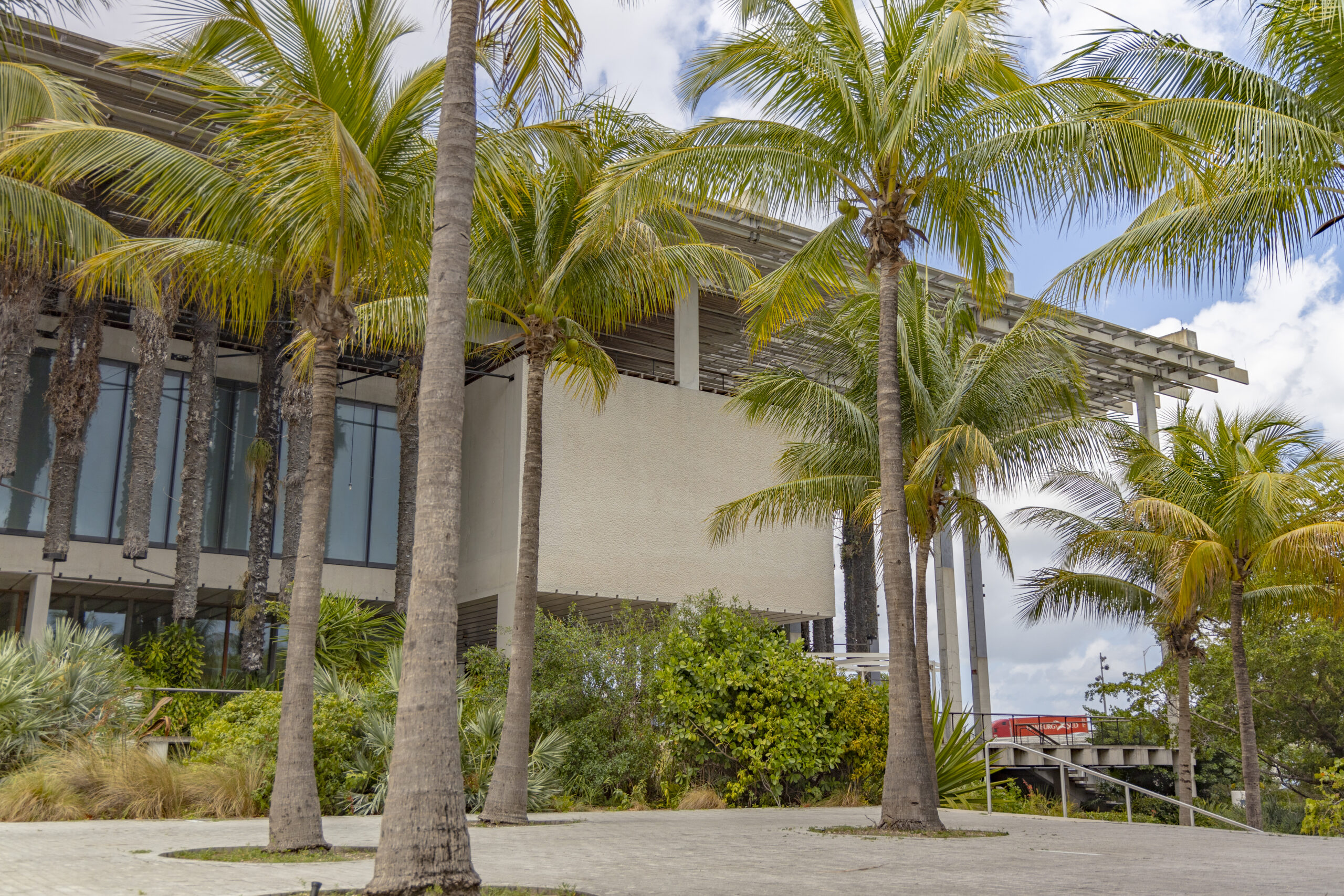
The convening will discuss these themes in relation to the exhibition, Carlos Motta: Histories for the Future, which is on view at PAMM through January 15, 2017. The exhibition was curated by María Elena Ortiz and features four recent short films and a sculptural installation by Motta that address the topic of homoeroticism during the Conquest and throughout the colonial period in the Americas. To further develop the themes represented in the exhibition, Motta and Colombian historian Pablo Bedoya have co-curated the one-day symposium.
Anjali Arondekar is associate professor of feminist studies at the University of California, Santa Cruz. She is the author of “For the Record: On Sexuality and the Colonial Archive in India” (Duke University Press, 2009), winner of the Alan Bray Memorial Book Award for best book in lesbian, gay, or queer studies, Modern Language Association (MLA), 2010. She is co-editor (with Geeta Patel) of “Area Impossible: The Geopolitics of Queer Studies,” GLQ: A Journal of Lesbian and Gay Studies (2016). Her current book project, “Abundance: On Sexuality and Historiography,” grows out of her interest in the figurations of sexuality, ethics and collectivity in colonial British and Portuguese India.
Pablo Bedoya Molina has an MA in history from the Universidad Nacional de Colombia and is a faculty member and researcher in the Department of Social Work, Universidad de Antioquia. He is co-editor of the book “Existir, habitar y resistir: Memoria histórica de las personas LGBTI” (“Exist, Inhabit, and Resist: The Historical Memory of LGBTI Persons”: Universidad Nacional de Colombia/Medellín City Council) and a researcher and co-author of the National Center for Historical Memory’s report “Aniquilar la diferencia: Lesbianas, gays, bisexuales y transgeneristas en el marco del conflicto armado colombiano” (“Annihilate Difference: Lesbians, Gays, Bisexuals, and Transgender Persons within the Framework of the Colombian Armed Conflict”: USAID/OIM, CNMH). He is doing research on the history of HIV/AIDS in Colombia and on the history of the armed conflict in the city of Medellín, and is currently editing the book “Desenfrenada lujuria y monstruosa lascivia: Justicia, prácticas de regulación social y representaciones de la sodomía a finales del periodo colonial” (“Unbridled Lust and Monstrous Lechery: Justice, Practices of Social Regulation, and Representations of Sodomy in the Late-Colonial Period”).
Joseph Massad is Professor of Modern Arab Politics and Intellectual History at Columbia University. He is the author of Colonial Effects: The Making of National Identity in Jordan (Columbia U. Press, 2001), The Persistence of the Palestinian Question (Routledge, 2006), Desiring Arabs (Uni. of Chicago Press, 2007), which received the Lionel Trilling Book Award, and Islam in Liberalism (Uni. of Chicago Press, 2015). His research is widely published in academic journals. His columns appear in Al-Jazeera English website, Electronic Intifada, Al-Ahram Weekly, Counterpunch, the London Guardian, the Lebanese-based Al-Akhbar and the Cairo-based Al-Shuruq.
Fernanda Molina has a PhD in history from the Universidad de Buenos Aires and an MA in the History of the Hispanic World from the Consejo Superior en Investigaciones Científicas de España. She is a member of Argentina’s National Scientific and Technical Research Council (CONICET) and a faculty member of the Department of History in the College of Philosophy and Letters, Universidad de Buenos Aires. She specializes in gender studies and the history of sexuality in the colonial period. She has worked on marriage and gender relations in indigenous societies and on sexual crimes and transgressions from the point of view of the administration of justice. Her current research centers on social representations, medical discourses, judicial practice, and the construction of identities vis-à-vis the phenomena of sodomy, transvestism, and hermaphroditism in the colonial and Spanish-Peninsular societies of the 16th and 17th centuries. She is the author of the book Cuando amar era pecado: Sexualidad, poder e identidad entre los sodomitas peruanos (Siglos XVI-XVII) [“When Loving Was a Sin: Sexuality, Power, and Identity among the Peruvian Sodomites, 16th-17th Centuries”] (in press) and numerous articles in prestigious journals.
Carlos Motta graduated from the Whitney Independent Study Program in 2006, and was named a Guggenheim Foundation Fellow in 2008. He has received several prestigious grants from entities such as Art Matters (2008), New York State Council on the Art (2010), and the Kindle Project (2012). His work has been included in solo and group exhibitions at Tate Modern, London; Guggenheim Museum, New York; MoMA/PS1 Contemporary Art Center, New York; Barcelona Museum of Contemporary Art; National Museum of Contemporary Art, Athens; Sala de Arte Público Siqueiros, Mexico City; and other venues. He was the recipient of the Pinchuk Art Centre, Future Generation Art Prize in 2014, and his single-channel video Nefandus (2013) won the Hoteles Catalonia Award for best video at the LOOP/Screen in Barcelona in 2013.
Pete Sigal is professor of the history of sexuality and Latin American history at Duke University. He recently published a study on the interaction of writing and sexual representation in sixteenth and seventeenth-century indigenous Nahua societies of Mexico (The Flower and the Scorpion: Sexuality and Ritual in Early Nahua Culture [Duke University Press, 2011]), which won the Erminie Wheeler Voegelin Award from the American Society of Ethnohistory, for the best book published in 2011. He is currently completing a study of “ethnopornography,” the relationship between the colonial and ethnographic gaze and sexuality throughout the world. Sigal has moved from studying sexual desires in indigenous communities to examining the early modern cultural processes that create global concepts of modern sexuality, gender, masculinity, and femininity. Sigal is a senior editor of the Hispanic American Historical Review. He is author of From Moon Goddesses to Virgins: The Colonization of Yucatecan Maya Sexual Desire (University of Texas Press, 2000), and editor of Infamous Desire: Male Homosexuality in Colonial Latin America (University of Chicago Press, 2003).

