Introduction
Important guidelines
For the protection of the artwork and the best guest experience for everyone:
- Please wear shoe covers before entering.
- Only twelve visitors at a time may be inside this installation.
- We recommend spending at least two minutes in each color chamber to experience the transformation of color saturation.
- Do not touch the suspended white cubes or the light fixtures and speak softly while inside this gallery space.
Thank you and enjoy!
Chromosaturation
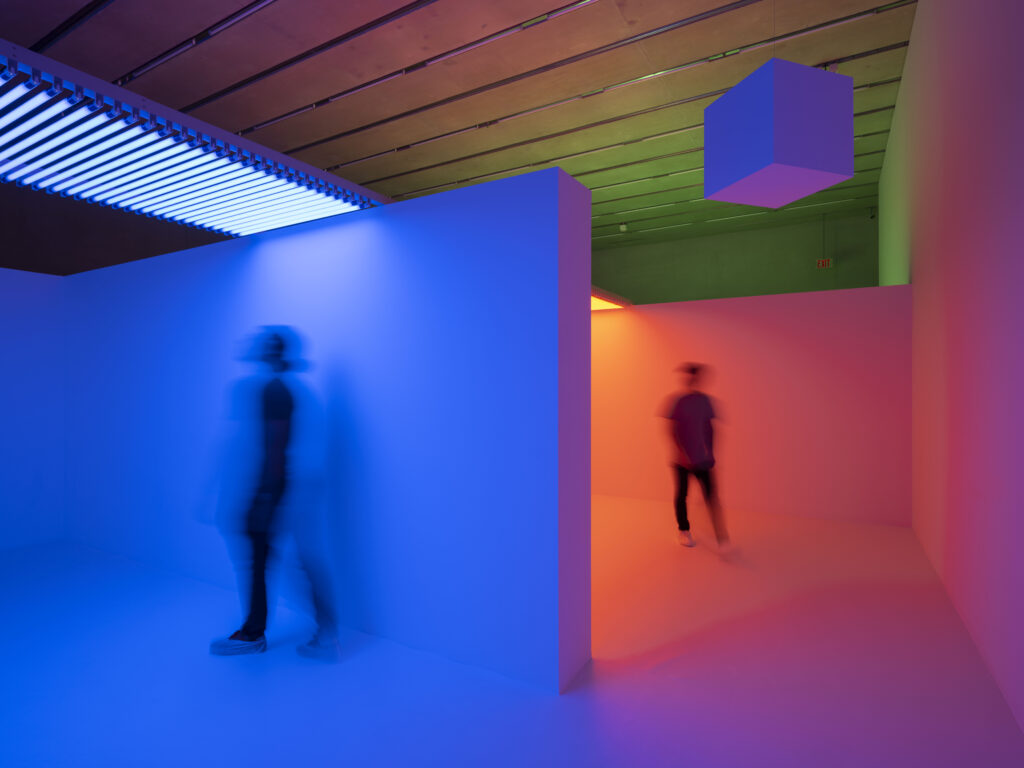
We invite visitors to enter Chromosaturation and linger in each of the spaces, free from distractions. While inside, notice the changes in your vision and perception of color. Take note of how your skin tone and clothing transform, as well as how the other colors spilling around each doorway shift and change. Don’t worry—we know you’re going to take a selfie; we just ask that you fully experience the artwork first.
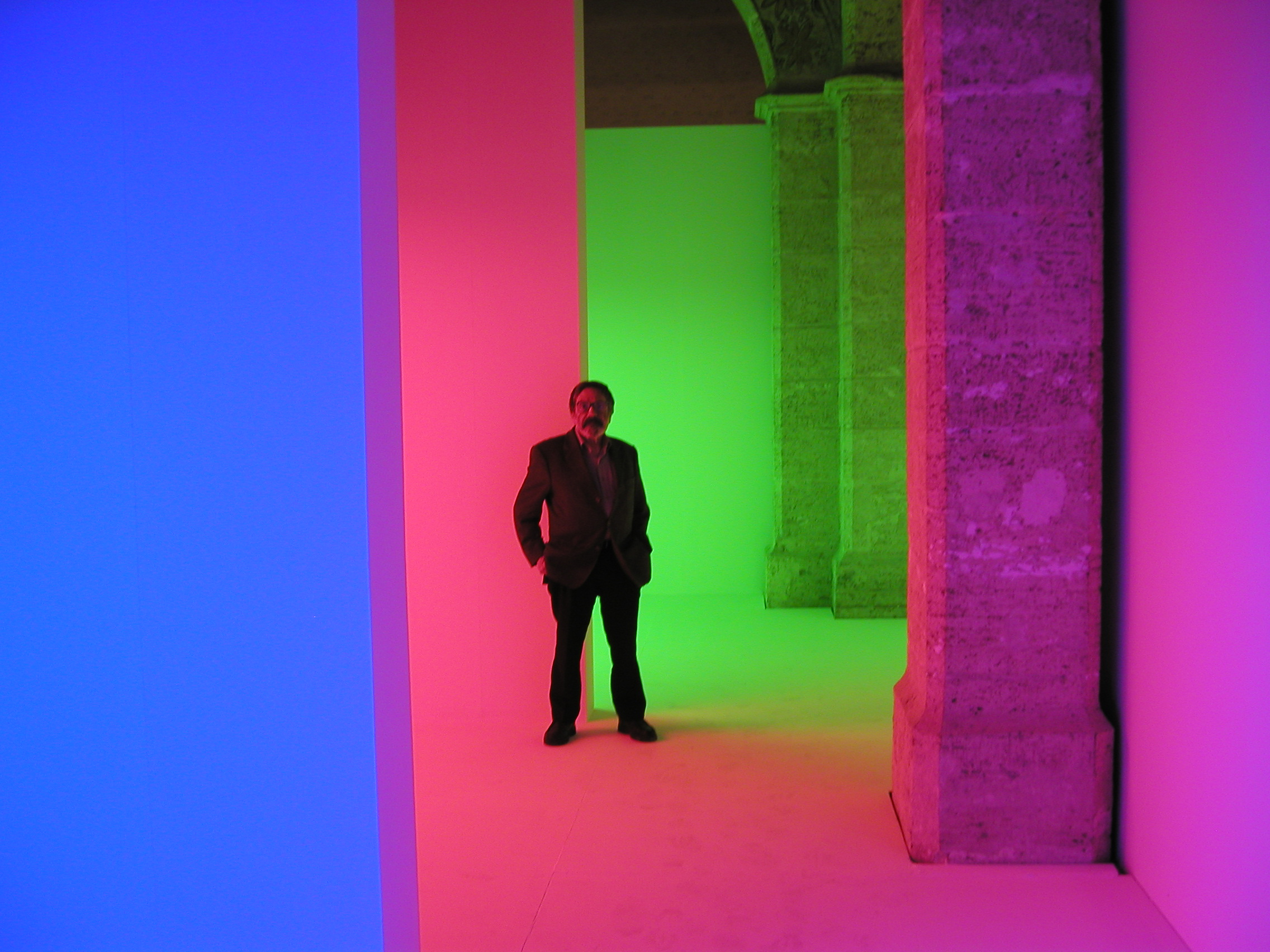
Carlos Cruz-Diez first conceived Chromosaturation in 1965 as part of a larger installation called Deconditioning Labyrinth. This labyrinth would have consisted of different rooms where “elemental stimuli,” such as heat, cold, sound—or in the case of Chromosaturation, light and color—would “reactivate or even awaken perceptions” of visitors. At the time, Cruz-Diez was part of a movement of Venezuelan artists, including Jesús Rafael Soto, who were exploring art that moved beyond static viewing experiences to create participatory situations that engage the viewer’s body, senses, and subjectivity. Visitors to PAMM can experience another example of this immersive approach in Soto’s kinetic artwork Penetrable BBL Bleu at the museum’s West Portico, where suspended silicone tubes create a similar transformation of space and perception through movement and interaction.
While Deconditioning Labyrinth was never fully realized, different configurations of Chromosaturation have been exhibited all over the world since. This version at PAMM features rooms entirely bathed in light-based colors, known as additive colors—red, blue, and green. Unlike the traditional primary colors we learn in school, these additive primaries create white when combined. This additive system is often used for lights and screens, mimicking how the receptors in our eyes perceive color.
The different color chambers in this experience overwhelm the retina, which is normally accustomed to perceiving a wide range of colors simultaneously. This unique phenomenon is what makes Carlos Cruz-Diez’s Chromosaturation so special—it engages our bodies and senses, transforming us from passive observers into active participants in the artwork itself.
Visual Description Chromosaturation
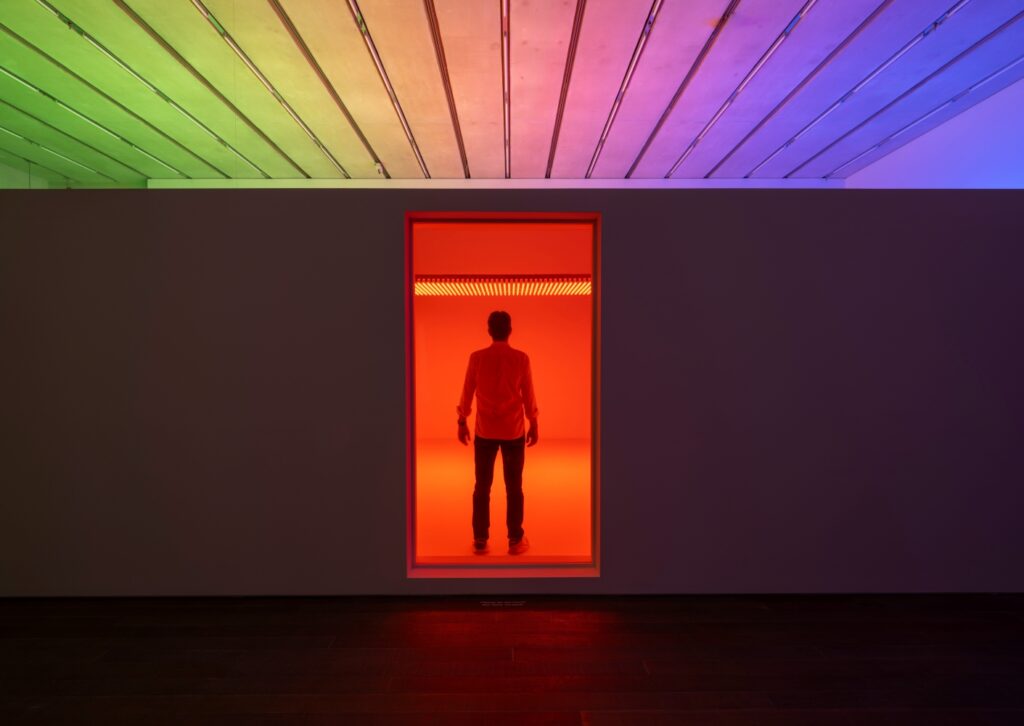
Chromosaturation by Venezuelan artist Carlos Cruz-Diez, is an immersive type of exhibition called an installation. These types of artworks are usually purposely installed inside a gallery and are usually larger in size and volume than a painting or sculpture. Installations often activate and transform the entire space they occupy and are frequently created specifically for their particular location.
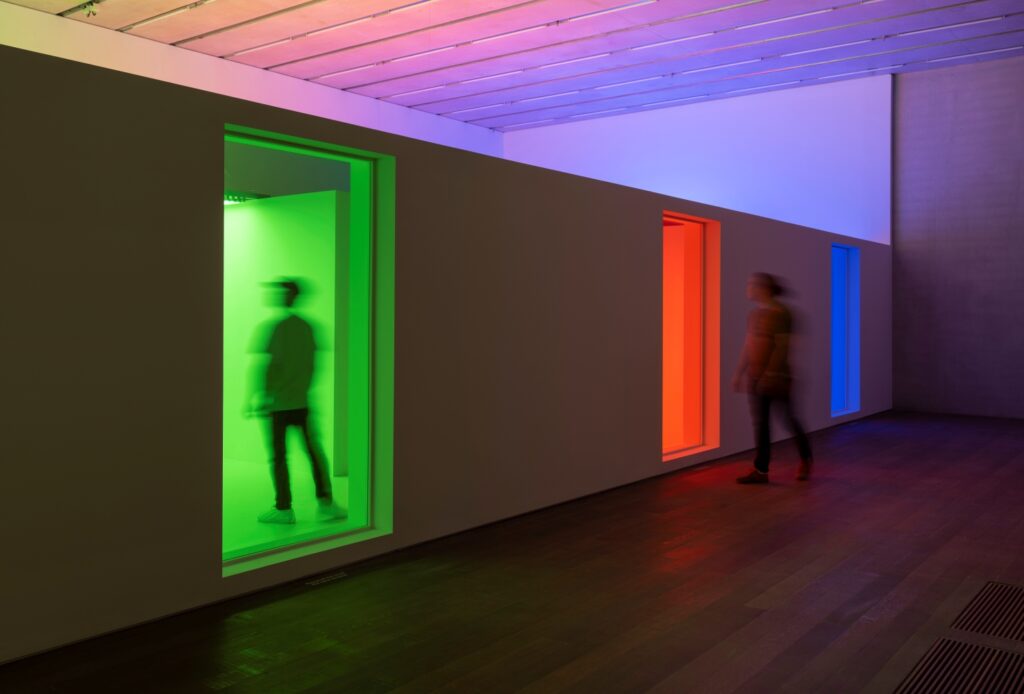
This installation of Chromosaturation is in the Diane and Robert Moss Gallery. The installation consists of three colored chambers – one green, one red, and one blue. Light from these chambers streams through windows into the main gallery space, bathing PAMM’s typically grey concrete walls in bright colors. As visitors move deeper into the gallery, on the right-hand side, they will find the entrance that leads into these three colored rooms, which form the main components of the Chromosaturation experience.
Each room is fully saturated in bright colorful light. The first room is green, the second red, and the final room is blue. Each room has two six-foot openings positioned at opposite corners as visitors progress from the green room through the red and into the blue. In the areas where two hues meet, secondary colors and gradients are visible as the two primary hues reflect their mixtures of light and intensity. White cubes are suspended above visitors’ heads at the threshold of the different chambers, bathing them in this reflected color. The suspended cubes heighten this experience; their surfaces bathed in reflected color that showcases the vibrancy of an environment entirely free of form and meaning.
Feedback
We hope you enjoyed this Digital Exhibition Guide!
We appreciate you taking the time to submit feedback to us as we strive to make PAMM as engaging as possible. You may submit your feedback anonymously through this form or by emailing us directly at AppFeedback@pamm.org