Introduction
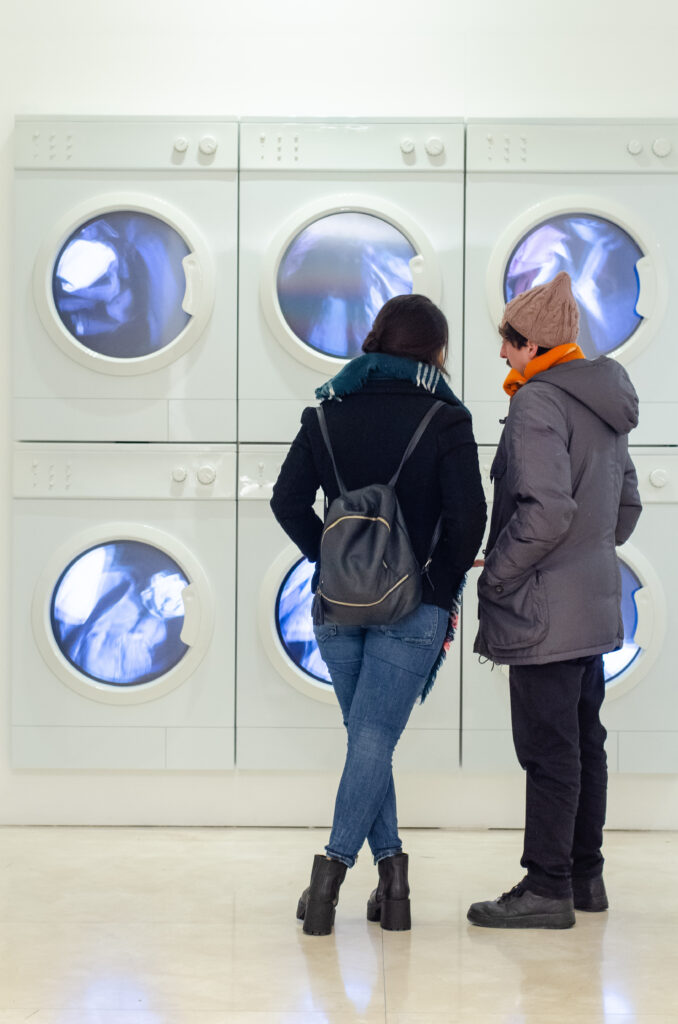
Leandro Erlich: Liminal curated by Dan Cameron and organized at PAMM by Franklin Sirmans and Maritza Lacayo highlights works made by the artist throughout his career from 1997 to the present. The word liminal means to occupy a space that is either existing in-between two places of being or existing in both simultaneously. In this PAMM App tour created by PAMM’s education department we will explore how the work on view by Leandro Erlich can exist in this titular liminal space.
Being In
While it is encouraged that you step inside these pieces and interact with fellow guests, we ask that you refrain from touching the glass in both pieces.
The first of the three spaces we will cover in this guided audio tour is Being Inside. In several of the pieces in this exhibition, Erlich creates the opportunity for the viewer to physically enter a space that is both common and mundane to the average spectator. Two of those pieces are Elevator Maze (2011), and Classroom (2017). In both pieces, Erlich takes a physical location from our everyday (a classroom and an elevator) and transforms them into something that challenges our perception of that space. In both pieces we are being asked to step inside of the work of art itself and to let our experience of being in it become a part of the art. In Elevator Maze this is done by stepping inside of an elevator that houses windows and mirrors that alter our sense of space. In Classroom this is done by placing our ghost-like reflections inside of a classroom we cannot actually enter. By being inside of the art we are becoming a part of it and by virtue of the art representing our everyday, it asks us to interact with those spaces in a new way the next time we encounter them. This theme of altering mundane objects or locations is present in all the work in this exhibition. However, what changes is how we are asked to interact with that work.

Classroom (2017)
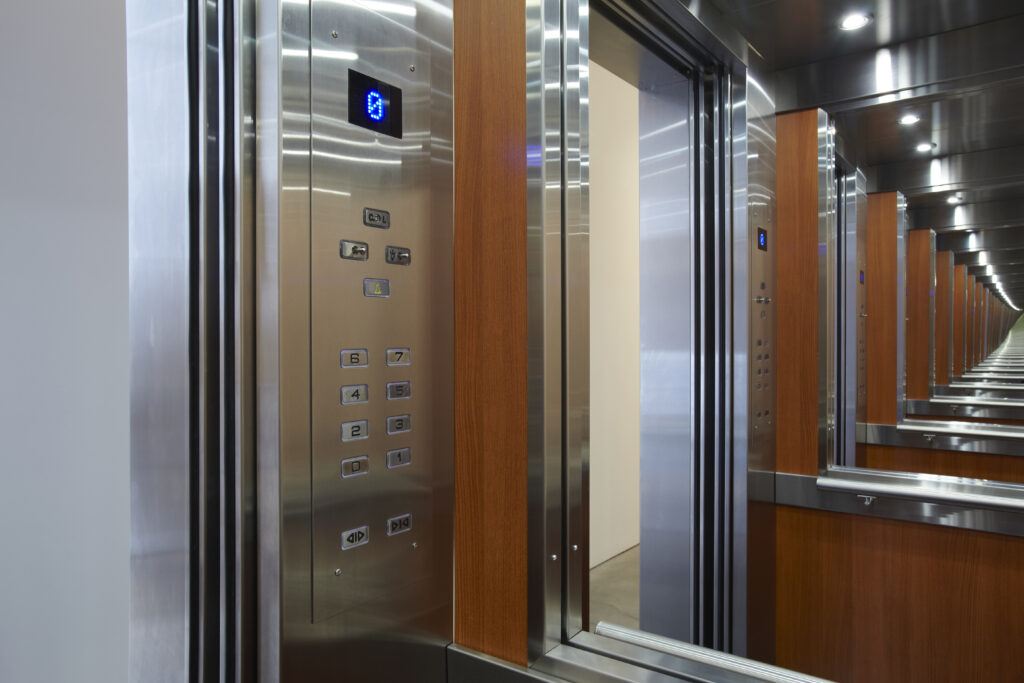
Leandro Erlich’s Classroom is an installation containing two rooms of identical dimensions made with wood, windows, desk chairs, door, glass lights, blackboards, classroom decorations and black boxes. The installation’s overall dimensions are approximately eleven feet high by twenty-one feet wide and forty-one feet deep.
Erlich’s Classroom is an installation where viewers are invited to both be participants and spectators. Like its namesake, it depicts a classroom built to realistic scale with life-sized desks, chalkboards, and other features. However, this classroom space exists on the other side of a glass window and is physically inaccessible to the viewer.
When first encountering the installation, one is confronted with a simple, empty room completely covered in matte black–from black painted walls and ceilings down to the black carpeted floor. The room only contains six minimal matte black desks with accompanying black benches, which all face in the same direction.
Perpendicular to the desks, a wall window appears to function as a two-way mirror to the other half of the installation. In this other half, there appears to be a life-like classroom containing six school desks with accompanying chairs that face the same direction as the benches in the opposite room one first encounters. The classroom has a muted atmosphere with subdued colors, seeming to exist in another era. The wall behind the desks is lined with three vertical windows with wooden frames. The square window panes appear to be frosted over with dirt and grime. Some of the windows are cracked open, as if they are unable to close from wear and tear over their lifetime.
Two chalkboards sit on the walls directly across and perpendicular to the windows. The boards show traces of writing with smeared chalk lines that are barely distinguishable between dusty eraser marks. The bottom half of the walls in the room are covered in a dark wood paneling while their upper halves are white, antiqued with age, covered in stains and smudges. The wooden floor is covered with layer of white dust. It is littered with pieces of wood and chunks of drywall that have fallen down from the dilapidated paneling from the ceiling above. Books lay on some of the desks and are scattered across the floor. Some lay half open, as if abandoned in a hurry.
As the viewer engages with the other side of the installation, sitting on the benches in the minimal black room, a mirage appears before them. The participant’s figures are reflected in the wall glass, appearing on the other side sitting at the classroom desks. The opposing classroom is lit with fluorescent lights, giving the reflections a ghostly, barely-there appearance while transporting the viewer to the intangible space on the other side.
Elevator Maze (2011)
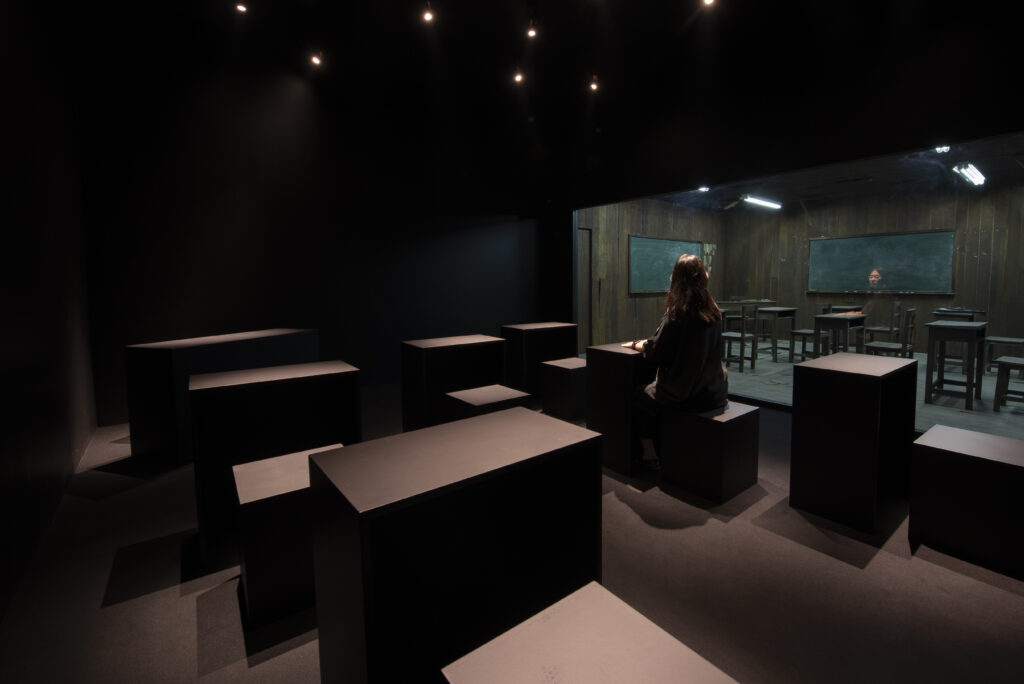
Elevator Maze is a sculptural installation by Leandro Erlich containing a metal structure, stainless steel, MDF (which is an abbreviation for Medium Density Fiberboard), melamine coated MDF (or in other words MDF with a water-resistant coating), mirrors, marble, elevator accessories, and lights. It stands at approximately nine feet long by twenty and a half feet wide, and nine and a half feet tall.
In Elevator Maze, the viewer is presented with a hallway of elevators that appear to be a single car. This freestanding sculpture consists of a white box or what appears to be a white wall with three metal elevator doors side by side replicated to life scale. These three elevator doors are open wide to the viewer, revealing their interiors.
Inside, the three elevators have the same exact features. They all have black marble flooring with stainless steel baseboards. The inner walls are divided into two halves by stainless steel rails. The lower halves of these inner walls are covered in a reddish brown, cherry wood vinyl paneling while their upper halves are covered in mirrors. All with the exception of the wall containing the door, which is covered in stainless steel. This stainless-steel wall has an elevator panel to the right of the door with silver buttons numbering seven imaginary floors illuminated underneath with a blue light. There are also replicas of buttons for opening and closing the elevator doors, as well as one to sound an alarm were these elevators to get stuck. Above the buttons, there’s a small black LED panel displaying the number 0 in blue light. The elevator ceilings are also covered in stainless steel and are dotted with six recessed lights.
When standing inside the elevator car, the mirrors covering the elevator walls appear to repeat infinitely in all directions. However, unbeknownst to the viewer, there is a clear window between each elevator car that is hardly detectable at first glance. When another visitor enters the passageway of the adjacent elevator, the viewer suddenly sees the image of their neighbor instead of their own reflection. This forces the viewer to question which walls are covered by windows and which are mirrors, playing with the tension between what we see and what we’re used to seeing.
Being Out
The second space we will explore is Being Outside. While the artworks we highlighted in the previous stop allowed the viewer to physically enter the work of art, the two pieces we are highlighting in this stop instead ask us to remain outside and look in toward the space the art work creates. In Neighbors (1997), and Sidewalk (2007), Erlich again places the viewer in familiar locations that are out of place by being inside a museum. As we peer into the peephole of Neighbors and gaze into the reflections of Sidewalk, we are doing something we have done countless other times in our everyday lives, however the strangeness of deliberately doing it with others in the setting of the museum makes the experience feel new and unexplored. In Neighbors we approach a structure resembling the door of an apartment where our only access point is the peephole on the door. We are asked to physically interact with the object and look inside to find a mundane hallway. In Sidewalk we are met with what looks like the gutter of a sidewalk with puddles of water. Inside these puddles we see the reflection of buildings. We can hear the sounds of the urban landscape but our only access point, like the peephole of Neighbors, is the peephole created by the puddles of water. Where in the previous works of art we explored how we interact with the spaces we inhabit, the pieces of Liminal that force us to look into them, ask us to reconsider how we view the world and the spaces within it that we come in contact with.
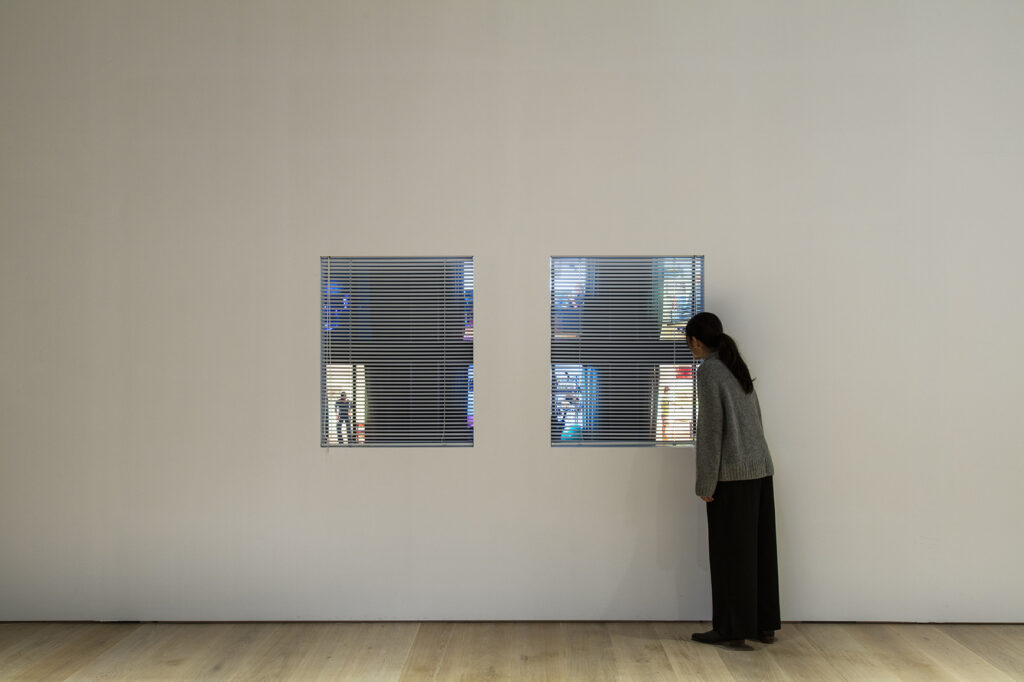
Neighbors (1997)
Neighbors is a sculpture made with MDF, wooden doors with peephole and lock, telephones, and models with lights. It stands at approximately seven feet tall by five feet wide and two feet deep.
This artwork consists of a free-standing structure with two life-sized doors. The structure is white and rectangular, with faces that are wider than its sides. The shorter sides of the structure appear accordion-like with corrugated surfaces that seem to fold like a fan. There are two faces on opposite sides of the structure with a smooth surface, mimicking the appearance of walls. These walls each contain a chestnut-colored door. On the wall to the left side of the door, there is a white corded phone. The doors themselves have a minimal, brass handle, deadbolt and swing lock, as well as a peephole which the viewer is invited to look through.
Through the peephole, we see a narrow, empty apartment hallway with white walls and gray carpeted floor lit by warm recessed lights in the ceiling. On the wall to the right, there is a red fire extinguisher hanging. At the end of the hallway, there are three chestnut-colored doors. Two of the doors are at the end to the left, and the last door stands directly across the one we are looking through. There appears to be a black welcome mat in front of the door at the end. All of the doors are closed.
For a moment, it is easy to forget that the sculpture containing this scene itself is quite short at just two feet deep. However, the hallway seen through the peephole appears to be at life scale. It seems to extend impossibly longer than its containing structure as if by some kind of magic.
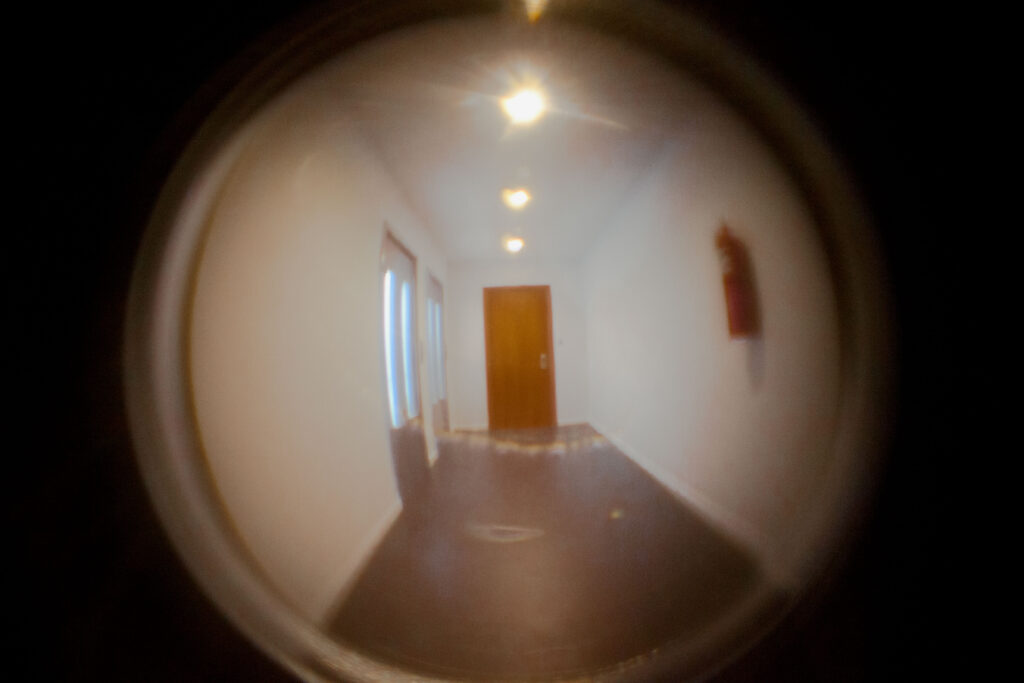
Sidewalk (2007)
Sidewalk is a sculpture made with a metal structure, plywood, fiberglass enforced resin, MDF (or in other words Medium Density Fiberboard), accessories, mirrors, water and water system, speakers, projectors, video players, and video animation. The installation measures approximately nine feet tall by thirty-one feet wide and ten feet deep.
When first encountering the piece, the viewer is met with a gray brick sidewalk–like the work’s namesake. The sidewalk is about six feet wide with tiles that have a repeating square pattern. It leads up to a white gallery wall that has a two-foot opening near the floor along the entire length where they meet. In this opening, there appears to be what looks like the gutter of a sidewalk and irregular puddles of water formed on gray asphalt. As the viewer approaches the puddles, they can see there are images of a cityscape reflected in the water. The reflections of the buildings on this city block appear upside-down in the water. They seem accurate to how they appear to be reflected in an everyday encounter with a sidewalk puddle, as if they too were sharing the same sidewalk as the viewer. The architecture appears to be apartment buildings of various colors, such as gray, beige, yellow, and brick red, all of which are lined with dozens of windows. We can also hear the sounds of an urban landscape, a bustling city. However, this city scape is just a mere video projection onto the water, a mirage.
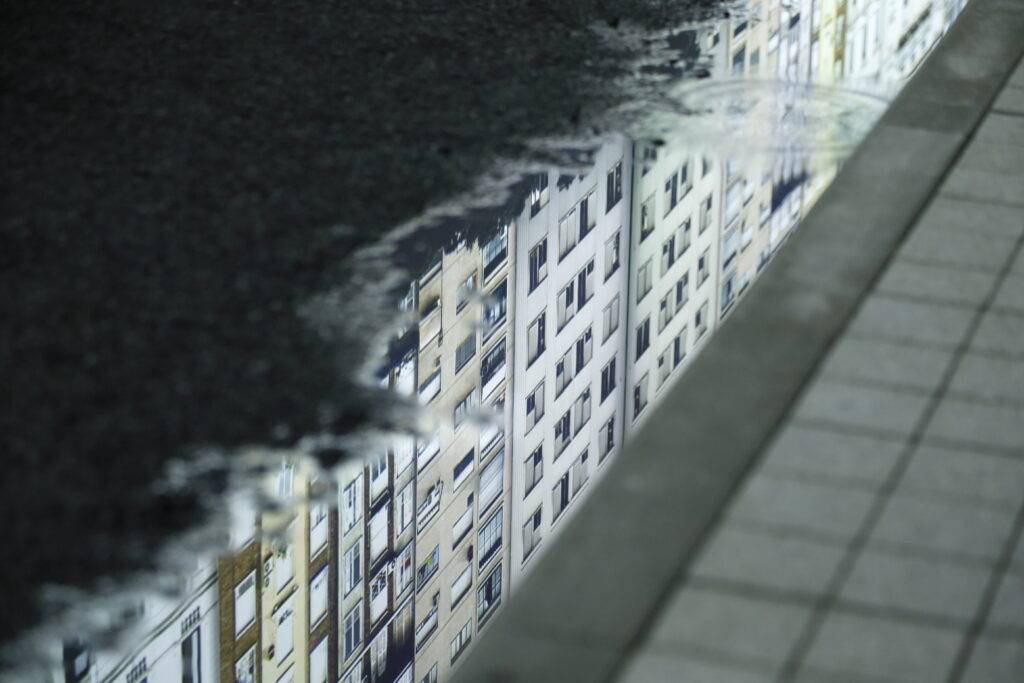
Swimming Pool (1999)
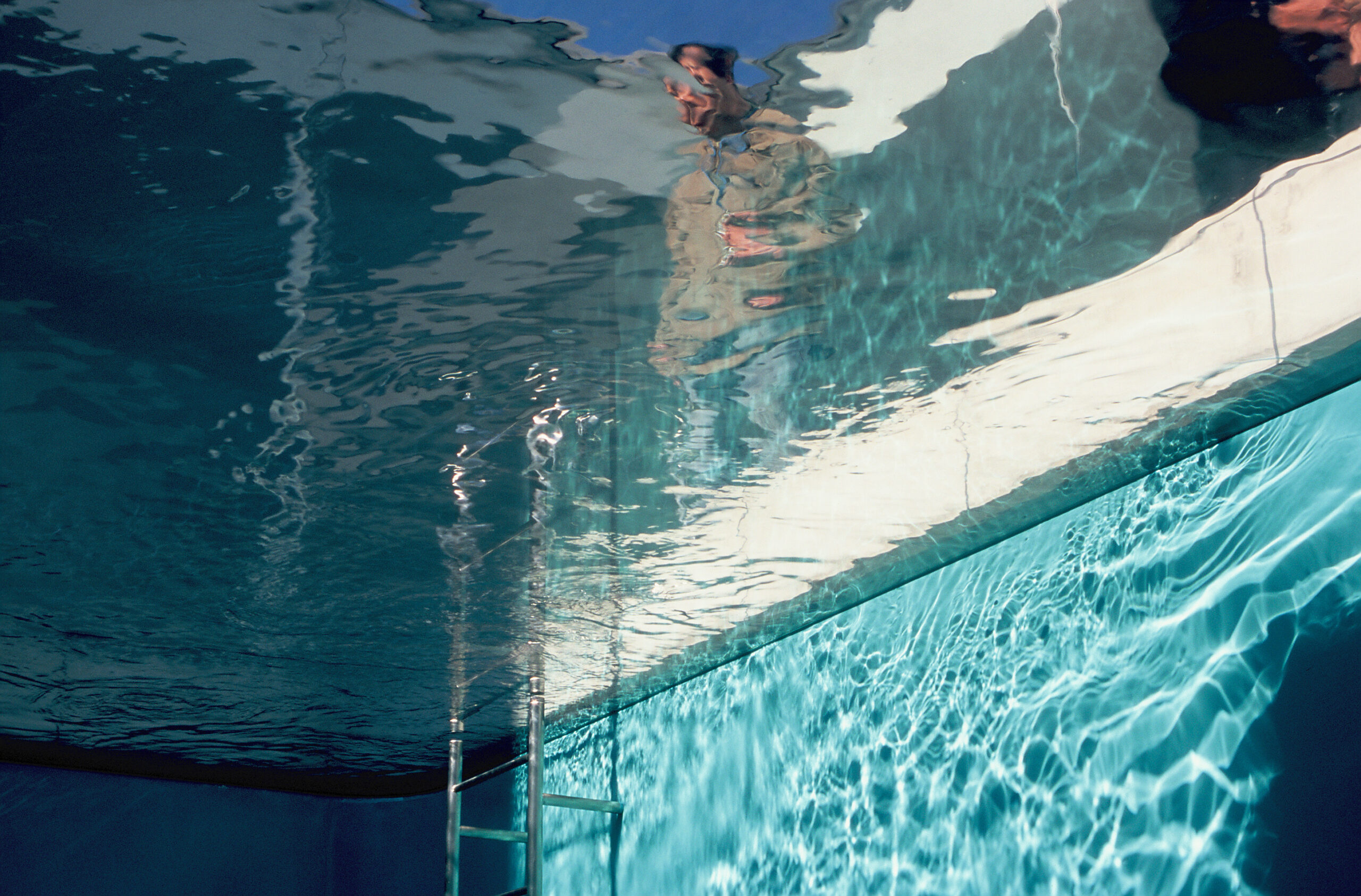
Swimming Pool is an installation by Leandro Erlich containing a metal structure, acrylic, water with water system, fiberglass, lights, swimming pool accessories, as well as a metal ladder. It measures approximately twelve feet long by nine and half feet wide and eighteen feet deep.
At first glance, Erlich’s Swimming Pool looks exactly how it sounds. The viewer first encounters what seems to be a life-sized in ground swimming pool complete with water features, a deck, metal ladder and structure that are all built to full scale. However, upon closer inspection, as the viewer encroaches the installation and looks over the edge and down into its watery depths, they encounter others looking back at them from below.
The viewers above and below are separated by about four inches of water over a transparent acrylic viewing pane that spans across the entire length of the pool. Below this transparent surface is a false bottom; a room which viewers can enter through a short, narrow door. The room mimics the bottom of an in-ground swimming pool with aquamarine-colored floors and walls. It has a gentle curve where the walls meet the floor instead of sharp ninety-degree angles.
On the longest walls, there are two round lights approximately a foot in diameter about a foot above the floor. Two metal vents that resemble pool filters are on the same wall, but just inches below the watery ceiling. On the floor, closest to the side of room with the entrance door, there is a small, round metal grate similar in size to the pool lights that resembles another pool filter. On the opposite side, metal ladder rungs stud the wall starting at adult shoulder height and appear to seamlessly pass through the acrylic ceiling to the other side of the watery surface above.
As the light filters through the transparent acrylic pane to this room below, it imbues the viewers inside and the water above with a greenish tone as it reflects off the aquamarine-colored walls and floor.
Feedback
We hope you enjoyed this Digital Exhibition Guide!
We appreciate you taking the time to submit feedback to us as we strive to make PAMM as engaging as possible. You may submit your feedback anonymously through this form or by emailing us directly at AppFeedback@pamm.org
Related Content



Scholl Lecture Series, presented by Goldman Sachs: Leandro Erlich in Conversation with Dan Cameron
Leandro Erlich: Liminal

