Introduction
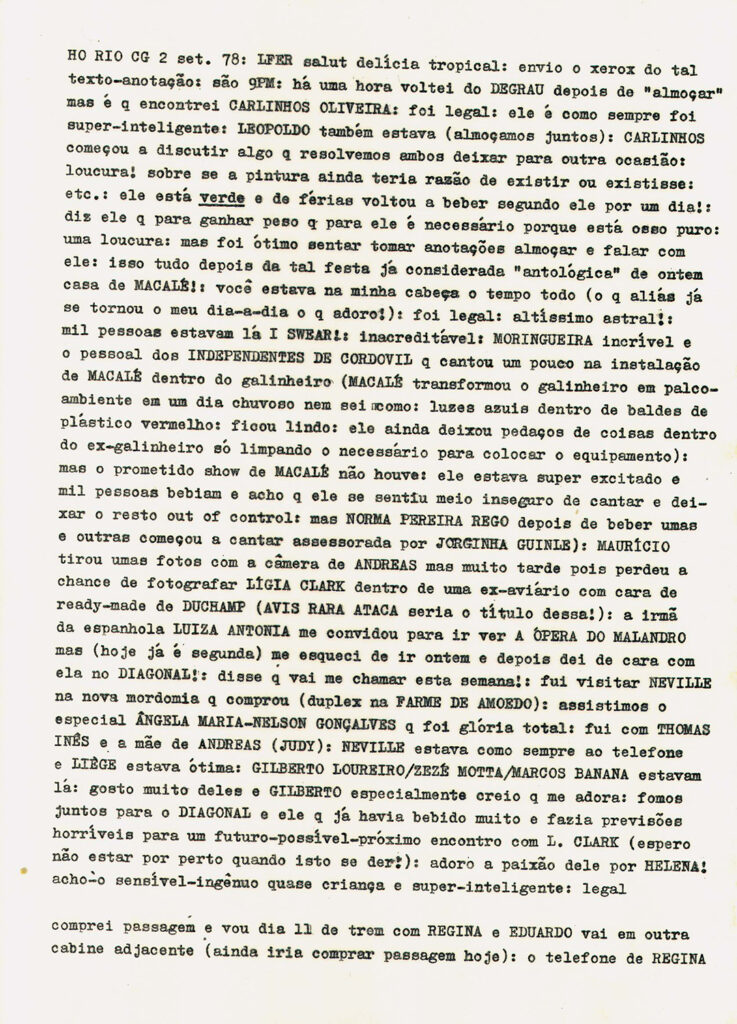
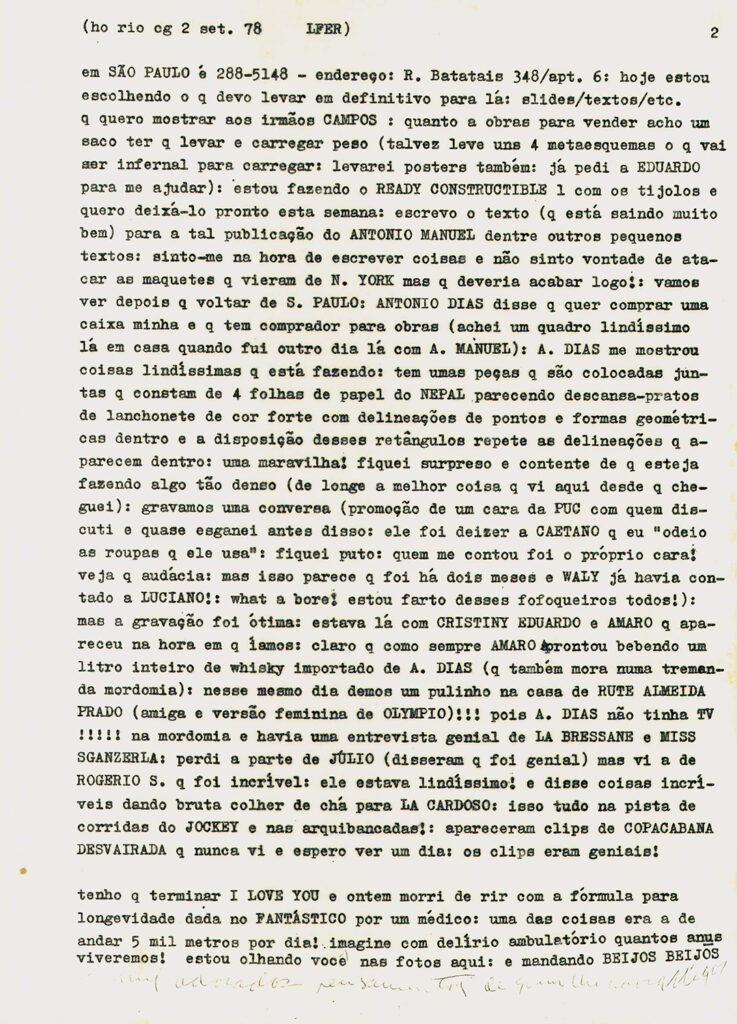
In 1978, Brazilian artist Helio Oiticica attended a party at the house of his friend and musician, Jards Macale. Oiticica would write about the party in his notes:
MACALÉ transformed the chicken coop into a stage-
setting on a rainy day I don’t know how: blue lights inside red plastic
buckets: it came out beautiful
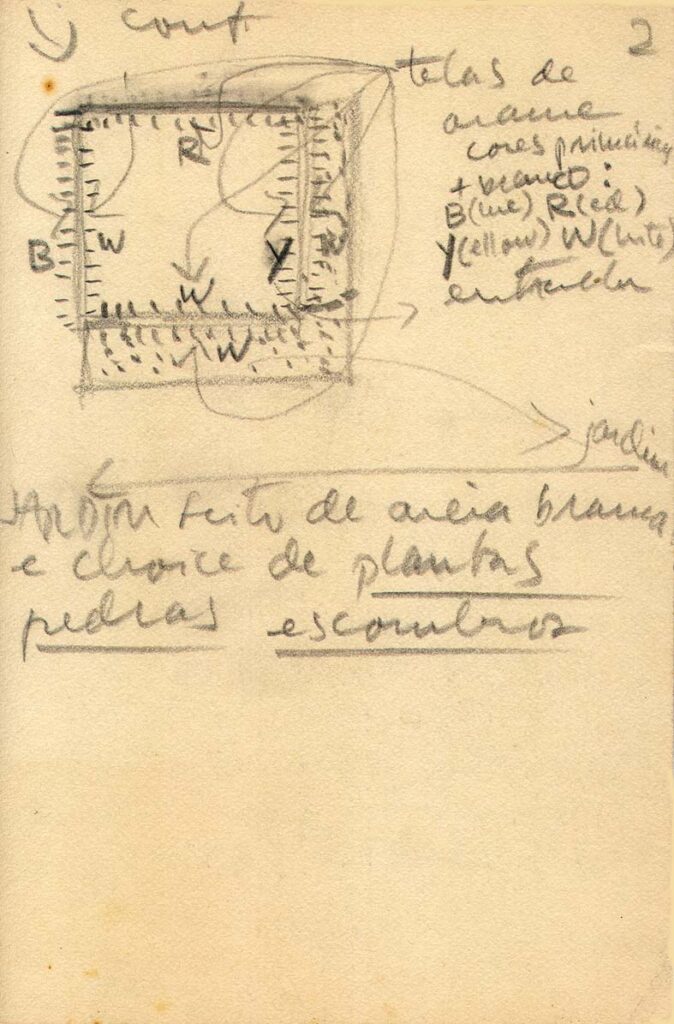
This experience would lead to the artist creating sketches of a piece inspired by the event. In the sketches, Oiticica details the materials he intended to use as well as their color and their general shape and construction. However, before he could physically create the piece, less than two years later, the artist passed away.
Thirty-two years later, using the sketches and notes the artist left behind, the piece, entitled Penetrável Macaléia (Malaceia Penetrable) was constructed in 2010. While it is not uncommon for artists to generate ideas and hire assistants to help fabricate the physical piece, what makes the construction of this piece interesting is that the artist was not alive to witness the creation of it.
The implication that this piece’s construction leads to is that the art’s authorship does not begin and end with its physical creation but rather its conception as an idea. This follows the tradition set by conceptual artists like Marcel Duchamp, Lawrence Weiner, and Joseph Kosuth who believed that the art was the idea itself. While Oiticica more than likely intended to make the piece himself, the fact that he was unable to, and that it was made after his passing, gives the work an added layer of complexity on top of the already existing ideas and themes the artist was exploring.
Penetrável Macaléia (Malaceia Penetrable)
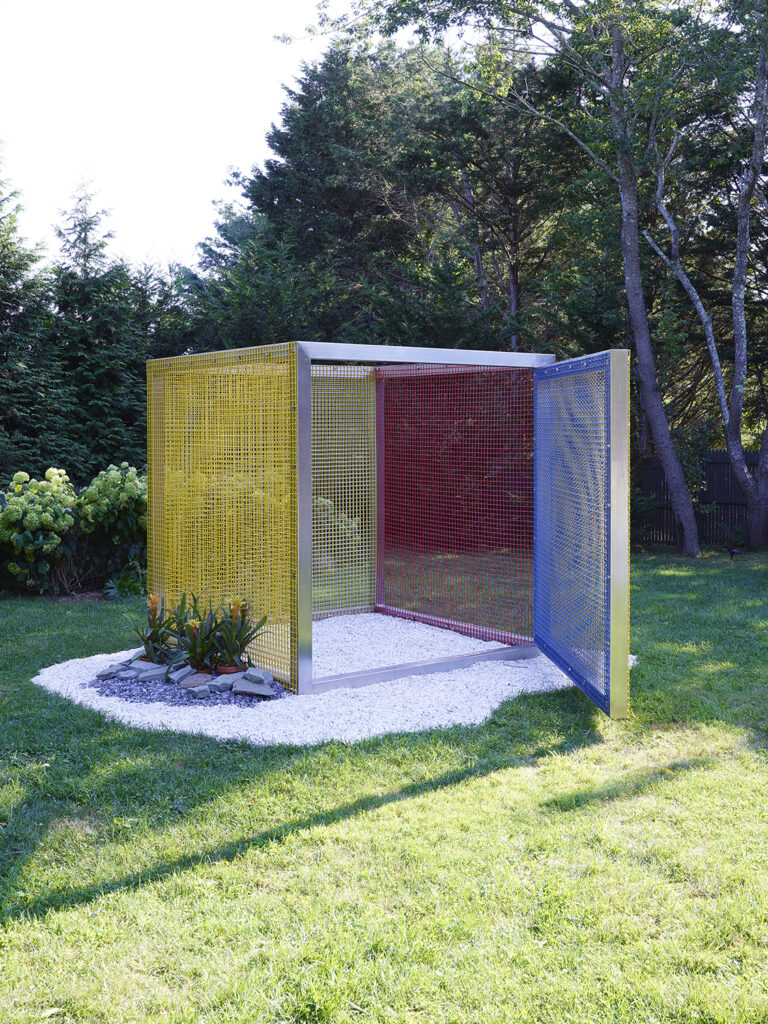
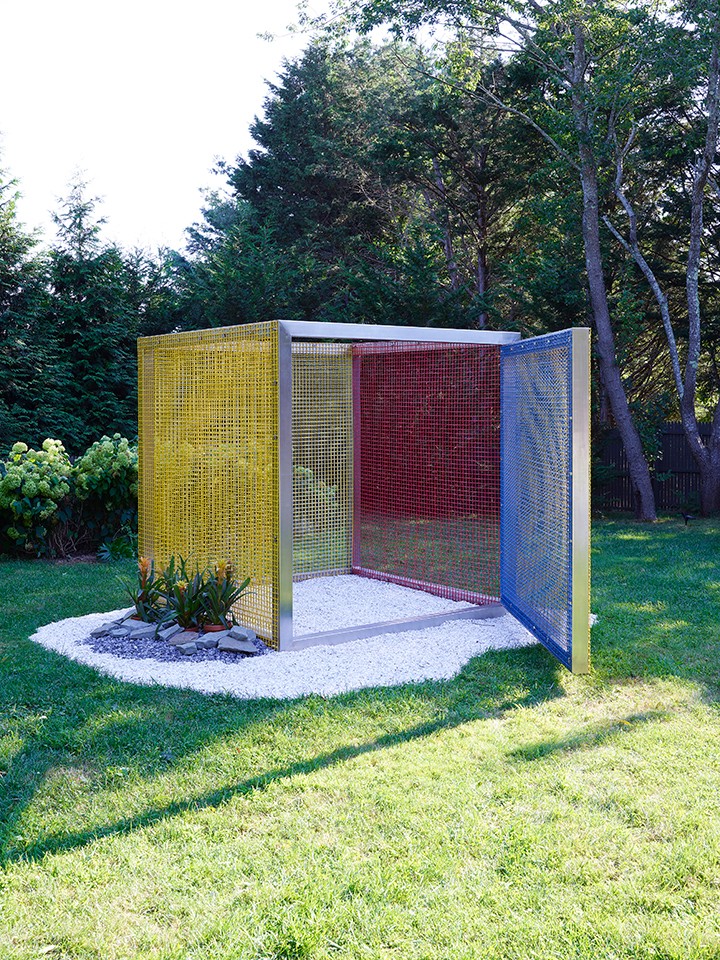
Penetrável Macaléia (Malaceia Penetrable) by Helio Oiticica is a sculpture conceived in 1978 and made in 2010. It is made of stainless steel, colored metal screens, sand, gravel, bricks, and plants. It is a cube that measures roughly seven feet on all sides.
The cube is made of twelve stainless steel beams that are joined together to create a cube. The beams are polished and reflective. Five of the faces of the cube are covered with mesh screens made of metal. Each face contains two mesh screens, one on either side of the support beams. The mesh screens are painted in primary colors: Red, Yellow, and Blue. The sixth and bottom face of the cube has no mesh and instead is left hollow. One of the planes is fixed on hinges, creating a door that can be opened and closed, and thus allows for viewers to enter the sculpture.
The cube rests on a bed of white sand. On one side of the cube, an arrangement made of grey gravel, bricks, and green plants with different colored flowers inside of pots rests on the foundation of white sand.
Feedback
We hope you enjoyed this Digital Exhibition Guide!
We appreciate you taking the time to submit feedback to us as we strive to make PAMM as engaging as possible. You may submit your feedback anonymously through this form or by emailing us directly at AppFeedback@pamm.org