

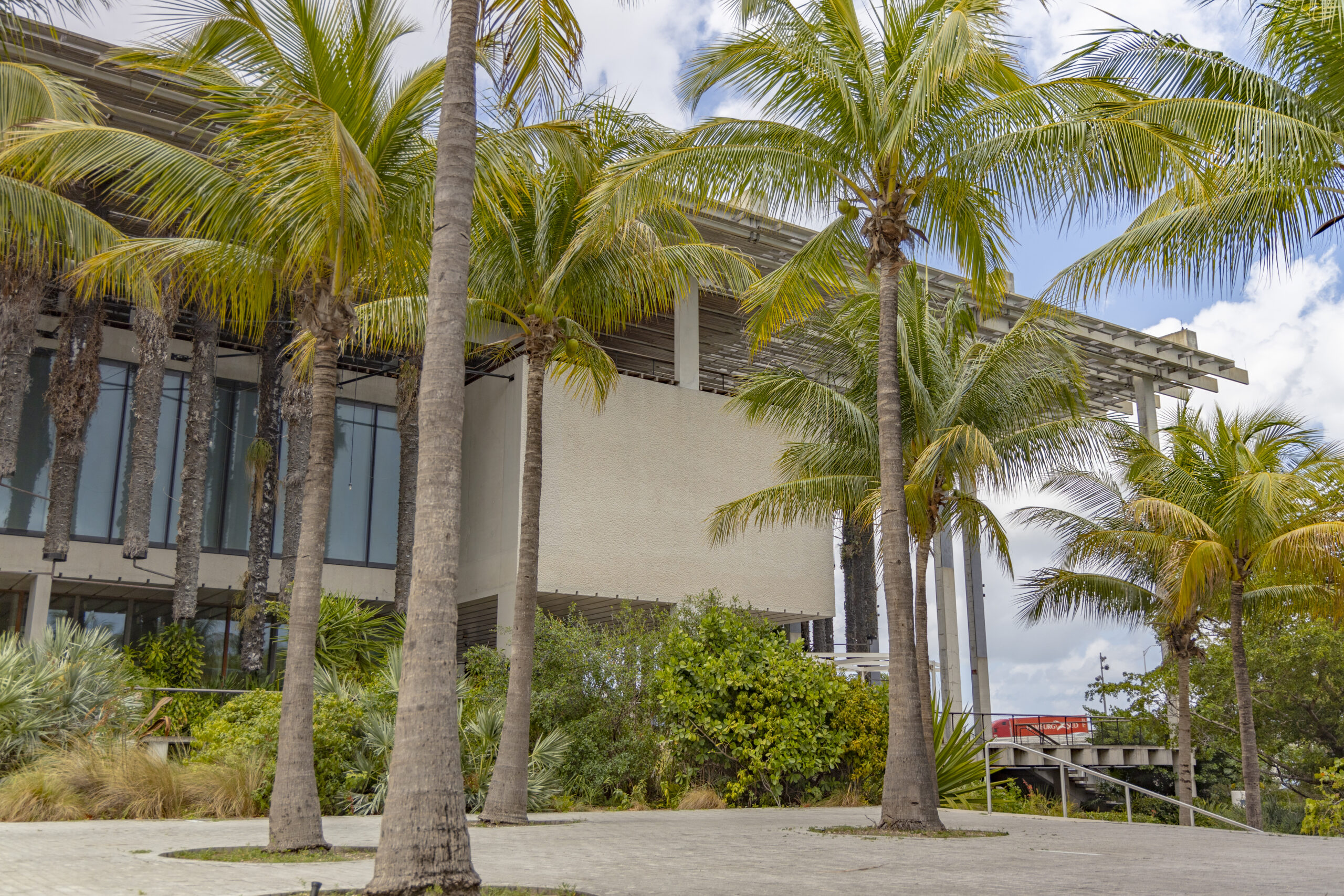
A rare gathering of Jean-Michel Basquiat’s most iconic works come together in Miami for the first time, generously loaned from the Kenneth C. Griffin Collection. Opening June 25, 2026.
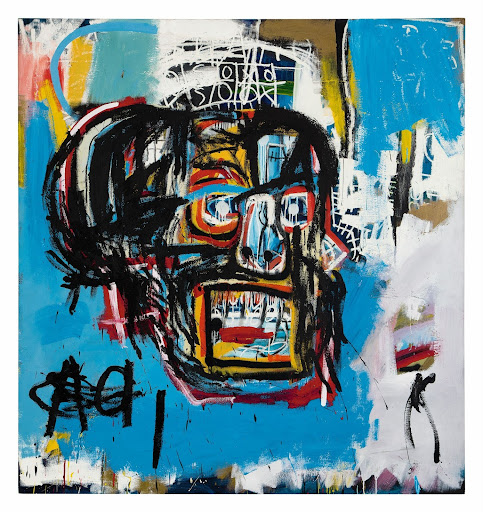
(MIAMI, FL — March 31, 2026) — Pérez Art Museum Miami (PAMM) is pleased to announce Basquiat: Figures, Signs, Symbols, an exhibition bringing together nearly a dozen works by Jean-Michel Basquiat—uniting some of the artist’s most recognizable paintings under one roof for the first time. Opening June 25, 2026, as Miami hosts visitors from around the world for the FIFA World Cup, the exhibition draws on works from the collection of Kenneth C. Griffin, founder and CEO of Citadel and a longstanding PAMM supporter, with the support of Griffin Catalyst, his civic engagement initiative. Basquiat: Figures, Signs, Symbols is co-curated by Sandra and Tony Tamer Director Franklin Sirmans and Kenneth C. Griffin Collection Curator Megan Kincaid.
Basquiat: Figures, Signs, Symbols marks among the most significant presentations to date of the late artist’s work. Across nine paintings and one sculpture—a rarely discussed aspect of Basquiat’s practice—this exhibition concentrates on the artist’s implementation of classic themes such as portraiture and the figure, script and language, and his conceptual amplification of color, form, and composition.
“As Miami prepares to welcome a global audience for the FIFA World Cup, Pérez Art Museum Miami offers an extraordinary opportunity to experience visual art from across the Americas,” said Kenneth C. Griffin. “I am proud to partner with PAMM to present some of the greatest works by one of America’s most iconic artists, Jean-Michel Basquiat, whose art has a unique power to connect across communities and generations.”
While Basquiat’s work has gained extraordinary visibility in the marketplace and has permeated popular culture across fashion, film, music, and more, Basquiat: Figures, Signs, Symbols offers an opportunity to deepen the conversation around the artist’s technical and conceptual contributions. The exhibition will also include a video of the artist speaking about his work, offering visitors a direct window into Basquiat’s voice and self-understanding.
Exhibition highlights include Untitled (1982), a standout example of Basquiat’s long and deep engagement with the human head—his most persistent anatomical motif; In Italian (1983), one of the artist’s richly layered compositions, operating simultaneously as portrait, study, linguistic puzzle, and autobiographical document that reflects his engagement with the Italian Renaissance tradition of anatomical investigation; Pez Dispenser (1984), a painting of the iconic candy dispenser that extends Pop Art’s elevation of consumer goods—void of clean lines and mechanical reproduction, rendered instead with nostalgic affection and irony; and Untitled (Tenant) (1982), in which a distorted, skeletal figure recalls German Expressionist depictions of bodies strained by the weight of the world, surrounded by statistics that transform the figure into a charged conveyor of the elements.
Basquiat: Figures, Signs, Symbols also provides an entry point for looking at and engaging with themes of race, class, religion, and world history that Basquiat investigated in his work. Born to a Puerto Rican mother and Haitian father in Brooklyn, New York, the artist’s Caribbean background deeply influenced his understanding and expressions of the world around him—a perspective that is intimately connected to Miami and its diasporic communities. This unparalleled presentation in Miami encourages a reflection on the interplay of these forces within the context of South Florida.
Basquiat: Figures, Signs, Symbols marks the latest chapter in Sandra and Tony Tamer Director Franklin Sirmans’ history with the late artist, building on PAMM’s 2016 showcase of Basquiat’s notebooks and smaller works. Sirmans first encountered Basquiat as a young New Yorker, resonating with the artist’s intellectual and poetic depth and ability to speak to a generation shaped by hip-hop and graffiti culture. Across scholarly pursuits and curatorial projects that include the seminal 2005 traveling show Basquiat at the Brooklyn Museum and the artist’s first retrospective in 1992 at The Whitney Museum of American Art, Sirmans has been central to the posthumous rise in popularity and visibility of one of today’s most celebrated contemporary artists.
“At PAMM, this exhibition feels both inevitable and vital. Miami’s layered histories, diasporic communities, and global outlook create a context where Basquiat’s visual language—rooted in memory, migration, and cultural hybridity—can be experienced with particular depth and immediacy,” said Franklin Sirmans, Sandra and Tony Tamer director at PAMM. “This is a compelling moment to revisit Jean-Michel Basquiat not as a market phenomenon or pop icon, but as a rigorous, self-taught master of painting and form. By bringing together works that are rarely seen in depth, we’re inviting audiences to slow down, to look closely, and to encounter a new way of understanding an artist whose name is universally known but whose complexity still demands deeper study.” “By bringing these works together, audiences will see how Basquiat constructs meaning—layering references, symbols, and language in ways that forge connections and gain in complexity,” said Megan Kincaid, Kenneth C. Griffin Collection curator. “The works move between art history and contemporary culture, using humor and critique to reflect on mythmaking, socio-historical forces, and power—ultimately inviting viewers to look closely, sensemake, and think together.”
Basquiat: Figures, Signs, Symbols centers the museum experience: close looking, sustained time, and the rare opportunity to see works that are often encountered only as reproductions, headlines, or cultural shorthand.
ABOUT GRIFFIN CATALYST
Griffin Catalyst is the civic engagement initiative of Citadel founder and CEO Kenneth C. Griffin, encompassing his philanthropic and community impact efforts. Tackling the world’s greatest challenges in innovative, action-oriented, and evidence-driven ways, Griffin Catalyst is dedicated to expanding opportunity and improving lives across six areas of focus: Education, Science & Medicine, Upward Mobility, Freedom & Democracy, Enterprise & Innovation, and Communities. For more information, visit griffincatalyst.org.
ABOUT PAMM
Pérez Art Museum Miami (PAMM), led by Sandra and Tony Tamer Director Franklin Sirmans, promotes artistic expression and the exchange of ideas, advancing public knowledge and appreciation of art, architecture, and design, and reflecting the diverse community of its pivotal geographic location at the crossroads of the Americas. The 41-year-old South Florida institution, formerly known as Miami Art Museum (MAM), opened a new building, designed by world-renowned architects Herzog & de Meuron, on December 4, 2013 in Downtown Miami’s Maurice A. Ferré Park. The facility is a state-of-the-art model for sustainable museum design and progressive programming and features 200,000 square feet of indoor and outdoor program space with flexible galleries; shaded outdoor verandas; a waterfront restaurant and bar; a museum shop; and an education center with a library, media lab, and classroom spaces.

