Open to artists, cultural practitioners, and scholars from the diaspora, CCI Fellowship Program fosters art projects and research advancing Caribbean art and scholarship.
(MIAMI, FL — January 25, 2023) — Pérez Art Museum Miami (PAMM) is pleased to announce the recipients of the third cycle of the Caribbean Cultural Institute Fellowship (CCI), selected through an open call by María Elena Ortiz, former PAMM Curator and current Curator at the Modern Art Museum of Ft. Worth, and Iberia Pérez Gonzalez, Andrew W. Mellon Caribbean Cultural Institute Curatorial Associate. With the support of the Mellon Foundation, CCI is a program that aims to advance the study of Caribbean art while providing opportunities for exchange and collaboration across the Caribbean region and its diasporic communities.
“We are delighted to announce and invite the third group of artists and scholars to the Caribbean Cultural Institute Fellowship Program, thanks to our partners at the Mellon Foundation. These new fellows represent the global ethos of the Caribbean from near and far through their unique backgrounds and artistic practices,” said PAMM Director Franklin Sirmans. “With one of the most significant collections of contemporary Caribbean art in an American museum, PAMM is committed to promoting the visibility of Caribbean art and culture, as well as expanding research in the field.”
The 2022 CCI Fellowship recipients are: Puerto Rican visual artist Guillermo Rodríguez; Brooklyn-based filmmaker and artist of Jamaican-American descent Madeleine Hunt-Ehrlich; and Cuban researcher and curator Abel González Fernández.
“The artist fellows have a strong experimental and research-based art practice,” said Andrew W. Mellon CCI Curatorial Associate Iberia Pérez Gonzalez. “By recovering the work and legacy of women artists and writers in the context of Martinique and Cuba, the fellow’s research makes a strong contribution to the expansion of artistic and intellectual histories in the Caribbean.”
Examining Earth as a sentient being, Guillermo Rodríguez’s practice renders sensible and playful probe cosmological data. Resuming artistic research proposing artworks as tools of perception, Rodríguez will explore two parallel investigations during the fellowship period. Turning “satellitally” inwards, “Doppler Landscapes” proposes an atmospheric conception of landscape. Consisting of large format silk screens based on satellite-generated meteorological data, the series studies the ubiquity of global warming as a generator of new subjectivity and artistic process. “Interstellar Topographies” stems from Rodríguez’s interest in Puerto Rican astrophysicist Wanda Díaz-Merced, known for her role in the field of space data sonification and advances in the field of space data physicalization. Composed of large-scale tactile sculptures, the series translates astronomical data into three-dimensional objects based on models being developed by NASA and other agencies for the blind-visually impaired (BVI) community.
Blending narrative and documentary traditions, Madeleine Hunt-Ehrlich explores the stories and experiences of Black women in the Americas. For her fellowship, Hunt-Ehrlich will focus on her ongoing film project Too Bright to See, collaborating with actors, musicians, and community members from the Francophone Caribbean and Francophone diaspora in Florida. Drawing on extensive research on the legacy of writer, anti-colonial, and feminist activist Suzanne Césaire, Too Bright to See weaves archival materials with cinematic scenes filmed with an unconventional and modern cast. Drawing inspiration from Caribbean aesthetics and Surrealist artwork, this film installation brings attention to new aspects of Cesaire’s legacy that are undocumented in the public arena, while addressing the broader question of the continued erasure of women from historical accounts.
Highlighting the cardinal presence of women artists within the Cuban and Caribbean modernism periods, Abel González Fernández’s research project takes its name from a lecture by Cuban designer Clara Porset in 1931, in which she introduced “tropical context” to the new tendencies in interior design developed by the international language of modernism. In Cuba, modernism has traditionally been known for its predominantly male figures, even though contemporary counterparts such as Clara Porset and modernist painters such as Loló Soldevilla, Carmen Herrera, Zilia Sánchez, and Amelia Pélaez existed. Architecture of “enclosed spaces” attempts to expand the narrative of Caribbean modernism art history not only by reconstructing the modernist ideology that framed the creation of modern objects, but also exploring how women artists situated within it developed their voice and perspective.
The recipients of last year’s CCI Fellowship were Eliazar Ortíz (Artist Fellowship), Monica Sorelle (Florida-based Artist Fellowship), Erica M. James (Florida-based Research Fellowship), and Jessica Taylor (International Research Fellowship). In the past year, this program has enabled local and regional collaborations with institutions such as the Bakehouse Art Complex in Miami, and Centro Cultural de España (CCE) in Santo Domingo, Dominican Republic.
ABOUT THE 2022 CCI ARTIST FELLOWS
Guillermo Rodríguez studied fine arts and sculpture at the University of Puerto Rico. He completed a Bachelor of Art (Honors) in Art Practice at Goldsmiths College, University of London in 2010, and attended a Master’s program in Curating Visual Arts at UNTREF in Buenos Aires. He has participated in the Rauschenberg Residency, FAAP Residency, and the Banff Centre Visual Arts Residency, and inaugurated the Davidoff Arts Initiative Residency in Basel. He has had solo exhibitions in Puerto Rico, Germany, Argentina, and Tenerife. His participation in group exhibitions includes the 11th Havana Biennial (Cuba); Artesur: Collective Fictions at the Palais de Tokyo (Paris); Final del Juego at Fundación Proa (Buenos Aires); and Entre Formas at Museo de Arte de Puerto Rico, among others. As part of his fellowship with Beta-Local in 2016, he founded and directed the transitory exhibition platform La Estacion Espacial. Rodríguez has recently curated Herbaria at Centro de Desarrollo de las Artes Visuales in Havana, CROMÁNTICA de Chaveli Sifre, Balancing a Blade on Diamond Grass (Balancing a Diamond on a Blade of Grass) at El Lobi, in San Juan and KIOSK at Cuchifritos Gallery + Project Space in New York. He is ICI’s 2022 Curatorial Research Fellow.
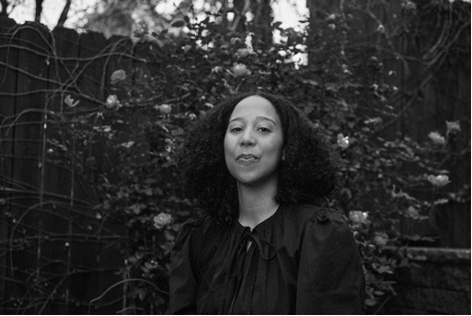
Madeleine Hunt Ehrlich is a filmmaker and artist who has completed projects in Kingston, Jamaica, Miami, Florida, and extensively in the five boroughs of New York City. Her work has been screened all over the world including at the 2022 La Biennale di Venezia, the Guggenheim Museum, and the Whitney Museum of Art in New York. Her films have been awarded special jury prize for best experimental film at Blackstar Film Festival and New Orleans Film Festival. She was named on Filmmaker Magazine’s 2020 “25 New Faces of Independent Cinema List” and is the recipient of a 2022 Creative Capital Award, a 2020 San Francisco Film Society Rainin Grant, a 2019 Rema Hort Mann Award, a 2019 UNDO fellowship and grant, and a 2014 Princess Grace Award in film.
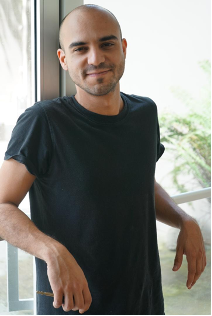
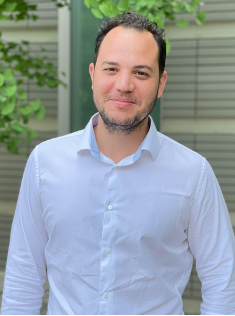
Abel González Fernández is a writer and curator based in New York. Currently, he is a 2023 MA candidate at the Center for Curatorial Studies (CCS), Bard College. He received a Bachelor’s degree in Literature from the University of Havana in 2015, where he engaged with the contemporary art scene through research-based and conceptual art practices, questioning art history as a language of power, and a source for the creation of social imaginaries. In 2019, he received the Prince Claus Funds Next Generation Program grant to make the series Sin 349 about the Cuban artistic community’s resistance to Decree 349, issued by the Cuban government in 2018 to legalize censorship. He has curated exhibitions in Havana, Berlin, Tokyo, and New York. Currently, he is co-curating an exhibition with Laura Mott, chief curator, and Andrew Blauvelt, director, at Cranbrook Art Museum (Detroit) that will premiere a collection of Caribbean mid-century furniture and modern design in the United States. As a writer, he has collaborated with publications such as Art Nexus, Vice, Eikon International Photography, Mezosfera (Tranzit), and El Estornudo. In addition, he has contributed as a writer for institutions such as Cranbrook Art Museum (Detroit), Columbia University (New York), and Institute for Studies on Latin American Art (ISLAA, New York), among others.
ABOUT PAMM
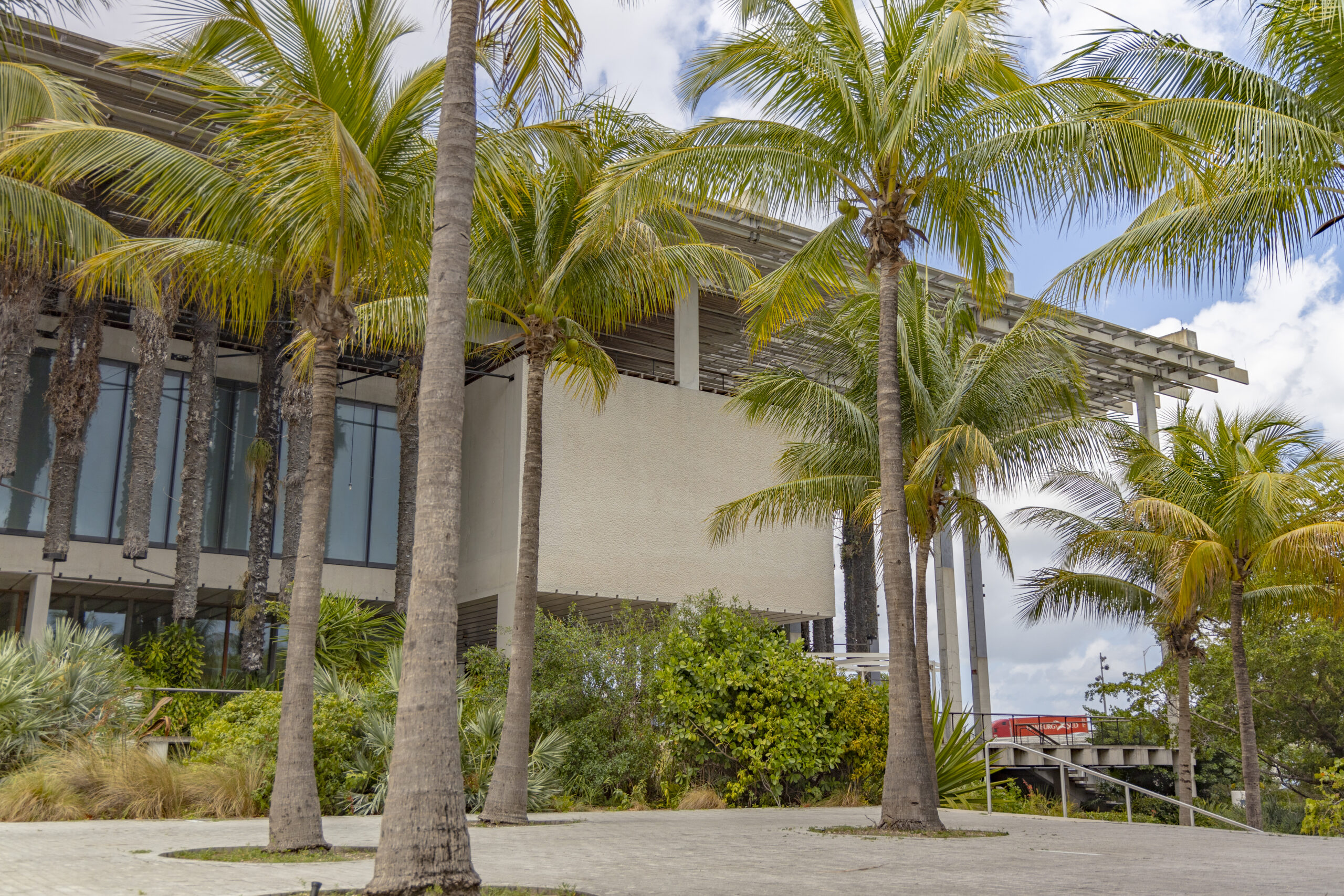
Pérez Art Museum Miami (PAMM), led by Director Franklin Sirmans, promotes artistic expression and the exchange of ideas, advancing public knowledge and appreciation of art, architecture, and design, and reflecting the diverse community of its pivotal geographic location at the crossroads of the Americas. The nearly 40-year-old South Florida institution, formerly known as Miami Art Museum (MAM), opened a new building, designed by world-renowned architects Herzog & de Meuron, on December 4, 2013 in Downtown Miami’s Maurice A. Ferré Park. The facility is a state-of-the-art model for sustainable museum design and progressive programming and features 200,000 square feet of indoor and outdoor program space with flexible galleries; shaded outdoor verandas; a waterfront restaurant and bar; a museum shop; and an education center with a library, media lab, and classroom spaces.
Accredited by the American Alliance of Museums, Pérez Art Museum Miami (PAMM) is Sponsored in part by the State of Florida, Department of State, Division of Arts and Culture and the Florida Council on Arts and Culture. Support is provided by the Miami-Dade County Department of Cultural Affairs and the Cultural Affairs Council, the Miami-Dade County Mayor and Board of County Commissioners. Additional support is provided by the City of Miami and the Miami OMNI Community Redevelopment Agency (OMNI CRA). Pérez Art Museum Miami is an accessible facility. All contents ©Pérez Art Museum Miami. All rights reserved.