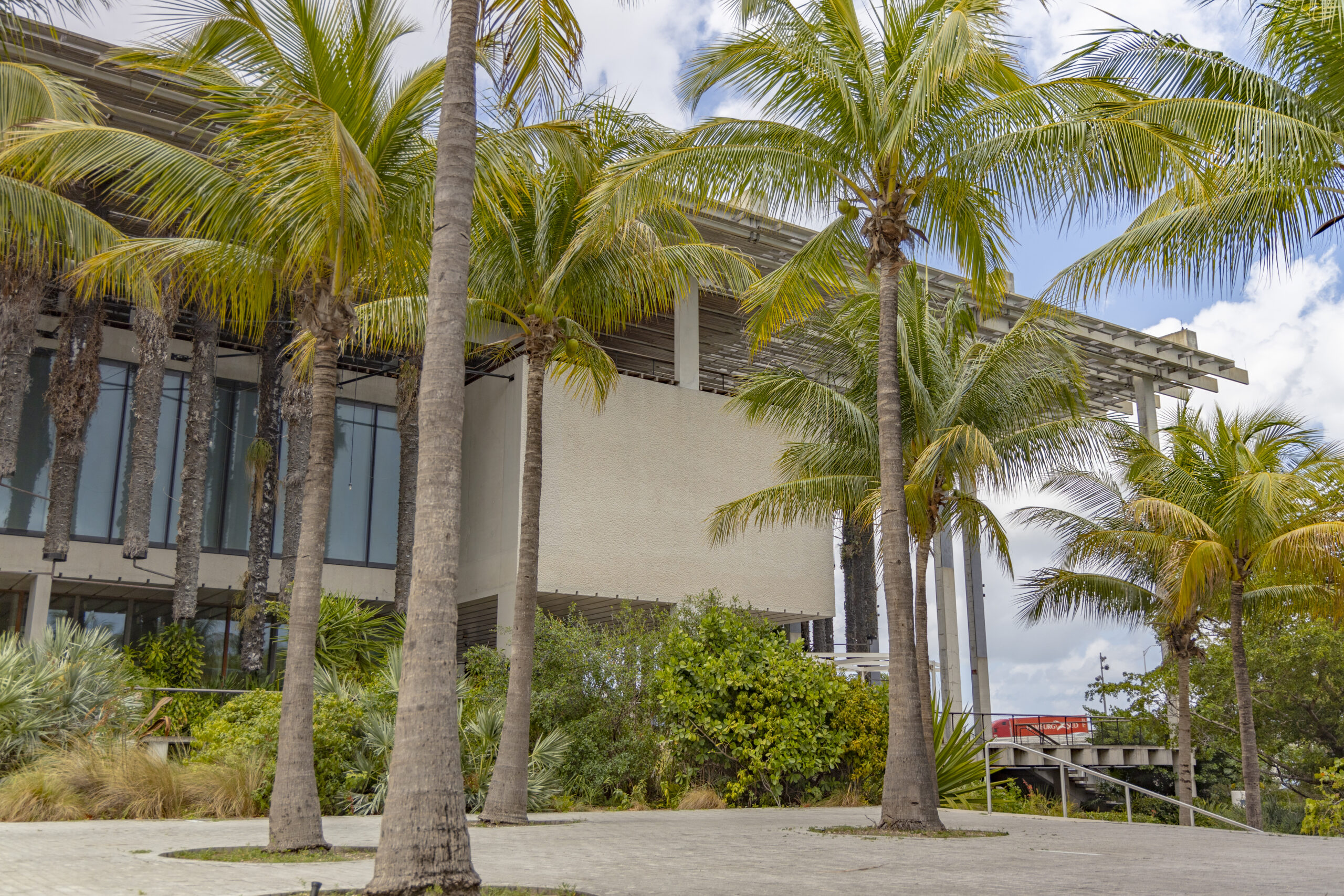
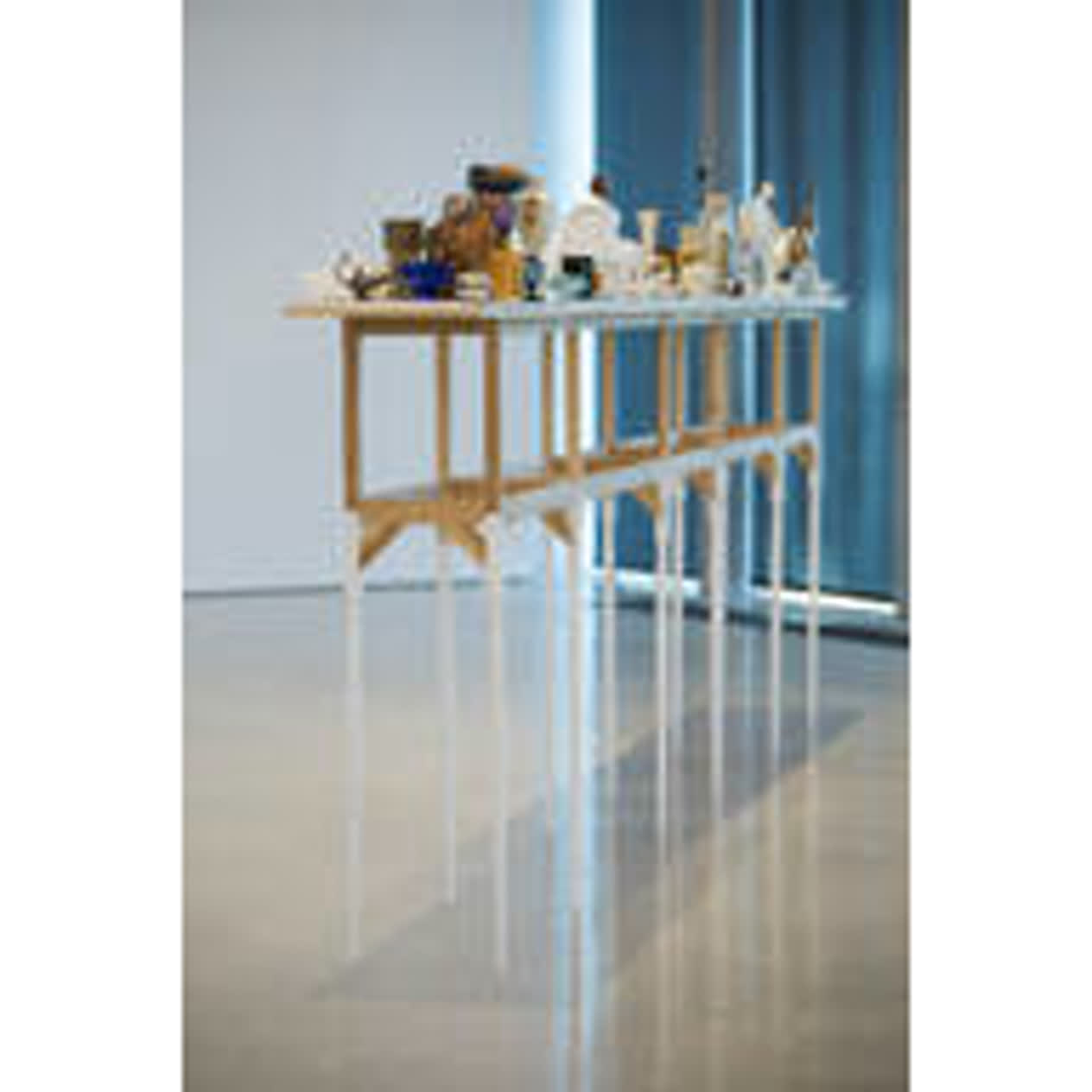
Juana Valdes An Inherent View of the World 2014
© Juana Valdes

Juana Valdes combines photography and installation to investigate the history of commodities and to reconsider their connections to trade and consumerism. In An Inherent View of the World, she presents a collection of everyday objects that together embody the long, complex history of trade between the East and West, specifically the trading of Chinese porcelain that began in the 16th century. In this work, she includes china and other domestic porcelain wares once imported from Asian countries to be used in homes in the United States. She collected these objects from thrift stores and estate sales throughout the country, particularly in Florida. By placing the objects on a high table, Valdes reconfigures what would be a conventional display for these domestic wares. Alluding to the Western tradition of still life painting, she offers an alternative perspective, reinterpreting the objects’ domestic quality as artifacts in the museum context, and highlighting the relationship between mass production in Asia and consumerism in the West.
Identification
Title
An Inherent View of the World
Production Date
2014
Object Number
2017.009
Credit Line
Collection Pérez Art Museum Miami, museum purchase with funds provided by Jorge M. Pérez, the John S. and James L. Knight Foundation, and PAMM Ambassadors for Black Art
Copyright
© Juana Valdes
https://www.pamm.org/en/artwork/2017.009
Copy artwork link
Physical Qualities
Medium
Porcelain, brass, wood, glass, and sheetrock
Dimensions
72 x 192 x 16 inches
Visual Description
An Inherent View of the World, by Cuban born artist Juana Valdes, is a mixed media artwork. It is made up of porcelain, brass, wood glass, and sheetrock, a brand of drywall. The entire artwork measures six feet tall, sixteen feet long, and sixteen inches, or a little under a foot and half wide.
This artwork takes the form of a long and narrow wooden table, with its surface just above the eye-level of most adults. On this table’s sixteen-foot-long surface is an assortment of dozens of household objects, varying in shape, size and material. They crowd the space of the table’s surface, and their varying heights, widths, and colors, create an uneven and irregular silhouette when seen at a distance, almost like a city skyline, but in miniature.
The table is elevated on six pairs of thin, evenly spaced legs. The lower two-thirds of the twelve spindly legs are smoothed and rounded. These rounded portions of the legs are painted white. The top third of the legs are untreated. This unpainted, uppermost third of each leg also features squared-off corners, resembling wooden planks.
The tables surface is a long sheet of white sheetrock or drywall, a material usually used in home construction. Most of the objects on this table’s surface can be described generally tableware, more specifically as porcelain china and metal stemware.
Most of the objects are dishes, wide plates, and bowls made of porcelain. The majority are white or light cream in color with small floral decorative motifs. Some of the porcelain objects could be vases for flowers or carafes for beverages, with wide bases that bulge outward as they taper to a narrow necks or openings. Some of the porcelain objects have a blue floral pattern that covers their entire surface, resembling fine pottery from China or the Netherlands. Other objects can be described as metal goblets of varying heights and sizes, wooden candle sticks, metal oil lamps, and small glass bowls.