Gerhard Richter Abstraktes Bild (742-4) (Abstract Painting (742-4)) 1991
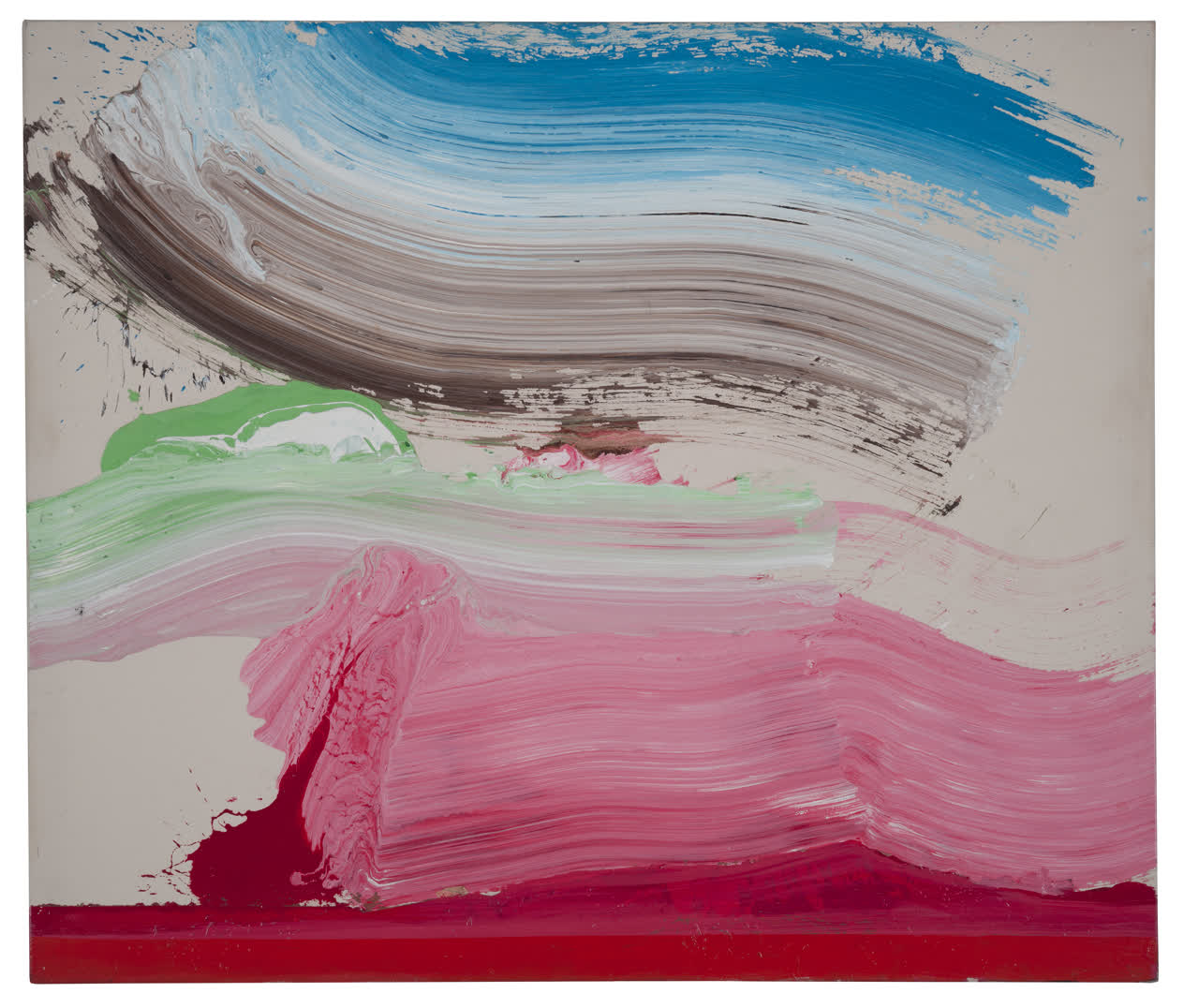
To create Abstraktes Bild (742-4), Gerhard Richter applied several layers of paint to a wood panel and then used broad, flat tools (similar to squeegees) to smear the wet paint across the surface. The result displays formal characteristics associated with the New York school of Abstract Expressionism of the 1940s and 1950s: an all-over, abstract composition of drizzles, splashes, and streaks; vivid color; and a strong sense of movement. Yet the attitude that underlies this work could not be more different from those that informed Abstract Expressionists, who sought to utilize art as a means of expressing existential struggle while exploring the obscure drives and impulses that linger in the subconscious mind. Though Richter’s work displays the painterly quality and spontaneous look associated with such concepts, it springs from an attitude of rational detachment and a preconceived process conducive to machinelike standardization.
Identification
Title
Abstraktes Bild (742-4) (Abstract Painting (742-4))
Production Date
1991
Object Number
1998.6
Credit Line
Collection Pérez Art Museum Miami, gift of Mimi and Bud Floback in honor of Suzanne Delehanty
Copyright
© Gerhard Richter
https://www.pamm.org/en/artwork/1998.6
Copy artwork link
Physical Qualities
Medium
Oil on wood
Dimensions
57 x 59 inches
Visual Description
Abstraktes Bild (742-4) by Gerhard Richter is a painting from 1991. It is made of oil paint on wood. It measures roughly five feet by five feet.
This painting is an example of an abstraction, which is a style of painting that focuses on the gestural movement of shapes and colors rather than depicting scenes or figures.
The painting depicts several layers of paint that are unevenly applied, allowing the viewer to see sections of each layer poke through each other.
The base layer appears to be made of a blue-grey paint that is mixed with small sections of white toward the upper part of the composition and with green paint toward the middle and bottom of the composition. On top of this layer, there is a heavy layer of bright red paint that is applied unevenly across the entirety of the composition. The paint appears to have a texture similar to plaster. Its application gives the impression of paint that has been degrading or peeling for some time.