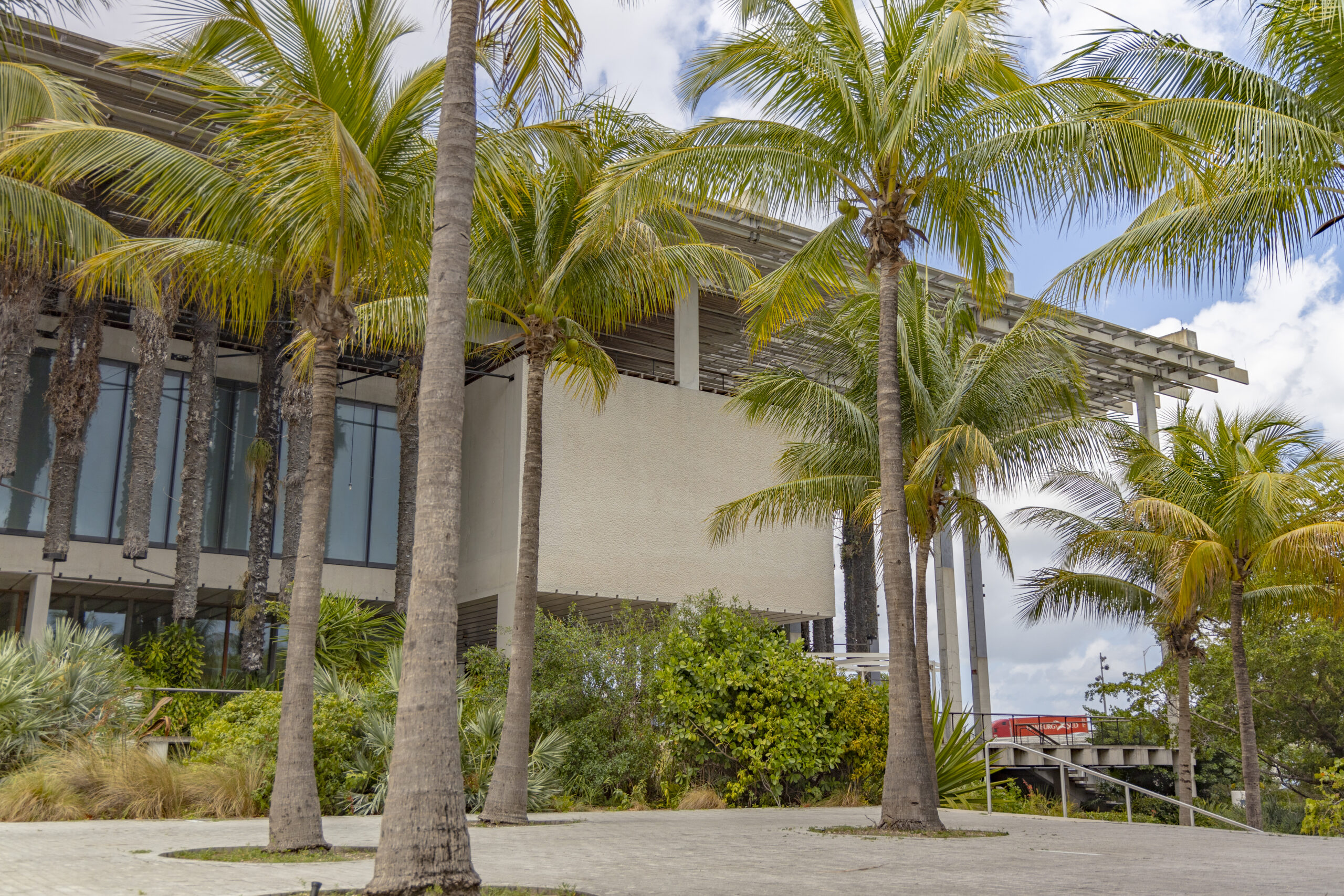
Sarah Charlesworth Figures 1983
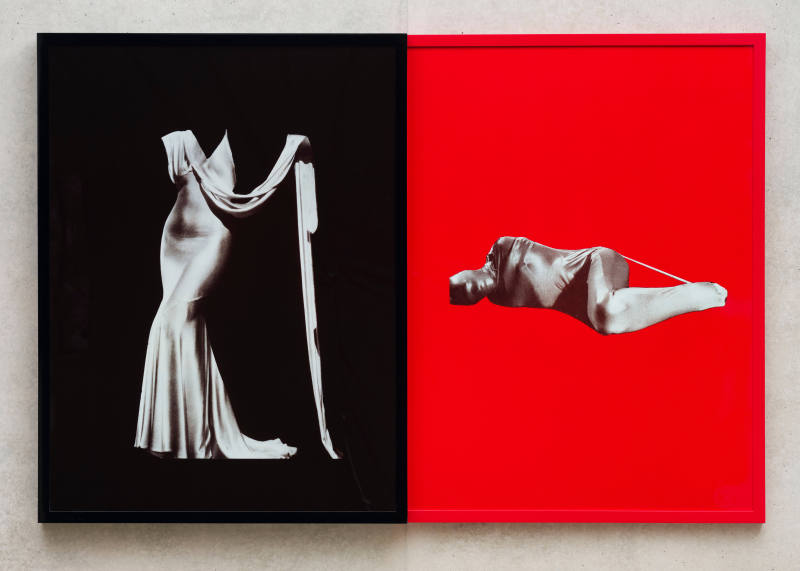
© The Estate of Sarah Charlesworth

Sarah Charlesworth is associated with the Pictures generation, a highly influential group of New York–based artists who, beginning in the late 1970s and early 1980s, focused on the appropriation of subjects from the never-ending supply of images churned out by commercial advertising, Hollywood movies, television shows, magazines, newspapers, and other forms of mass-market media.
Figures is one of Charlesworth’s best-known works, from her series “Objects of Desire” (1984–88), which revolves around the relationship between ritual and fetishization, be it sacred, secular, or sexual in nature. The unique aesthetic of the series derives in part from the artist’s use of lacquered frames that seem to extend each work’s monochromatic background into the viewer’s space, causing it to read more like a single, unified object than as a two-dimensional photograph. In Figures Charlesworth explores the role of gendered power dynamics in human sexuality. Each of the images draw the connotations of the other into itself: the evening gown—ordinarily a symbol of elegance—becomes associated with subjugation, a way of restraining and controlling the female body; the rubber suit, on the other hand, becomes quasi-normalized, elevated from a symbol of transgressive kinkiness to the status of a classical nude.
Identification
Title
Figures
Production Date
1983
Object Number
2017.201
Credit Line
Collection Pérez Art Museum Miami, museum purchase with funds provided by PAMM’s Collectors Council and Ann Blackwell and Cornelius Bond, Maureen and George Collins, Carol and George Crapple, Camille and Patrick McDowell, Elizabeth R. Miller and James G. Dinan, Diane and Robert Moss, Darlene and Jorge M. Pérez, Dorothy and Aaron Podhurst, and Roz and Charles Stuzin
Copyright
© The Estate of Sarah Charlesworth
https://www.pamm.org/en/artwork/2017.201
Copy artwork link
Physical Qualities
Medium
Silver dye bleach prints with lacquered wood frame
Dimensions
42 x 62 inches each
Visual Description
Figures is a set of identically sized chromogenic prints in lacquered wood frames. Together, the diptych measures three and half feet tall and approximately five feet wide. It is horizontal in orientation, meaning its longest side runs parallel to the ground. Each photo contains a clothing item worn by a slender female figure. However, the only indication of a body is the volume suggested under the clothing itself, as the parts that would otherwise be visible have been erased or obscured by the artist. In the photo to the left, we see a champagne-colored, full length satin evening gown hovering in a black space. The figure facing us in the evening gown has their left leg bent as their body leans slightly to our right. The gown is sleeveless with a flowing sash that appears to float above an invisible shoulder to our right and flows down to the feet of the ghostly figure. In lieu of a body, the black background takes place of the figure’s head, feet and arms. The photo is surrounded by a black lacquered frame, blending in with the black background of the photo and isolating the gown as if it were an object. In the photo to the right, we see a figure bound in a champagne colored, zentai or full body suit made from the same material as the gown in the photo on the left. The figure lays horizontally across the middle of the composition, appearing to also float in a red background. Their entire body is covered from head to toe, as if it were mummified. This figure has their legs bent towards the viewer. Alluding to the sash in the left picture, a piece of the body suit wraps around the figure’s shoulder to our right and ties their feet to their chest. This photo is surrounded by a red lacquered frame, also blending in with the color of its background and isolating the figure as it were an object as well.