POST / Blog

Navigating the Nuances of Spanish: Translation at PAMM 

April 9, 2026

Language is not static—it is dynamic, an evolving reflection of culture, identity, and lived experience. At Pérez Art Museum Miami (PAMM), situated in the heart of one of the most linguistically diverse cities in the United States, the role of language in cultural engagement is paramount. In such a context, Spanish translation is not a simple matter of word-for-word conversion, but a carefully considered practice.  
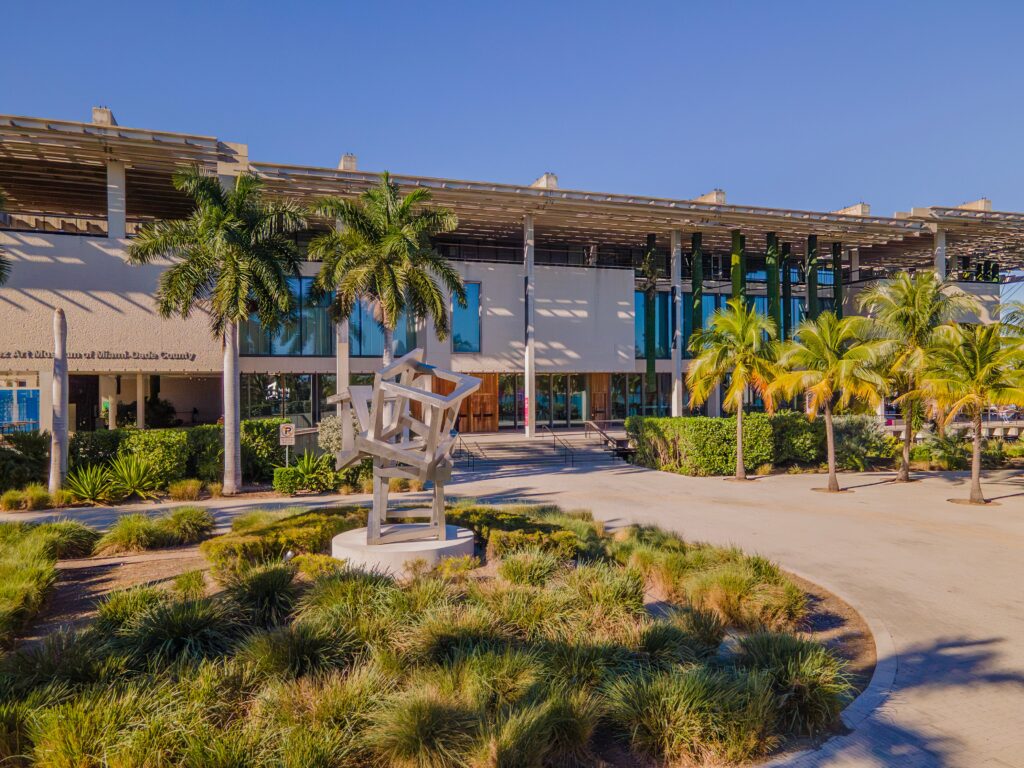
View of the museum behind palm trees
PAMM 2026

Why Spanish? 

Given Miami’s rich multicultural makeup, where nearly 70% of the population identifies as Hispanic or Latino, according to U.S. Census Bureau data, it was essential to assess which language would best serve PAMM’s public. Spanish is spoken by over 500 million people worldwide and spans a vast range of dialects, idiomatic expressions, and localized meanings. This diversity presents both a challenge and an opportunity—to meet visitors where they are linguistically while respecting the cultural richness embedded in regional variations. 

Spanish emerged as a priority, not only because of demographic prevalence but also because of its cultural resonance among our audiences. Pérez Art Museum Miami began its translation work within the museum itself—installing bilingual labels in exhibitions, providing signage in both English and Spanish for amenities and general way finding and providing interpretation into American Sign Language, Haitian Creole, and Spanish for in-person programming. However, as more content shifted online, digital content became just as critical as in-gallery interpretation.  

Today, PAMM’s website is fully accessible in both English and Spanish. It serves as a central platform for our audience to explore exhibitions, browse the permanent collection, access visual descriptions, audio guides, and participate in the Learn portal.  
Establishing a Translation Framework 

Understanding what and how to translate, adapt, or retain is critical for preserving both meaning and accessibility. Pérez Art Museum Miami collaborates with experienced translators who are fluent not only in language but also in contemporary art terminology, ensuring our content resonates across linguistic and cultural lines.  

The museum generally adopts Mexican Spanish as the default for digital content. This approach aligns with best practices in U.S.-based institutions, where Mexican Spanish is the most widely understood variant (Pew Research Center, 2022) and represents one of PAMM’s largest digital audiences. That said, we recognize the importance of flexibility. Depending on the exhibition’s context—particularly when featuring artists from Cuba, Puerto Rico, or the Dominican Republic—the tone shifts toward Caribbean terminology. This allows us to better reflect the artist’s voice and cultural background, preserving the authenticity of the original message.  

Making deliberate stylistic choices is essential to the framework of translation and collaboration. This approach not only streamlines the translation process across diverse linguistic backgrounds but also honors the original intent of the content and ensures alignment with the museum’s mission. Documenting each stage of this process through best-practice guidelines and bi-monthly team meetings helps maintain both consistency and accuracy—both within the team and for our audiences. See an example of these best practices for writing and editing bilingual digital content here

Three friends laughing in galleries looking at a phone

Tone 

When crafting Spanish content, one of the most nuanced choices is whether to use the informal  or the formal usted. This decision significantly affects how the museum communicates its identity and relates to its audience. As a contemporary, community-oriented art institution, the museum typically favors  for its welcoming and conversational tone. This choice aligns with broader digital communication trends, where brands and public institutions increasingly adopt informal language to appear more accessible and engaging.  

Language plays a powerful role in how people experience art. Our translation practices are rooted in the belief that everyone deserves access to culture in a way that feels authentic, welcoming, and respectful of their identity. By embracing regional variation, choosing tone with care and staying attuned to shifts in usage, we aim to foster deeper connections with all of our audiences—both in person and online.

Authors
Nathalia Bolivar Nathalia Bolivar is PAMM’s Content Writer and Editor.
Read More

More Posts Related To Blog

Artists in Tandem: Love and Muses in the PAMM Galleries by Naomi Bitton

post
From a Los Angeles family’s potted plants to Europe’s bustling streets, both adoring and platonic relationships quietly shape the works we encounter in museums today—even when this presence is subtle or symbolic. Whether through shared travel, domestic life, or creative dialogue, these bonds reveal that art is rarely made alone.
Blog

PAMMTV Intertidal Artist Interviews

post
These excerpts are part of an interview series, which brings together a group of artists featured in PAMMTV’s INTERTIDAL 2025–2026 exhibition, whose practices reflect the forces that shape our shared and personal worlds.
Digital

Navigating the Nuances of Spanish: Translation at PAMM  by Nathalia Bolivar

post
Today, PAMM’s website is fully accessible in both English and Spanish. It serves as a central platform for our audience to explore exhibitions, browse the permanent collection, access visual descriptions, audio guides, and participate in the Learn portal.  
Blog

PAMM Acquires Works by Miami Artist Daniel Ochoa Through 2025 SCOPE Art Show

post
Pérez Art Museum Miami (PAMM) proudly welcomes two new sculptures by Miami-based artist Daniel Ochoa into its permanent collection, acquired through the 2025 SCOPE Art Show PAMM Prize.
Blog

NADA Acquisition Gift Expands PAMM’s Mission With Three New Works

post
Through the 2025 NADA Acquisition Gift, PAMM welcomes significant new works by Sheroanawe Hakihiiwe, Thomas Bils and Pallavi Sen.
Blog

Creative Aging Series: Building Community Through Art by Nicole Combeau

post
The Pérez Art Museum Miami (PAMM) recognized this potential through the launch of its Creative Aging Series, an art-making program designed for individuals aged 55 and better. This free initiative offers project-based workshops led by talented local teaching artists, opportunities to explore contemporary and modern art history, and a public…
Education

More Than Meets the Eye: How PAMM Crafts Visual Descriptions by Armando Zamora and Victoria Ravelo

post
How would you describe a piece of art to someone who can’t see it? Visual descriptions are a written, or spoken, guide of what we can objectively see in works of art.
Education

Pérez Art Museum Miami Wikimedian in Residence Program: Knowledge Equity and the Gender Gap by Michaela Blanc

post
According to research data released by the Wikimedia Foundation, in 2023, only 20% of Wikipedia users identified as women, and the number of people identified as gender diverse was less than 7%. In 2024, nearly 49% of Wikipedia’s readers are women, but fewer than 20% of its biographies are about…
Digital

Digital Resources for “Kate Capshaw: Exclusive Tonsorial Services” by Education

post
Explore these digital resources and discover unhoused and marginalized communities’ resources, stories, struggles, and triumphs.
Education

“Xican- a.o.x. Body” Reading Room List by Education

post
The Xican–a.o.x. Body exhibition reading lists presented here relate to the themes that foreground the body as a site of political agency and imagination, existing within an “in-betweenness” of identities, artistic investigation, decolonization, and alternative forms of community examined throughout.
Education

PAMMTV Closed Captioning by Mariana Dias

post
This first iteration of PAMMTV’s best practices guide delineates our developing process for captioning and translating video artworks for in-person and online museum experiences.
Digital

Crafting a Multilingual Experience: Bilingual Content Guidelines by Nathalia Bolivar

post
Pérez Art Museum Miami (PAMM) embarked on a transformative initiative with the launch of its bilingual website in 2022. This stride not only marked a significant milestone for the institution but also signaled a pivotal shift in the museum landscape toward greater inclusivity and accessibility. As the dynamics of bilingualism…
Digital

Pérez Art Museum Miami Wikimedian in Residence Program: A Critical Reflection by Michaela Blanc

post
Established as part of PAMM’s Digital Engagement departmental new initiatives, the Wikimedian in Residence program started in January 2023. The project includes institutional archival research, digital and in-person public programs, and original editorial bilingual content.
Digital

Educational Resources For Gary Simmons: Public Enemy

post
A list of projects recovering erased histories. These were created by scholars, artists, and academics working in Digital Humanities, both locally, and on a national level.
Education

Gary Simmons: Public Enemy Reading List by Dr. Kitty Oliver

post
The reading lists presented here all relate to the themes present throughout Gary Simmons: Public Enemy.
Education