


Don’t miss your last chance to get in the game at Pérez Art Museum Miami (PAMM)! In commemoration of the closing weekend for Get in the Game: Sports, Art, Culture, PAMM partners with the curator Dr. Terri Francis and Miami-Dade Public Library System’s AV Club for a 16mm film double feature and panel.
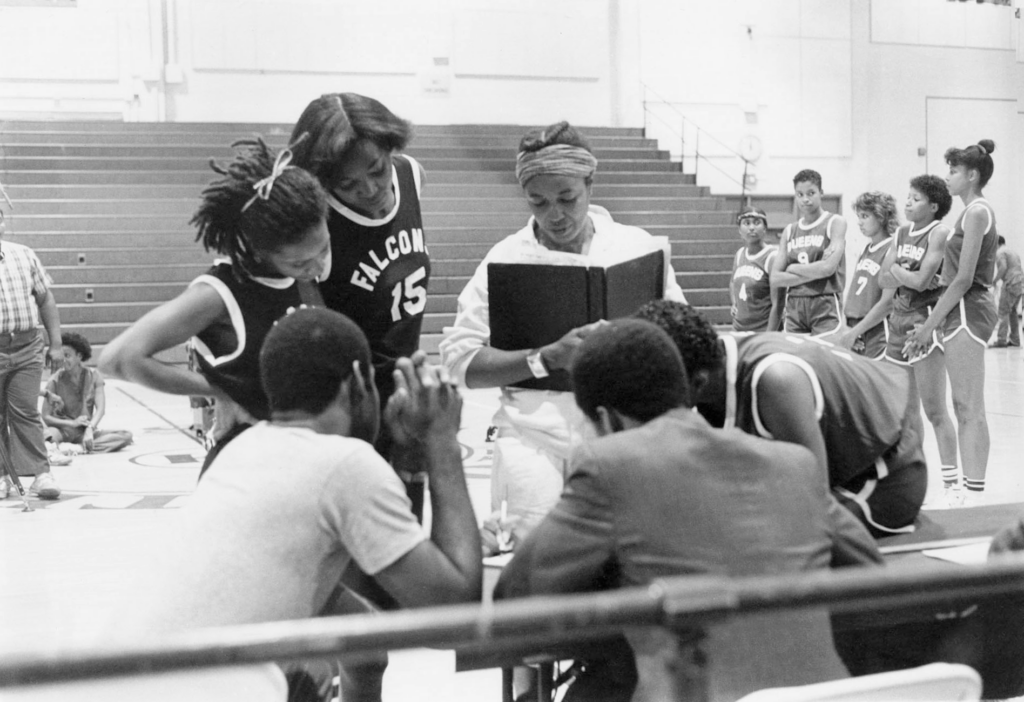
The afternoon opens with the short film “Didn’t We Ramble On” (1989), drawing parallels between present-day Black marching bands and traditional West African music and dance, followed by the feature film “Twice as Nice” (1989), a story of sisterhood and competition starring twin college basketball players.
The afternoon concludes with an insightful conversation with curator Dr. Terri Francis and writer/artist Bernardo Wade.
Schedule
2pm “Didn’t We Ramble On” (1989) Screening
2:15pm “Twice as Nice” (1989) Screening
3:25pm Conversation with Dr. Terri Francis and Bernardo Wade
About “Didn’t We Ramble On” (1989)
Directed by Billy Jackson, this film draws parallels between traditional West African music and dance and present-day black marching bands. It traces the history of marching bands back to their African origins; then through Turkey, Europe, and the United States. It has a current-day focus on the Florida A and M marching band and New Orleans street bands.
About “Twice as Nice” (1989)
The second feature by pioneering director Jessie Maple is a wonderfully relaxed, comic portrait of twin sister basketball players Caren and Camilla Parker (played by real-life twins and NCAA basketball stars Pamela and Paula McGee) competing to be the first draft pick in the women’s professional league (here, the “MBA,” anticipating the future WNBA). With her keen eye for telling details honed through her documentary work, Maple explores questions of sisterhood, ambition, and what it means to succeed as a young Black woman in America.
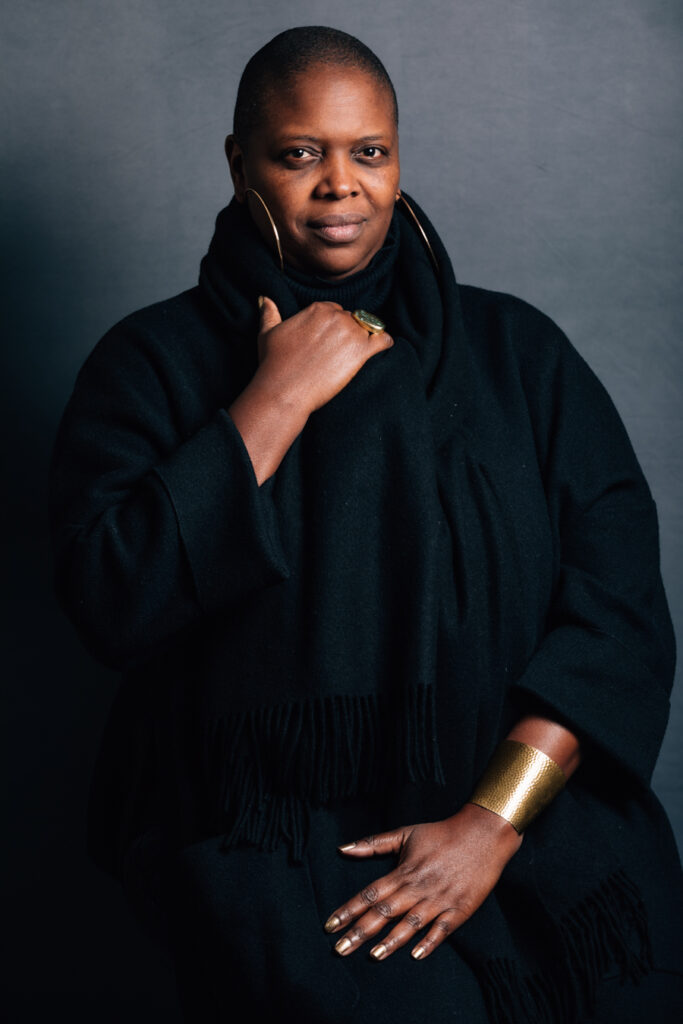
About Dr. Terri Francis
Dr. Terri Francis is an award-winning film curator, scholar, author, and artist whose work centers Black cinema as a vital force in global visual culture. An Andy Warhol Foundation Arts Writers Grant recipient, she is the author of “Josephine Baker’s Cinematic Prism,” founder of Cinematic Prism LLC, Associate Professor of Cinematic Arts at the University of Miami, and curator of the African American Film Festival at the Kravis Center for the Performing Arts.
Formerly director of the Black Film Center & Archive at Indiana University, Francis galvanized the restoration and renewed circulation of pioneering Black filmmakers Jessie Maple and Kathleen Collins, returning their films to audiences and helping reestablish their place in film history. Her scholarship includes influential work on the Jamaica Film Unit, Afrosurrealism, and Camille Billops. Her video essay “Josephine Baker Watches Herself,” published in “Feminist Media Histories” with an accompanying introduction, has screened internationally, including at the Il Cinema Ritrovato (Rediscovered Cinema), and Internationales Frauen* Film Fest Dortmund+Köln, Germany’s premier feminist film festival.
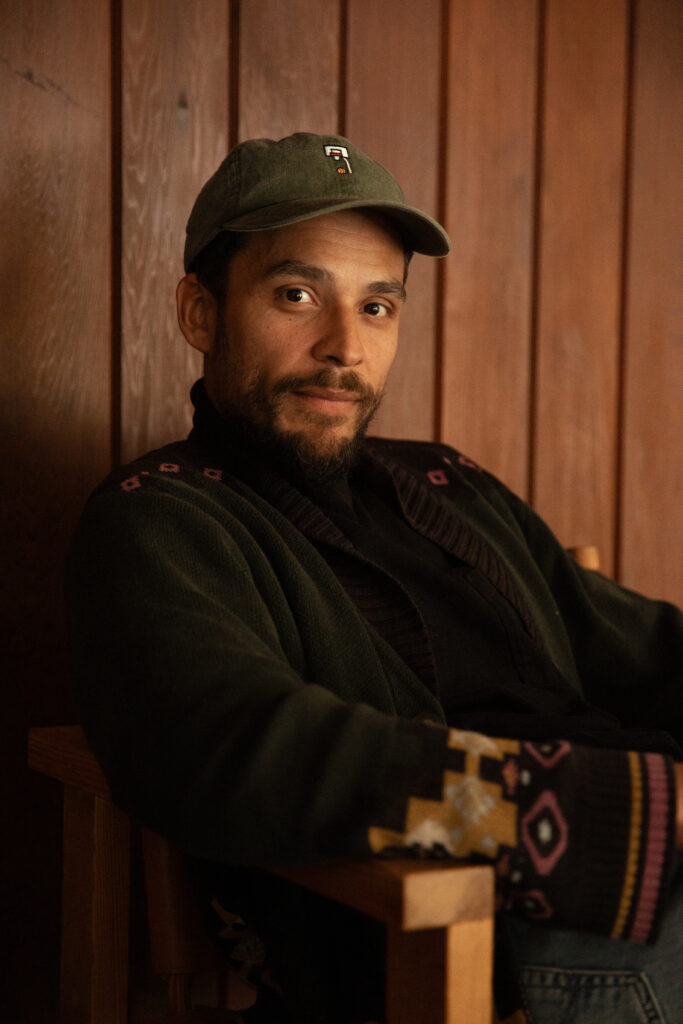
About Bernardo Wade
Born and raised in New Orleans, Bernardo Wade serves as assistant editor & poetry editor for “Obsidian: Literature & Arts in the African Diaspora.” Currently finishing his time as a Wallace Stegner Fellow at Stanford, he’s stoked to begin yet another period of study at UC-Santa Cruz this fall. His first full-length poetry collection, “A Love Tap,” was published in 2025 from Lookout Books of UNC-Wilmington. And though his poetry appears in a bunch of literary journals no one in his family has ever heard of, they remain proud of him, especially when they are featured in the poems. He stays infatuated with Ed Roberson’s question, “Can you O.D. on life?”
About Miami-Dade Public Library – The AV Club
The AV Club program, hosted by the Miami-Dade Public Library’s Special Collections & Archives Division, brings curated screenings of the 16mm Film Collection to various library locations and off-site venues. The Miami‑Dade Public Library System maintains one of the last remaining, circulating 16mm film collections in the nation. Established in 1956 as a teaching collection for public programming, it reflects a long-standing commitment to film as a tool for education, artistic exploration and community engagement. The collection preserves a rich selection of Florida and Miami-focused films, documenting the region’s landscapes, communities and moments of transformation. Also included within the collection are rare international feature films, experimental and avant-garde shorts and educational works produced by leading filmmakers, artists, and institutions.

