
Situated in Pérez Art Museum Miami’s (PAMM) Kenneth C. Griffin Gallery, you will not only find artworks with vibrant colors, abstract brushstrokes, and thick textures, but also hidden stories of artists’ relationships and their everlasting influence.
Upon entry, artist Jonas Wood’s two-dimensional, bold still-life painting of his potted houseplants welcomes you into the space with a soft and gentle feel. After relocating to Los Angeles in the early 2000s, Wood’s practice shifted as he began painting houseplants as a reflection of his domestic life. Constantly inspired by his environment, Wood includes personal objects that leave his paintings feeling like a visual diary. Tucked in the bottom right corner, a yellow orchid blooms out of Dinosaur Pots, vases made by Wood’s wife and PAMM collection ceramicist Shio Kusaka.
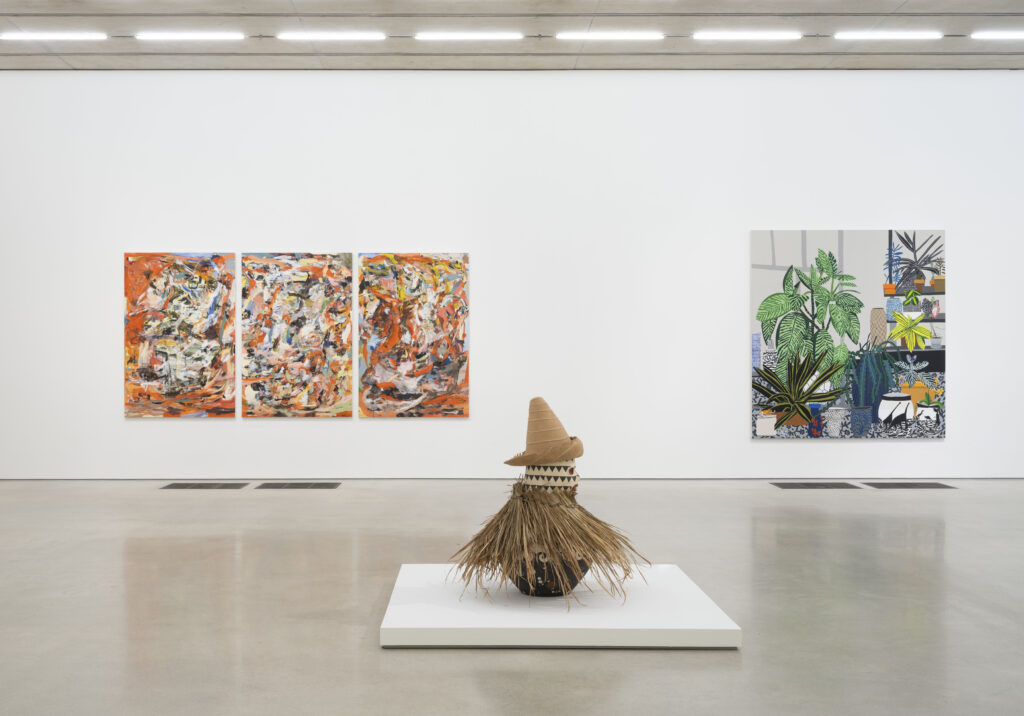
Kusaka is uniquely known for her playful and organic approach to ceramics, and she attributes the inspiration for dinosaur motifs to her children’s educational books.1Wood similarly includes personal symbols in reference to the couple’s children, such as a miniature tiger figurine in the bottom left side. Kusaka and Wood’s mutual adoration for ceramics led to their unique bond that is continuously demonstrated and explored in their artistic practice—the jagged lines, imperfect forms, and geometric designs. These small yet apparent similarities provide a glimpse into modern-day artistic influences, and act as a window into the duo’s personal and parental lives.
Nearby Wood’s Dinosaur Pots Still Life (2014) hangs the gallery’s tallest abstract painting by the late Cy Twombly (1928–2011). At the start of their relationship in the early 50s, Twombly and PAMM collection artist Robert Rauschenberg traveled from New York to Palermo, Sicily, where they began an eight-month trip that would not only define their dynamic but also their early stages as artists. Twombly’s Untitled (Rome) (1962) has a whimsical feel, comprised of swirls, scribbled text, or small pops of color—a style he picked up during this adventurous tour. Tom Delavan, “How an Eight-Month Trip Shifted the Course of Art History,” The New York Times, October 11, 2018,2. Similarly, Rauschenberg began photographing the European and North African markets, clothing, and similar commonplace objects throughout the trip that would be later assembled into his work.3The museum’s permanent collection piece Bob + Cy, Venice (1953) is a prime example of the art made from this practice, showing seated images of both artists overlaid on Venice’s Saint Mark’s Basilica architecture.
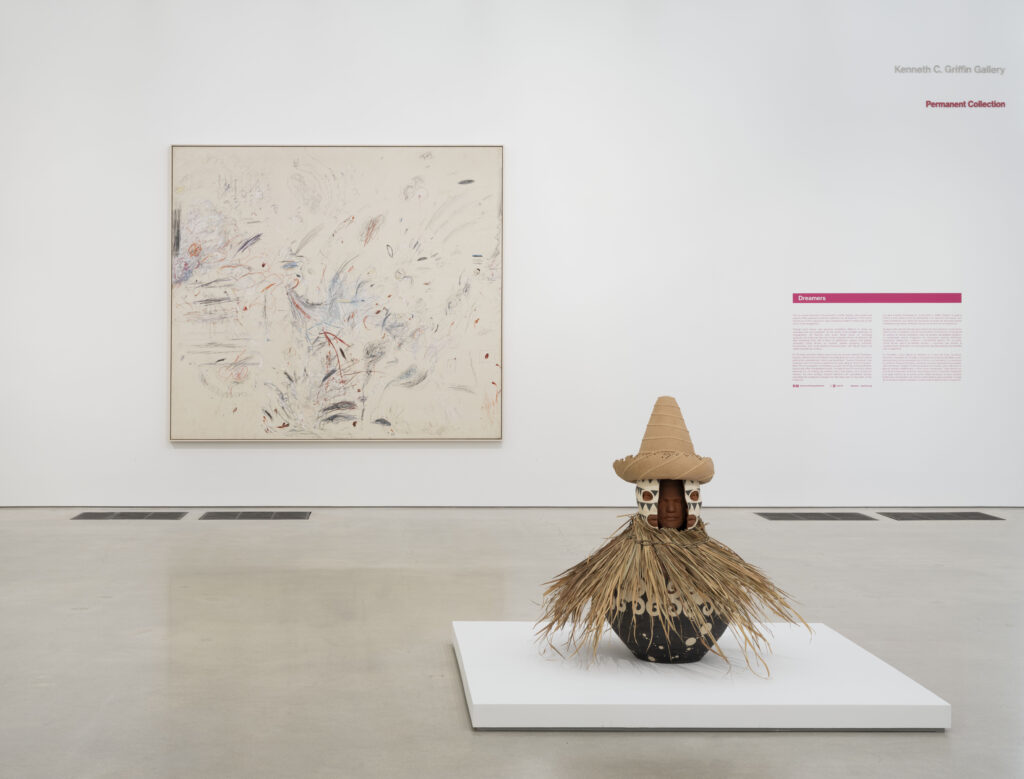
Currently on display near Twombly, Rauschenberg’s Love Hotel Anagram (A Pun) showcases the artist’s fully developed assemblage and photographic transfer practice. Though seemingly short in time, the histories that the duo encountered abroad resulted in lasting advancements in artistic experimentation, collaboration, and perhaps admiration. The influence of their formative travels continued to grow as the artists remained lifelong friends, continuously inspiring one another through shared identities, artistic interests, and creative exchange.
From a Los Angeles family’s potted plants to Europe’s bustling streets, both adoring and platonic relationships quietly shape the works we encounter in museums today—even when this presence is subtle or symbolic. Whether through shared travel, domestic life, or creative dialogue, these bonds reveal that art is rarely made alone. As viewers, we are invited to reflect on the finished pieces that hang in our gallery walls, and to consider the inspirations or influences behind them. Perhaps this season, consider how your loved ones might influence your life or your art making.
Related Content


Love Hotel [Anagram (A Pun)]
- Chris Wiley, Blackwedler, Jonas Wood and Kusaka (Karma). https://karmakarma.org/texts/jonas-wood-and-kusaka_chris-wiley/
- Tom Delavanm “How an Eight-Month Trip Shifted the Course of Art History,” The New York Times, October 11, 2018, https://www.nytimes.com/2018/10/11/t-magazine/cy-twombly-robert-rauschenberg-art-travel.html
- Ibid.


