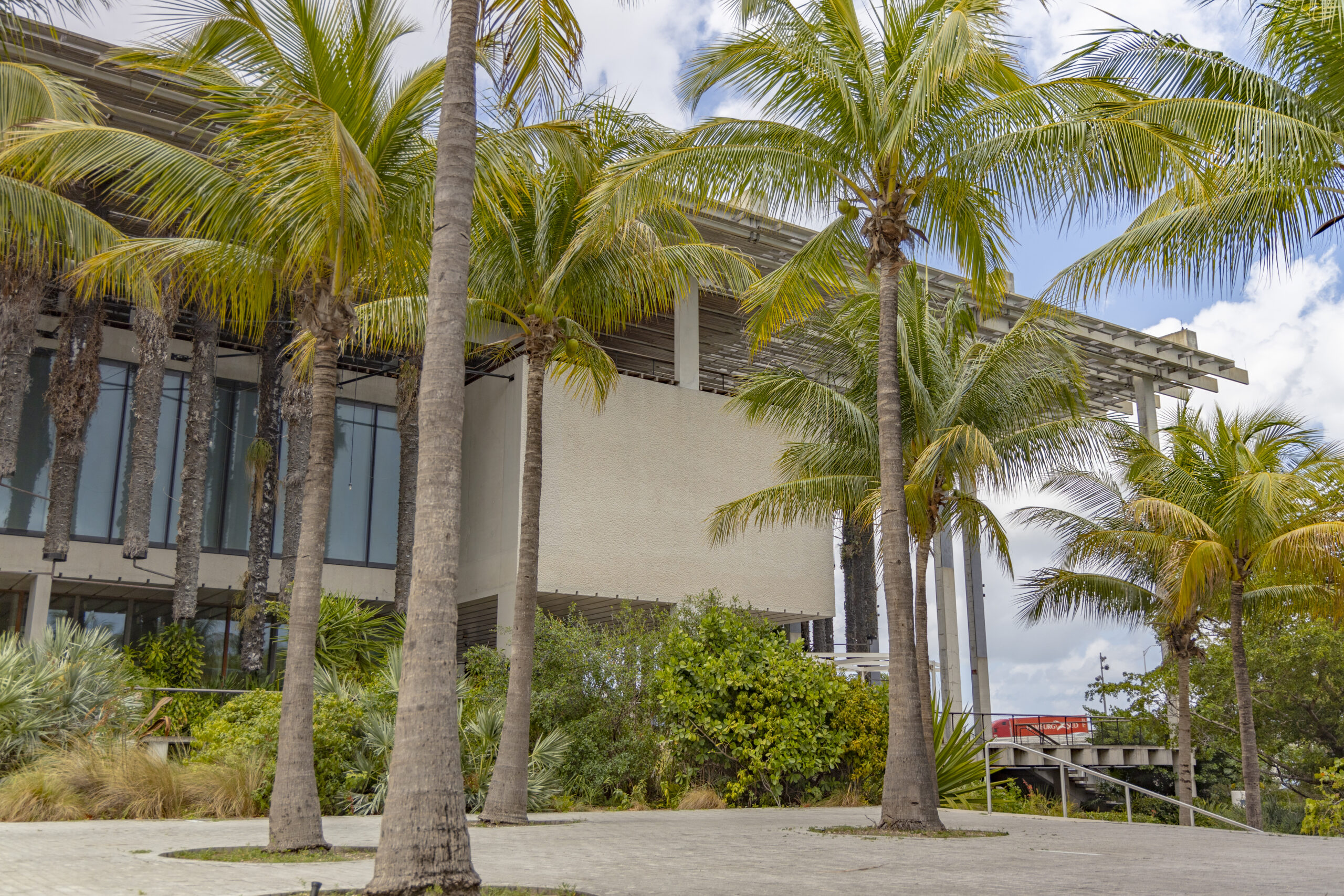
Al Loving Untitled #32 ca. 1975
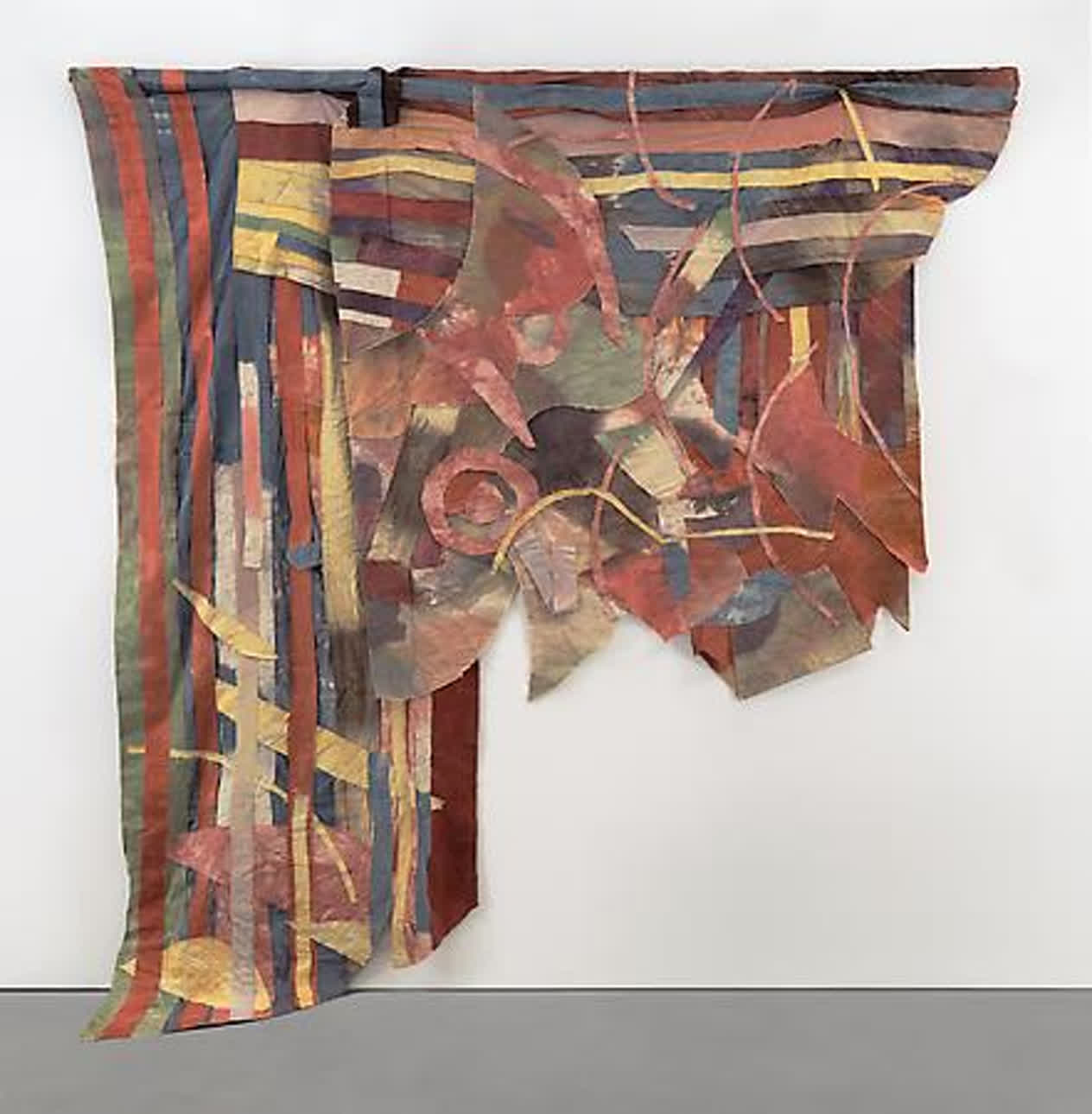
© Estate of Al Loving. Courtesy Garth Greenan Gallery, New York

In 1972, Al Loving began to cut, dye, and sew together fragments of canvas, creating large, irregularly shaped wall hangings. Untitled #32 is an excellent example of his work from this dynamic period, with its strips of fabric sewn together in vertical and horizontal lines and overlaid with circular pieces that give the work a sense of movement. Loving’s mother and grandmother were both quilters and the artist recalled long hours spent watching them sew as a child, an experience that informed these pieces. The design and dying processes involved in these works are also influenced by West African textiles, which tie them to additional political and celebratory statements involving African traditions being pursued by Black artists during the 1970s.
Identification
Title
Untitled #32
Production Date
ca. 1975
Object Number
2012.167
Credit Line
Collection Pérez Art Museum Miami, museum purchase with funds provided by Jorge M. Pérez and the John S. and James L. Knight Foundation
Copyright
© Estate of Al Loving. Courtesy Garth Greenan Gallery, New York
https://www.pamm.org/en/artwork/2012.167
Copy artwork link
Physical Qualities
Medium
Mixed media
Dimensions
121 3/4 x 112 inches
Visual Description
Untitled #32 is a mixed media canvas collage by artist Al Loving. This artwork measures one hundred and twenty-one inches by one hundred and twelve inches. This equals a little over ten feet tall along its left side, by nine and a third feet along its widest dimension at the very top.
This irregularly shaped collage has three distinct corners, two along the top left and right, and one in the bottom left. Together, these three points create a right angle, bound by two straight lines along the top and left edges of the collage. The outside edges of Untitled #32 roughly parallel a large capital letter “F.” Filling in the space between the corners and borders of the collage are different color strips of canvas and fabric, stitched together. The colors of the fabric are faded and dulled, like lightly dyed fabric or watercolor paints. Unlike a traditional painting, the canvas is not stretched on an underlying wooden frame. Instead, the collage hangs on the gallery wall like a tapestry, the bottom right corner usually touching the floor.
Starting on the leftmost side, is a long, straight, vertical strip of dulled green fabric, no more than two inches in width. This thin green textile runs the full vertical length of the piece, ten feet from top to bottom. Moving right, a red strip of fabric follows, of roughly the same dimensions, followed by another green one. This alternating color stripe pattern forms the majority of the collage composition. Throughout the collage, the stripes vary in color and their directional orientation.
The pattern continues moving toward the right of the collage. A denim-like blue color replaces the green, interwoven among the red stripes. About one foot from the top left corner, another stripe pattern runs the horizontal width of the collage. This second set of stripes align horizontally. They follow a similar red-blue-red pattern as seen on the vertical stripes. The colors change from the established red-blue pattern to include yellow and brown stripes. The two stripe patterns create a corner, using alternating colors as a frame. Between the vertical and horizontal stripes are a mass of different fabric shapes, layered on top of one another. Some of the random shapes resemble spirals, thin arcs of fabric, or leaf-like shapes. Some of the shapes are stitched into the striped background, moving in front of and behind the longer strips.